
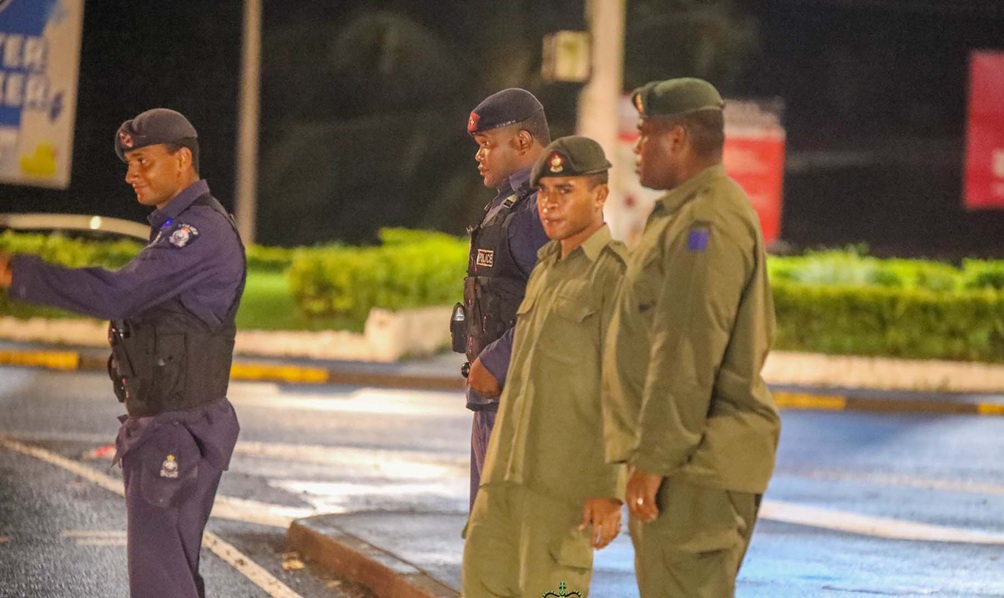
Their origins
Many of us do not realise that our modern Fiji Police Force and the Republic of Fiji Military Forces (RFMF) share the same historic ancestor, the Armed Native Constabulary (ANC). This history begins during the Colo campaigns of the 1870s. Following the Cession of Fiji in October 1874, the colonial administration sought to establish formal authority over the interior highlands of Viti Levu. During the 1876 campaign, often referred to as the “Little War” or Na Valu ni Lotu, different narratives emerged. For the colonial administration, it was a campaign to bring the region under centralised law, while for many coastal allies, it was viewed as a mission to introduce Christianity to the interior. Even before the 1876 campaign there has been several battles and campaigns launched from 1874 to 1876 which fermented resentment and dissent. Historical records show that traditional Fijian chiefs directly led their own men on the ground. While colonial officials managed the overarching strategy and compiled administrative reports from base camps, local leaders executed the tactical movements. For instance, oral and written histories note that chiefs like Ratu Luke Nakulanikoro mobilsed large contingents of over 1500 warriors which did the bulk of the fighting during the little Colo war, supported by substantial contingents from his traditional allies from Serua, Namosi, Davujukia, Conua, Malolo and Vatulele which were held in reserve. While the events occurred in Viti Levu interior which was more published, there was pacification campaigns being waged in the interior of Vanua Levu by paramount chiefs of the vanua there. Following these events, I believe the colonial administration formally organised these various tribal contingents from Tailevu, Rewa, Cakaudrove, Nadroga, Namosi, Ba, Ra and other chiefdom armies into the Armed Native Constabulary. Although initially tasked with constabulary duties, the ANC functioned as a disciplined paramilitary force to maintain peace across the new colony. Over time, the administration also introduced the native regulation system, which structured village life around traditional obligations and centralised governance. The ANC and the Native Administration played a huge part in pacifying the Tuka and Viti Kabani movements. These two colonial organisations made the native iTaukei to be dependent on the Central government and destroyed their age old entrepreneurial spirit and customs. By the onset of World War I, the ANC’s dual role naturally required specialisation. The force eventually split into two distinct paths, one evolving into the civilian civil defence framework of the Fiji Police Force, and the other transforming into the formal defence structure of the RFMF. Understanding this shared paramilitary origin helps us appreciate how our national security institutions were built upon the foundations of our traditional leadership and early history. MELI MATANATOTO
Nadi
Wages and poverty
I am not an economist, but I believe wages and productivity must be understood together. Raising wages without productivity gains only drives up the cost of goods and services. Take bread as an example. If it costs $2 to make when wages are $1 per hour, and wages suddenly rise to $10 per hour while productivity stays the same, the bread could cost $14–$15 as logistics and other costs rise in the same way. Poverty is not reduced, workers face higher consumer prices, and businesses risk closure. Therefore, practically increasing wages without increasing productivity will never reduce poverty. This burden falls hardest on the unemployed, retired, and subsistence farmers — nearly half of our population — who have no wage increase to offset rising costs. For them, poverty becomes extreme. Moreover, Fiji’s exports would collapse. Countries with higher productivity would outcompete us, and our agricultural products would lose their markets. Raising wages without productivity is not progress — it is the slow death of our industries. If we want higher wages, we must first raise productivity equivalently. Only then can workers truly benefit, businesses survive, and Fiji remains competitive. Dinesh Jamnadas Sugar Avenue, Lautoka
Unruly behaviour
I think Nishant Singh is a prolific contributor towards this forum, but I feel in his frustration and anger, he lashed out at those unruly kids (LTE 16/08/26) with an unmerited response, blaming their rowdy behaviour on village upbringing. Most children brought up in villages are well behaved and true Christians in their behaviour. The unfortunate event witnessed by Mr Singh can be because of other reasons such as drugs, alcohol, peer pressure or kids from broken homes now roaming the streets. Their behaviour is a typical example of gangs trying to be tough and instil fear as a defensive mechanism since most of these children were probably abused and looking for a sense of belonging which they perceive within these gangs. The social breakdown within our society needs to be addressed and the Government of the day needs to act quickly before the sweet city becomes a bitter city. Edward Kumar Lautoka
Vanuatu outclass Bula FC!
After the Swire Shipping Fijian Drua’s 50-35 disappointing loss to the visiting NSW Waratahs, the Extra Bula FC disappointed with their performance against 10-men Vanuatu FC. Our opponents scored a stunner in the 92nd minute through Azariah Soromon who has played for Suva. Nicholas King added salt to our wounds as he scored the winning goal. The cheers from the Ni-Vanuatu at the Go Media Stadium in Auckland showed their delight and joy as they upset the Bula FC who took an early lead through Rewa’s Josaia Sela. Down 2-1, the Bula FC scrambled and looked for the equaliser but to no avail. Vanuatu FC held on for a famous win to play South Melbourne who topped the Leaders Group. Vanuatu FC had topped the Challengers Group with seven points. After taking a 1-0 lead, the Bula FC went on sleeping mode and allowed Vanuatu FC to strike two goals. Our defence looked out of position while our attackers lacked the firepower to have finished the game. The season has come to an end. We must learn lessons from this year’s first OFC Pro League and improve as the year’s progress. Rajnesh Ishwar Lingam Nadawa, Nasinu
Ba vs Rewa
Congratulations Delta Tigers on your unexpected win over Ba — the black magic. Ba, Ba black sheep! Have you any in the bag? Yes sir, yes sir. Still to fill. Never too late. Tahir Ali Hamilton, New Zealand
Short on passion
Watching the Drua game, I just couldn’t help noticing that whenever a Drua player scored, the rest of the team just turned their backs and walked away. No group hugs, no team pride. Something is wrong. Terry Hulme NSW, Australia
Thank you
Vinaka vakalevu saka, Ratu Tevita Mara, for speaking about Indo-Fijians with such dignity, grace and respect that my eyes truly “watered”. Your parents and family would be immensely proud to see you carrying yourself with the same humility, wisdom and statesmanship qualities that so greatly distinguished your late father. Like many other Fijians, I’m genuinely thrilled that you’ve returned to help carry forward the legacy and spirit of leadership your great father left behind. Fiji needs voices that unite, uplift and inspire hope in all our people. Colin Deoki Australia
Time will tell
TLTB pushes for greater mineral rights and royalties for landowners (FT 16/5/26). Where did such a decision germinate from? How long did it have to wait? In my opinion, nothing as such had been done since Fiji’s independence. It is inspiring and promising, from my perspective, since 91 per cent of Fiji’s land is owned by iTaukei, the founding people of Fiji. These legislative changes are necessary as some, I am certain, have been so entrenched in place, for over 70 years. They are the land laws, I believe, that have been denying and depriving the “maximum returns”, that entirely belong to the resource owners. What were the previous TLTB boards thinking all these years? Even amendments regarding foreshores and what not need to be addressed, in my opinion. Let us be hopeful that this is not just another “political rhetoric”. The usual proposed solution of political issues, prior to the general election. Maybe UNDRIP has found its mark. Only time will tell. Samu Silatolu Nakasi, Nausori
Reality and bird image
The gaps of reality
A few days ago I was diagnosed with a brain tumour that needed urgent surgery. In the days that followed, I tried to process the realities of my circumstances. The magnitude of it didn’t fully hit me until later — that weeks after surgery, I would likely stop getting paid. I had exhausted my leave provisions before the diagnosis, finally explained by that CT scan. No salary meant no rent, no bills paid, no meals, no transportation to school for my children. With nothing to fall back on, I did something I would otherwise never do. I signed up for GoFundMe. And it really got me thinking. Consider this. Under FNPF provisions, medical withdrawal exists but payment goes directly to the hospital, not to the family surviving at home. Unemployment withdrawal exists but only once you have lost your job, not while you are fighting through a medical crisis to keep it. Medical incapacitation allows full withdrawal but only if you can prove you will never work again. What about the space in between? When the sole earner who requires medical intervention will be unpaid for months of recovery and whose children or family still need to eat and whose rent does not pause for illness? That person falls through every provision. Government offers nothing more. No sickness benefit. No income replacement. No safety net for the household that depends on one person — and that person is suddenly down. I am writing this because I will not be the last Fijian to discover this gap at the worst possible moment. It is time the system looked after us just as faithfully as the tax and contributions deducted off our salaries. Samantha Reena Suva (Ms Reena is a journalist at The Fiji Times — Editor)
Image on a shirt
Dialogue Fiji director Nilesh Lal put it quite succinctly when he said the use of a mynah bird image on a shirt designed for Girmit Day celebrations in Fiji is “highly inappropriate, deeply offensive and historically tone-deaf”. Mr Lal said “Girmit Day is meant to honour the history, hardships and resilience of Indo-Fijian girmitiya, and using an animal historically associated with racist caricatures against the community undermines the purpose of the commemoration” (The Fiji Times 16/5/26). Mr Lal is too right in pointing out a “direct legacy of dehumanisation” inherent in James A. Mitchener’s Return to Paradise in which he said the mynah bird was used as a literary device to portray Indo-Fijians as an “invasive pest” rather than people escaping poverty and exploitation. I recall as a student at the USP in the mid 1970s a protest was staged when James Mitchener came to deliver a public speech at the university lecture theatre. The people behind the design of the mynah bird shirt for the Girmit Day celebration 2026 are clearly lacking in understanding the history of the trials and tribulations of the girmitiyas and are politically empty headed. Rajend Naidu Sydney, Australia
A different take!
When I read Dialogue Fiji executive director Nilesh Lal’s statement (FT 16/5) criticising Coalition Minister Singh for wearing a mynah bird on his bula shirt at the Girmit Day celebrations, I had to stop and read it again. At some point, we need to ask ourselves whether we’re genuinely pursuing understanding and healing, or simply searching for new reasons to be offended as victims rather than living as victors. Yes, our girmitiya ancestors endured hardship, humiliation and injustice in the cane fields. Their suffering should never be forgotten. But neither should their resilience, courage and determination to build a better future for generations to come. They were survivors and pioneers, not perpetual prisoners of exploitation and bitterness. The truth is we all live in a world layered with historical contradictions. Many people drive Japanese and German cars despite the horrific crimes committed during the Second World War. People wear diamonds and gold sourced from regions scarred by scurrilous practices. We wear clothing manufactured in factories where workers in struggling developing nations often endure harsh and dehumanising conditions. None of this excuses injustice. In fact, it highlights how deeply complex and imperfect the modern world really is. If we’re to condemn every symbol, object or reference linked to some painful chapter in history, where does it end? Surely Girmit Day should also be about celebrating how far descendants of the girmitiyas have come through sacrifice, endurance, education and enterprise rather than magnifying division over what appeared to be a harmless design on a “Bula” shirt. Our ancestors carried enough burdens already. We don’t honour them by constantly looking for reasons to be offended on their behalf. We honour them by building stronger bridges of understanding, resilience and unity and focusing on their unquantifiable contributions to building our nation. Colin Deoki Australia

