
Scary front page
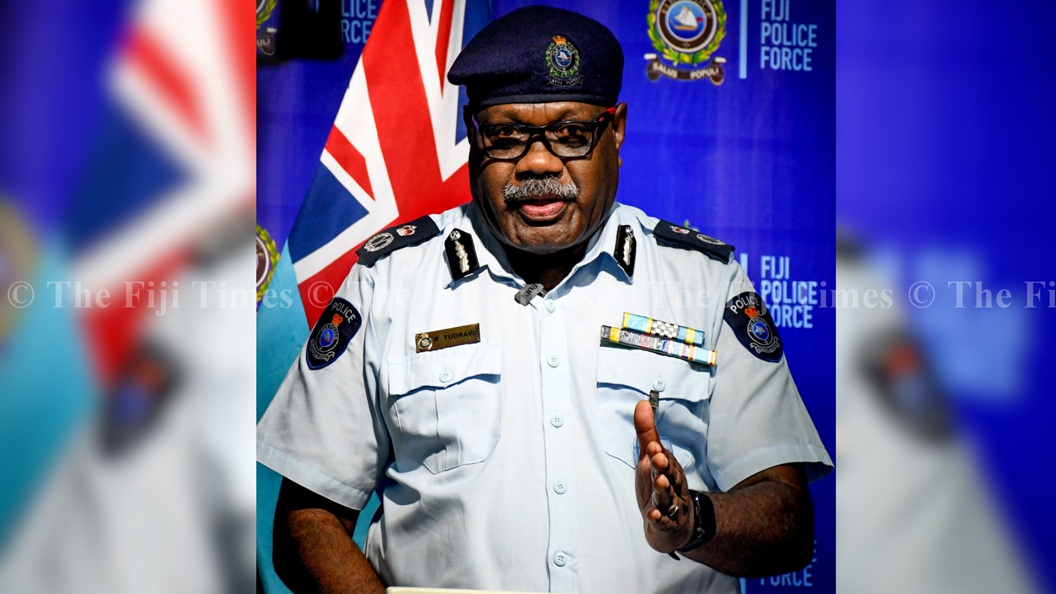
‘Drug alert in Lau’ (FT 10/06)- scary front-page headline! This shows how desperate people are to get drugs into our shores. Police Commissioner Rusiate Tudravu ordered the deployment of a team of officers with the support of the Fiji Navy to certain parts of the Lau Group following the discovery of more than 25 floating and washed-ashore packages suspected to be cocaine over the past few weeks. Just scary, man! Rajnesh Ishwar Lingam Nadawa, Nasinu
Standing up
Good to see that Kirti Patel (FT 10/06) has stood up to the PM for being indecisive and being a flip-flopper. We cannot say the same about the leader of her party. He seems to be kow-towing to the PM all along since the coalition was formed. He is still kow-towing even now when everyone expected him to hold the PM to account as part of the coalition. All the more reason that Kirti should be the new leader of the NFP. We need someone who can stand up and hold people accountable rather than those who are self-servers. Jan Nissar Sydney, Australia
Farming support
I read with great interest that Fiji’s visitor arrivals are set to hit the million mark in 2026, with earnings ranking in $2.81bn (FT 10/06). While this is interesting news, I wonder if Fiji can solely rely on the tourism dollar to stay afloat. The COVID-19 pandemic proved that tourism isn’t the most reliable industry and that we need to focus more on other industries. Fiji’s inane obsession with selling the sun, sand and sea catalogued advertisements to attract visitors needs to change. One industry that needs a good turnaround is agriculture. Agriculture has been the backbone of our country for ages; however, I wonder if farmers are given the necessary assistance they need to sustain their livelihoods. Fiji is blessed with abundant resources such as land, rivers and seas, and they must be utilised to cater for local demands. Farmers need to be assisted regularly to diversify their crops, venture into new farming grounds and support the local economy. Impending issues such as land leases, lack of agricultural support, high fertiliser costs and poor initiatives are driving these farmers towards other jobs. Avitesh D Kumar Ba
Economy loses steam
A man got sick. He went to a doctor who took his temperature and declared he was alright. But the man still felt sick. He went to a hospital and doctors conducted temperature test, X-ray, CT scans, MRIs, blood tests, etc. Similarly, when a country’s economy is losing steam, we have to check investment levels, interest rate, income of the people, wealth distribution, surging inflation, wage stagnation, rising unemployment (untrained school drop-outs), reduced spending, surge in charity demand (begging included), higher debt defaults etc. We’ve been experiencing all of the above or many of the symptoms for the past three and a half years (leave FijiFirst decade). The 2026-27 budget is near. Suddenly, alarm bells are being sounded. As usual our large sized Coalition Government will make excuses (oil price rise) and continue to spend even borrowed money extravagantly (more than $11billion debt).
Rakesh Chand Sharma Nadi
State of the economy
The recent State of the Fijian Economy dialogue at the Grand Pacific Hotel on June 9 raised serious concerns about the country’s economic direction. Leading economists and policy experts, including Mahendra Reddy, senior economist at USP and former Fiji First Minister, Nilesh Lal, Dialogue Fiji executive director, Richard Naidu, the Fiscal Review Committee chairman, representatives from the International Monetary Fund, and the World Bank, highlighted growing fiscal challenges facing Fiji. With national debt reportedly reaching $11.4 billion, economic growth slowing, inflation rising, and fiscal pressures deepening, there is increasing concern about the sustainability of government spending. Dialogue Fiji executive director Nilesh Lal pointed out the irony of asking ordinary citizens to tighten their belts while Fiji maintains the largest Cabinet in its history. Borrowing itself is not necessarily the problem; how borrowed funds are spent is what matters most. Public resources must be directed towards productive investments that generate economic growth, create jobs, and improve living standards. The concerns raised by respected economists and the speakers at the National Economic Dialogue should not be ignored. Fiji needs prudent fiscal management, greater accountability, and a clear long-term economic strategy to safeguard the future of our nation. Indar Deo Bisun Sakoca Height
Stinking drain
I thank Suresh Chand – LTE FT June 8, 2026 for his clarity in highlighting this open drain eye-sore and regular stench. This drain originates from the general Nadi Mortuary area and running through many town centres towards a side of the Nadi post office etc – under built up areas too. There is a major bone of contention who is responsible to maintain its cleanliness; environmental hygiene and serious breach of occupational healthy and safety minimum requirements. The bureaucracy and finger-pointing by all relevant authorities is mind-boggling. In the final analysis, all who come to Nadi suffer the embarrassment as Jetset Town. I have on numerous occasions raised this same issue. No official response has been forthcoming. Our responsible “township leaders” must, once and for all,” attend to this unsightly stench. Sincere and honest collaboration all responsible authorities concerned is not too hard. Common sense, pride, humility, dignity and responsibility need to prevail. Nothing else. Bureaucracy erodes all our civic pride, in my view. Grow up Nadi. Enhance our “beauty”. Ronnie Chang Martintar, Nadi
Paid for services
The chairman of the Fiscal Review Committee should know that people are not expected to repair potholes and carry out road markings on government roads. We’re paying Road User Levy and MVA Levy to LTA every year after getting Vehicle Test Sheet from LTA Agents. We also pay VAT and any other fees levied by the government like applying for water/ electricity meters, housing etc. Public hospitals are only used by people who cannot afford private doctors and hospitals. Rakesh Chand Sharma Nadi
Locked and loaded
I believe community members will be locked and loaded with questions to be answered by the three political parties that formed the current government in relation to their unfulfilled promises made during the last political campaign. AREKI DAWAI Suva
Selective letters
Has Rajend Naidu ever sent a letter like this to The Sydney Morning Herald? If he does, Australia must have solved all its problems by now. Avenai Serutabua Nabukelevu Village, Serua
Foreign workers
With the amount of street dwellers who are collecting bottles and cans to survive, it is time government stops those people from coming and the same jobs can be given to those living on the streets. At least our Fijian dollar will remain in our country and these homeless people will get jobs and they don’t have to live on the streets like beggars. Narayan Reddy Lautoka
Performance and results
Can we ask the Fiji Rugby Union and the new Flying Fijians coach Senirusi Seruvakula and his team to please concentrate on the highest level of physical fitness, skills, mental preparations, character, discipline, performance and results of our Flying Fijians. And in carrying out this huge responsibility for the team and our country we don’t need daily and regular media briefing and publicity for it. All we need is the outstanding efforts, and performance from our Flying Fijians team in this Northern Tour Rugby Championship 2026. The World Cup 2027 is another chapter. If we perform well in this tour, we will be in a better position to perform better in the World Cup. So, our priority is to perform to the highest level in this Northern Tour first. Toso Viti! Saverio Baleikanacea Delainavesi, Lami
Election and Aiyaz
Like a horse race
If you’ve ever watched a horse race, you’ll know there’s something captivating about the final stretch. As the finishing post draws near, jockeys begin positioning their horse for one last charge. The best riders understand the strengths and limitations of their mount and know precisely when to make their move. In many ways, Fiji’s approaching election resembles that final run to the finish line. The jockeying has already begun. Political parties are assembling their teams, refining their messages and preparing to launch campaigns designed to win the hearts and minds of voters. We’re also seeing high-profile personalities being courted and offered potential roles should a particular party form government. What’s visible to the public, however, is often only part of the story. Because behind the scenes, backroom conversations are taking place that most voters will never hear. Negotiations, alliances, promises and strategic deals are all part of the political process. Some arrangements may be entirely legitimate and aimed at building capable leadership teams. Others may raise questions about motives, loyalties and what commitments have been made away from public scrutiny. This isn’t unique to Fiji. It happens in democracies around the world. Politics, like horse racing, is often as much about positioning as it’s about performance. The challenge for voters is to look beyond the excitement of campaign launches, catchy slogans and headline-grabbing announcements in different media platforms. We should ask deeper questions: Who are the people seeking our trust? What values do they stand for? What’s their track record? And most importantly, will they serve the interests of the nation or the interests of those who helped them cross the finish line? As election day approaches, every party will be eager to present itself as the best choice for Fiji’s future. Yet the real winners should not be the politicians or the parties. The real winners should be the people of Fiji. After all, unlike a horse race, the prize at the end of this contest is not a trophy. It is the future of our nation. Colin Deoki Australia
Inviting Aiyaz
Aiyaz Sayed-Khaiyum was invited as a speaker at a panel discussion during the Fiji State of Economy Dialogue in Suva, where he was asked as Former Minister of Finance what he would do if he were Minister of Finance for a day. With all (un)due respect, there is a glaring irony in including Aiyaz Sayed-Khaiyum on any panel discussing Fiji’s state of economy. It’s like inviting the arsonist to the Fire Safety seminar. As Minister for Economy (a portfolio name he created) from 2014 to 2022 under the Bainimarama military government and a key power broker from the 2006 coup onwards, he presided over the very fiscal trajectory now under scrutiny. I believe the Fiji Government debt-to-GDP ratio reached 87.3% by 2022, against a world average of roughly 60% – a historic peak on his watch. By his own government’s pre-election update, domestic debt alone stood at approximately $5.8 billion. Platforming him as an economic commentator rather than as a subject of accountability, I believe, reframes culpability as expertise. It normalises the architects of a crisis as its analysts. Any credible state of economy discussion must first ask – not invite Sayed-Khaiyum to account for how Fiji arrived here. Tavai Bale Suva

