
Value of labour
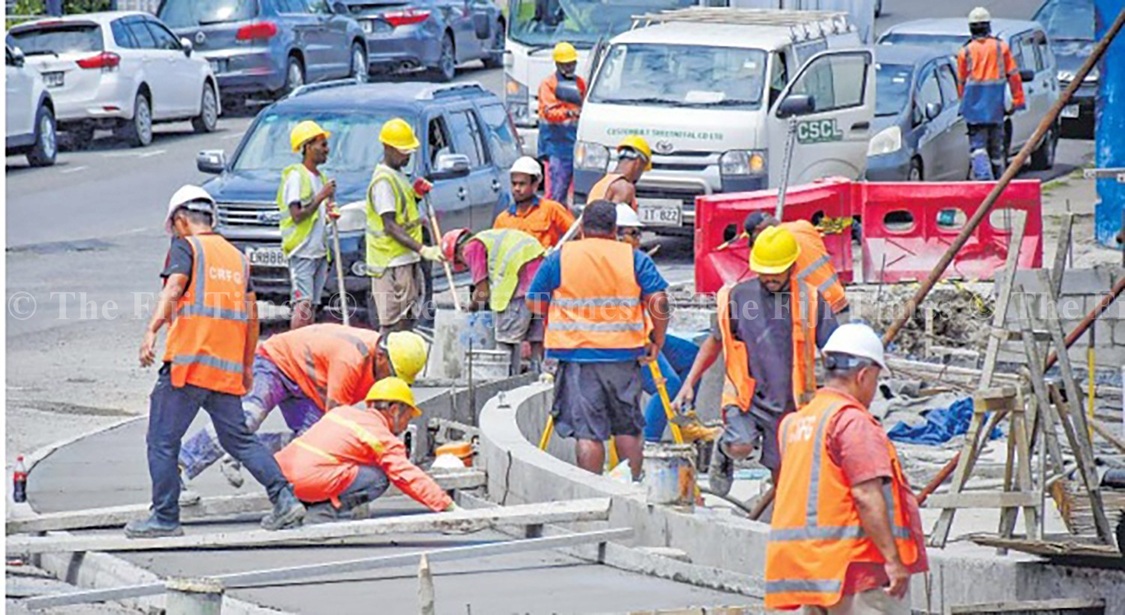
I have read certain views in the media on how the country should address the rising oil prices situation, one of which was to reduce wages of workers. This is indeed so irrational that it should not be even considered. The truth is that as the cost of oil and goods increase, so does the value and cost of labour. The point is that the wages should continue to be pegged against the cost of living. Hence, when cost of living rises, so should the wages of workers; and by reflecting that same percentage of increase in the cost of living. It consequently makes sense that if employers cannot match the rise in oil and prices of goods, all that they need to do and which to me, is the most legitimate way, is to cut the current working days by one or even two days. This will also save in a big way, the administrative costs of one day. For example, if the Government Building and the Reserve Bank with its 15 levels building are closed for one day in the week or even two days, the cost of electricity, water and internet which will be saved will be quite substantial. May I conclude by stating that it is time employers show due recognition to the value of labour. Without labour/workers, no trade can take place as no goods can be made nor services delivered. Investors can have all the money in the world; but without labour no investor can make a single cent. SUSANA TUISAWAU Wainivula Rd, Nasinu
No pay cuts, says PM
Prime Minister Sitiveni Rabuka’s recent assurance that there will be no pay cuts to civil service has come as welcome news and a great relief to thousands of civil servants and their families throughout Fiji. The civil service remains one of the largest employers in the country, and any reduction in pays or salaries would have had far-reaching consequences beyond the public sector. Civil servants form a significant part of Fiji’s workforce, and their earnings support not only their immediate families, but also countless businesses and communities across the nation. Had there been salary reductions, the effects would have been felt throughout the economy. Consumer spending would have declined, cash flow within communities would have weakened, and many small businesses would have suffered from reduced customer purchasing power. From local market vendors and shop owners to transport operators and service providers, many depend on the spending capacity of public servants to sustain their livelihoods. Furthermore, any move by the Government to cut salaries or wages could have set an undesirable precedent for the private sector. Some private and corporate organisations may have used such a decision as justification to implement similar measures, arguing that if the Government itself was unable to maintain employment levels, then businesses facing economic pressures would be compelled to do the same. This could have triggered wider job insecurity and uncertainty across the country. At a time when families are already grappling with rising fuel costs and living costs, maintaining employment stability is crucial. The Government’s commitment to protecting civil service demonstrates an understanding of the important role public servants play in national development and economic stability. Teachers, nurses, police officers, administrative staff, agricultural officers, and many others provide essential services that keep the nation functioning effectively. While fiscal responsibility remains important, protecting employment should continue to be a priority. A stable workforce contributes to a stable economy, stronger communities, and greater public confidence in the future. The Prime Minister’s assurance has provided comfort to many families who were concerned about their livelihoods. It is hoped that the Government will continue to pursue policies that promote economic growth, job creation, and financial security for all Fijians. INDAR DEO BISUN Sakoca Heights
Address the shortfalls
The Nadi Back Rd plays a crucial role in the daily lives of the community. Not only does it serve the needs of the locals, but it also facilitates the smooth movement of travellers, including tourists, to and from the airport on a daily basis. This road’s development is, without a doubt, an important step forward in easing the traffic burden that would otherwise rely solely on Queens Rd. With that said, it is important to highlight some pressing issues that need immediate attention. First and foremost, I urge the authorities to address the lack of critical safety features, which have been missing since the road’s inception. For instance, there are currently no barriers along the stretch to protect motorists from falling into the deep drains that run alongside the road. Installing such barriers is not just about infrastructure, it is an essential step in promoting safety and potentially saving lives. The Nadi and Sigatoka highway can serve as a good example in this regard. Another significant concern is the inadequate width of the road. At present, the road is too narrow for two-way traffic to flow smoothly, especially when large vehicles are involved. It’s clear that covering the drains to widen the road would go a long way in addressing this issue and ensuring a safer and more efficient driving experience. Lastly, it’s worth noting that there are no streetlights along this road, which makes nighttime driving particularly unsafe. The absence of proper lighting increases the risks for both motorists and pedestrians during dark hours. By installing streetlights, the overall safety and usability of the road could be greatly improved. In conclusion, while this road is undoubtedly a vital artery for the region, there is an urgent need to address these gaps. With proper attention to safety features, road width, and lighting, the Nadi Back Rd can truly fulfill its potential as a safe and efficient route for all who use it. SURESH CHAND Nadi
Political bias
I admit I have my political bias. Will Avenai Serutabua admit his own (FT 9/6 ) like being a sychophantic supporter of the NFP and its political leaders? My political bias is against bad governance of the kind where people get into positions of political leadership and use their position to amass their personal wealth and for self-aggrandisement. Trump in America, the rogue dictators in Africa, Asia and the corrupt leaders in Latin America along with those closer to home in the Pacific come readily to mind. I make no apology for my political bias. I have never had an affiliation to any political party. RAJEND NAIDU Sydney, NSW, Australia
Council elections
The most important people in any town or city are the ratepayers and those who pay business licences. The ratepayers have been let down big time by differing the elections. Well it is the ratepayers who suffer the most by the decisions of the administrators installed by the past and present governments. SUKHA SINGH Labasa
Vuda project
I totally respect your opinion Mr Prime Minister regarding the rejection of the environmental impact assessment report for the Vuda Waste-to-Energy project, but I also stand for the need to build another waste facility. Like it or not, this project is much more crucial than you think. Hopefully, this process will not be delayed much longer. You have my full support TNG. Keep up the good work! KELEPI DAKUIYACO Navua
The difference
Has Inia Seruiratu told anyone the major difference between his new party and his old one? And how on earth he was unsuccessful in making his old party like his new one? MOHAMMED IMRAZ JANIF Natabua, Lautoka
Kava positive
This cold weather is not funny, even people who don’t drink Kava are getting dry skin. By the way, if you see cracks appearing on your body it means you are kava positive. Kaila! NAVNEET RAM (TD) Lautoka
Seabed mining
I applaud The Fiji Times report “Imminent” deep seabed mining concern ( FT 9/6 ) raised by Dr Claire Slatter. She is a dedicated campaigner for good governance in this space. State parties in our region must take heed of the concerns articulated by Dr Slatter to protect the integrity of our oceans and marine environment and indeed the planet from the ravages of capitalist deep seabed mining. RAJEND NAIDU Sydney, NSW, Australia
Soccer, decision, barracks
Millions in soccer
New Zealand Football is guaranteed to pocket at least $US10million ($F22.179million) by qualifying for the World Cup and the 26 squad players will get 40 per cent of any prize money earned throughout the tournament. That led me to think about the massive windfall Fiji Football Association would have enjoyed had Fiji qualified. That further led me to think, with the way our soccer and its administration have been run for a few decades, we are better off outside. That $22.179million would have driven the current Fiji soccer head honchos nuts. Our players would have received $50 each, OK, that’s a bit harsh. Maybe $100. Let’s qualify for the 2030 episode. The money is going up again. Watch out NZ, and possibly the South Americans, for the repechage matches. DONALD SINGH Nausori
Indecisive decisions
I’m losing count of how many times our PM’s utterance has changed. Either through public outrage or change in circumstances. Maybe he should not be that quick to give his thoughts just in the blink of an eye That is in good faith sir. Think well before you speak. Right now our country depends on your decisions. We have gone backwards, forward and in circles way too many times. When you talk about cutting civil servants pay, you touch the soft nerve. We should explore all avenues first before coming up with such important decisions. It is a good thing that their pay is intact. Hope for more sensible solutions coming forward. Thanks for giving us the “freedom of speech” KIRTI PATEL Lautoka
Police barracks
“General maintenance works on government quarters in Nabouwalu, Bua, have been delayed” (FT 5/6). May I ask, what’s happening to the Police Barracks in Levuka, Ovalau? One double storey row containing 4 micro-apartments/live-in quarters was destroyed by fire more than 10 years ago and another double storey row, also comprising 4 micro apartments/live-in quarters, has been condemned “unfit for habitation” due to its dilapidated state. The previous government, including the current one, had/has turned a blind eye to such. Sheer pathetic negligence, to a necessity, that plays a part in ensuring the maintenance of public safety and peace. Most Levuka Police officers reside out of town, inconveniently scattered out in various locations away from the main station, with some residing approximately more than 3km away. Centralisation is key, to guaranteeing a rapid response for back-up personnel, should an emergency situation arise. How soon will maintenance works start on the barracks? Levuka has been neglected for too long. Can the relevant authorities confirm? ANTHONY SAHAI Levuka, Ovalau

