WAF must fix own leaks first
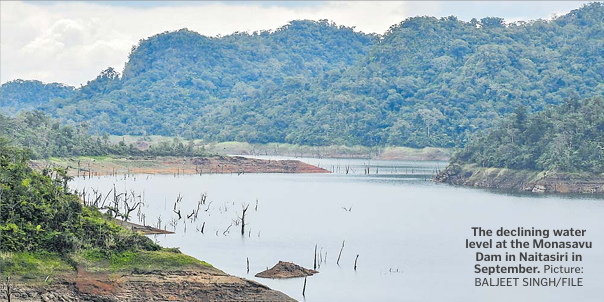
While the Public Works Minister’s announcement that 19 out of 44 water sources are at critical levels is alarming, the Government’s response places far too much blame on the public. We are urged to stop washing cars, driveways, and watering gardens, yet the biggest culprit of water wastage in Fiji is the Water Authority of Fiji (WAF) itself. It is hard to swallow pleas for citizen conservation when thousands of liters of treated water flow down our roads daily from broken mains and leaking pipes that go unattended for days, if not weeks and sometimes months. How can WAF demand that households fix a dripping tap when their own major distribution lines are bleeding water across the country? This structural negligence is a massive waste of a precious resource, especially now as the El Niño drought worsens. The proposed $10.46 million special operations budget should not just be spent on the temporary band-aid of water carting trucks – contractor’s pocket. A significant portion of this funding must be directed toward an aggressive, round-the-clock repair campaign to seal WAF’s leaking pipes. The minister noted that the critical Vaturu Dam is dropping by 5.3 centimeters a day and could hit its critical threshold in less than a week. How much of that daily drop is actually reaching household taps, and how much is leaking into the ground? We will gladly do our part to conserve, but WAF must lead by example. Stop policing our garden hoses and start repairing your own leaking lines.
Radhikash Kapoor
Tacirua
Water sources
The minister has declared that Fiji’s water sources could be critical by January 2027, due to dry weather outlook (FT 3/11/26). Does it sound familiar? In fact, we have been hearing and reading similar “explanations”, within the past 30 years. The El Nino and whatnot syndrome. And all that we heard in Parliament were issues and I am certain, no solution was ever introduced or implemented accordingly, to resolve its continuation. Where were all the “government hired experts” who were brought in as overseers? Just look at all of Fiji’s eight major systems of surface water sources. Have any of them been dried up? Singapore or Israel would be so blessed to possess such, in my opinion. However, I believe that it is not about the water sources, but how they need to be “maximized”, to cater for the dry spells. It has been over 56 years of independence, have we not learned anything yet? Because of ignorance and negligence, I believe, we are losing the most precious value – life.
Samu Silatolu
Nakasi
Car show
THE recent total destruction by fi re caused by “two step battle” in Saturday night car show. Too many “show off drivers and fancy vehicles” on our roads these days. So many modifications. Are they legal? Do they meet LTA approvals? Is LTA losing effective control? There is so much noise pollution from such vehicles on our roads. LTA must step up all efforts to rid our roads of such vehicles. On a recent early morning travel to Pacific Harbour to attend a funeral service, we came across many vehicles with extra lights — some were almost blinding. Why are such supplementary lights allowed as imports if they are deemed “illegal and unsafe?”
RONNIE CHANG
Nadi
More than a horse race
MILLIONS of Australians paused what they were doing to watch just over three minutes of horse racing. The annual Melbourne Cup, held at Melbourne’s Flemington Racecourse on the first Tuesday of November, is affectionately known as “the race that stops a nation”. The Melbourne Cup began in 1861. The race is run over 3200 meters (two miles) and is regarded as the richest handicap horse race in the world. The money comes from a combination of sponsor ship, broadcasting rights, race club revenues, wagering-related income, and commercial partnerships. Is it the biggest horse race on the planet? That largely depends on how “biggest” is measured. Other races such as the Saudi Cup and the Dubai World Cup offer larger purses However, few horse races carnival the Melbourne Cup’s combination of history, cultural significance, public engagement, and international recognition. The Melbourne Cup is also much more than a race. It is the center piece of a four-day racing carnival featuring fashion competitions, hospitality events, corporate functions, tourism activities, entertainment programs, and significant media coverage. In terms of audience, the Melbourne Cup remains among Australia’s most watched sporting occasions. It has often been described as Australia’s most watched three minutes of television each year, drawing millions of viewers domestically while also attracting substantial international audiences.
SHIV RAM
Suva
Think of our pets
DIWALI is a time of joy, light and celebration. However, as we enjoy fireworks, we must remember the impact of loud explosions on animals and pets. Dogs, cats and other animals have highly sensitive hearing. Sudden loud bangs can cause fear, anxiety, panic and even lead pets to run away or injure themselves. While everyone has the right to celebrate, we also have a responsibility to protect the welfare of animals. Let us be mindful of excessive noise, the timing of fireworks and the distress they may cause. Celebrate Diwali with happiness but let compassion be part of the celebration too. Our enjoyment should not come at the expense of innocent animals who cannot speak for themselves.
SHAMAL CHAND
Kuku Village, Nausori
Butako
THOSE coconut trees at My Suva Park along Queen Elizabeth Drive have been providing a regular source of income for many green coconut (bu) sellers around the city. Having witnessed the harvesting, bag filling and then the same sellers at their selling base minutes later, I realised that we should plant more coconut trees in public parks. Easy money. Climb and pick, no need to plant your own. Bu, moli, and all. Butako apparently pays.
DONALD SINGH
Nausori
Interesting
read
ABRAHAM Lincoln (1858, Republican State Convention) said: “A house divided against itself cannot stand.”
SURESH CHAND
Nadi
Melbourne Cup
THE 2026 Melbourne Cup, the race that stops a nation and the world, took place at the Flemington Racecourse in Melbourne yesterday. The race featured a strong and competitive field of horses vying for the prestigious prize, making it one of the richest horseraces in history. Hopewell Rock, Point of Law, Trust your instinct and Juja Kibo were poised to take out the race. Last year, Half Yours beat Goodie Tow Shoes, Middle Earth and River of Stars to claim victory. In 2024, Knight’s Choice claimed top honors, beating Warp Speed and taking the coveted $8m prizemoney. Knight’s Choice joined Without a Fight (2023), Gold Trip (2021), Verry Elegant (2021), Twilight Payment (2020) and Vow and Declare (2019), to go into history books. Fans all over enjoyed the race with much fun and flair!
RAJNESH ISHWAR LINGAM
Nadawa, Nasinu
Physical
discipline
IT is common knowledge that classroom behavior has deteriorated since the abolition of corporal punishment. It is inevitable that bad classroom behaviors have filtered into life outside school. The no smacking rule is turning some children into little monsters. They need a hiding. Sobo!
WISE MUAVONO
Balawa, Lautoka
Email
address
I WOULD like to know if the Government has any fuel mitigation money left. As for the constitution review, why doesn’t the Government provide an email address where every Tom, Dick and Harry can send their submissions.
SUKHA SINGH
Labasa
FNPF
facts
THE Fiji Times’ opinion on FNPF, amnesia and use of selective analysis with facts and figures by Professor Wadan Narsey (FT25/10) will continue for those pensioners who have not been paid their dues yet, lest it’s too late. Retirement is not the end of the road. It’s the beginning of an open highway. Vinaka! FNPF for securing our future.
TAHIR ALI
Hamilton, New Zealand
Protect
journalists!
OUR brave and bold editor-in chief delivered a timely call as he spoke at the Breakfast Dialogue on Journalists Safety and Media Freedom in the Pacific at the Tanoa Plaza in Suva. Fred Wesley made a bold call protect journalists. I salute Wesley for his call, and I agree with him that stronger newsroom safety measures, digital security, legal support and trauma counselling are vital in a bid to protect journalists in Fiji and the Pacific from growing threats and intimidation. Wesley shared some scary experiences and intimidation that his staff went through. Apart from physical confrontation, online bullying and cyber-attacks must be addressed. Wesley concluded with a strong statement that protecting journalists required more than condemning attacks as a practical support system was vital to ensure media workers performed their duties safely and independently. Some valid points raised by Wesley, who has seen the bright and dark days in his capacity as the editor-in chief of The Fiji Times!
RAJNESH ISHWAR LINGAM
Nadawa, Nasinu
A future HIV generation
THE skyrocketing rates of drug abuse and HIV infections in Fiji have officially moved past alarming they are now an existential threat to our nation. If we continue to sleep on this crisis, our future will be a generation living with HIV, and our identity as a small island nation will be wiped from the global stage. We must target the root of this crisis: poor decision-making among our youth. Despite knowing the devastating health and economic impacts, many are still choosing drugs and inviting HIV into their lives. This points to a severe breakdown in moral and ethical guidance. We need a united front; the Government, the vanua, and our religious bodies must work hand-in-hand to restore these values. The Ministry of Youth and Sports must step up and lead regular, ongoing community visitations not just one-off workshops. We need knowledgeable, raw, and talented speakers who can deliver hard-hitting awareness straight to the core of our youth. HIV is a matter of life and death; it is not a subject for jokes or lightheartedness. Furthermore, the Government must start tracking behavioral statistics around large public gatherings. Events like village soli, birth days, and community days bring crowds together, and where there are crowds, our youth become highly vulnerable to peer pressure, drug distribution, and risky behavior. The more people gather without strict boundary lines, the more vulned able we become. We must fight this battle with absolute seriousness today or bury our future tomorrow.
PAULA KALOUKOCEI
Levuka, Ovalau
A chair for
cashiers
I AM writing to raise a concern that many of us see daily but often ignore the plight of cashiers in our supermarkets who are forced to stand for eight to 10 hours a day while serving customers. In almost every supermarket, I have noticed that cashiers most of whom are young women have to stand continuously from morning till evening. They have no chair, no stool, and no chance to sit even for a few minutes. They must scan items, pack, collect cash, and still stand. Standing for such long hours is not only tiring but is a serious health risk. It causes severe backpain, leg pain, swelling of feet, and long-term problems with joints and varicose veins. It also affects women more, especially during pregnancy. Is it humane to make someone stand like a machine the whole day? In many other countries, cashiers are provided with high stools or chairs so they can sit while working. Their work quality does not decrease. In fact, a comfortable worker serves customers better with a smile. Therefore, I would like to make a humble request through the newspaper to all supermarket owners and management – please provide suitable seats or high stools to your cashiers. Our cashiers are also human beings. They deserve dignity and care at their workplace. A simple chair can make a huge difference to their health and morale. I hope the concerned authorities and supermarket management will take immediate action.
YASHNEEL KUMAR
Vakabuli, Lautoka