
Addressing AIDS
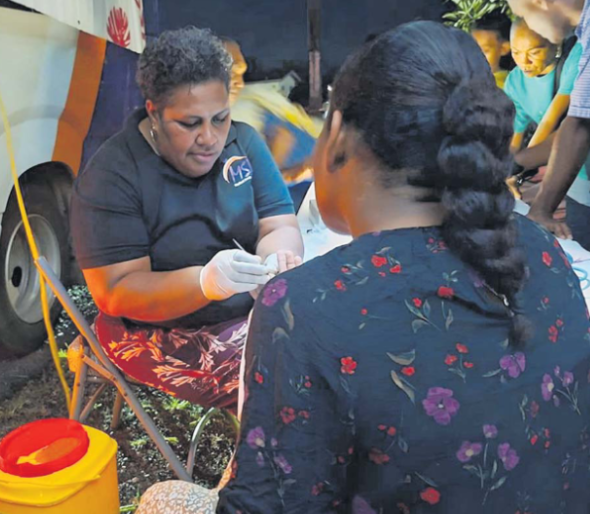
HIV is the virus responsible for the infection, while AIDS is the advanced stage that occurs when the virus is left untreated.
Thankfully, medical advancements now offer various treatments that enable individuals with HIV to live long, healthy, and fulfilling lives without progressing to AIDS.
Understanding this difference can help reduce unnecessary panic and encourage early diagnosis.
To address the increasing number of cases, both government and local communities must adopt a proactive and practical approach:
- Grassroots Awareness and Comprehensive School Curricula: The government should spearhead extensive awareness campaigns at both village and town levels. Importantly, sexual health education should be integrated into middle and high school curricula without hesitation or shame. Education is our first line of defence, and young people need to know how the virus spreads and the importance of barrier methods, particularly condoms, in prevention.
- Encouraging Personal Responsibility: It’s vital to have open discussions about personal freedom. While individuals enjoy sexual autonomy, it should always be accompanied by caution, as freedom without precaution can be dangerous. Awareness programs should highlight other significant transmission routes, such as sharing contaminated needles among drug users and mother-to-child transmission during pregnancy or childbirth.
- Addressing Social Stigma and Discrimination: A major obstacle in battling this issue is the severe social stigma attached to the virus and those affected by it. People with HIV are often marginalised or treated as “untouchables”, and this fear of public shame can lead individuals to hide their status, avoiding tests or life-saving treatments. Illness is a health matter, not a moral failing. We must replace judgment with empathy and isolation with community support. It’s time to stop ignoring this issue due to embarrassment or outdated taboos.
The Government should take the lead with grassroots initiatives, educational institutions must openly teach the facts, and society should treat affected individuals with dignity and compassion.
Suresh Chand Nadi
General election
According to the Constitution, the upcoming General Elections (GE) cannot really be held on December 2 anyway, or on any other date that is within six months before our Parliament’s four-year term expires.
The term actually expires on December 24, 2026.
Upon this expiration, the GE can then be held within 51 days from that date (24th).
No later, or no earlier!
Edward Blakelock Pacific Harbour
It’s Deans Final
Last week I said I was praying for both Ra High School and Lelean to make the finals, but unfortunately, the win was not on Ra High School’s side. Congratulations to Lelean and Suva Grammar for making the finals.
And while everyone is talking about Deans, who else is following the Eastern State Rugby League competition held every Saturday?
Boy, I tell you, the boys from our yasayasa in Serua are doing much better this year.
The competition has been good, and our teams are really showing improvement.
All the very best to our Serua teams competing in the 9 rounds today: Serua Dragons, Vatunilumi Magpies, Burenitu Roosters and Vusu Raiders.
All the best, boys.
Avenai Serutabua Nabukelevu Village, Serua
Fans brace for a wet Deans final!
The gates to this year’s Deans U18 final will be opened by QVS and Ratu Navula when they face off in the U14 final. RKS will then face Marist in the U15 final, followed by the Raluve U16 final between Nasinu and St Vincent.
After that, the Suva Grammar U16 and 17 sides will battle the two Tailevu giants — QVS and RKS.
Northern giants, Navatu Secondary, playing their first final in the U19 grade, will face Lelean.
It will be redemption time for Ra High and Nasinu when they play for third spot in the U18 grade.
Southern zone champions, Lomary, will aim to maintain their winning run against MGM High when the two sides clash in the Raluve U18 final, followed by the big one around 6pm between Southern zone champions, Suva Grammar and Eastern zone champions, Lelean.
Grammar will aim to end a 21-year-old drought, while Lelean is out to recapture lost glory after 12 long years. Grammar last shared the Deans U19 trophy in 2005 with RKS after both sides battled to a 19-all draw.
The Lions have never won the Deans trophy in the U18 grade. Lelean last won the Deans title in the U18 grade in 2014, beating RKS 13-8 at Churchill Park.
Expect a sell-out crowd, baptism of fire and passionate fans walking through the crowd, cheering for their schools. A considerable amount of money, time and energy have been spent preparing for the finals. Every player has a dream — to win the trophy. No player wants to settle second best. Hence, morale support must be provided to the players, especially those who finish as runners-up.
All the best to the players, officials, well-wishers and supporters! May the best prepared teams win and let good sportsmanship prevail.
Rajesh Ishwar Lingam, Nadawa, Nasinu
River pollution
I have been told that the Qawa River has been polluted and it has affected the marine life, nobody can pinpoint where the pollutants came from.
We have a big sawmill, we have the EFL powerhouse, and FSC sugar mill outlets all going into this river, it is the Environment Ministry’s job to find out and fine or stop this discharge from taking place again.
Sukha Singh Labasa
Oil shock
The Fiji Times editorial comment “Oil shock should drive Fiji, energy reform”(FT 10/8) has not only shocked Fiji but the entire world.
Our life depends on how we use fuel to survive.
Choose according to your needs and wants.
Let’s take the challenges to take traditional ways of living, transporting and cooking in this crisis.
Adjust your cost of living.
Tahir Ali Hamilton, New Zealand
Fatal accident
The school holidays are upon us and just like that we have recorded fatal and motor vehicle accidents on our roads.
To make it worse, the victims are our children who are still in primary school.
While the relevant stakeholders have done their best to advocate on road safety every now and then, it seems awareness is not sinking into the wider public.
We still notice carelessness and no care attitude on our roads.
Our children are vulnerable and they tend to forget road safety guidelines whilst using our roads.
I believe we as adults either as parents or drivers should at all times be mindful when allowing our children to move from point A to point B, especially when using our roads.
Juki Fong Chew Nadawa, Nasinu
Chinese language
At this important time when our country is dealing with so many issues, the Education Minister again wakes up one morning to state that Chinese language should be implemented in learning institutes.
Can the Education Minister please get his priorities right?
There already is enough on the plate of education at this stage. Please sort those issues out first.
Kirti Patel Lautoka
Church and yaqona
Methodist Church president Reverend Dr Semisi Turagavou has raised concerns about church ministers and pastors consuming excessive amounts of yaqona and smoking, warning that some members are leaving the church because they no longer see the spiritual leadership they expect.
And frankly, who in their right mind would feel inspired listening to sermons from preachers appearing exhausted, with bloodshot-eyes and heavily affected by yaqona?
There were concerns raised several years ago about banning yaqona consumption in churches, but judging by what continues to happen, that initiative appears to have had little lasting impact.
The luva ni tai, taking off the necktie and immediately “belting” grog after church services remains an unfortunate and rather pointless practice in some circles.
Perhaps the Methodist Church leadership should also seek the wisdom of that preacher who recently visited a school in Lautoka and apparently decided which students were destined for heaven based on their religious affiliations.
If he possesses such extraordinary, almost God-like insight into people’s futures, surely he could also enlighten local church ministers about the harmful effects of excessive yaqona consumption and smoking.
I am sure they will heed his advice. But seriously, the church cannot expect to retain its moral authority while some of its own spiritual leaders appear to be contradicting the very values they preach. Leadership begins with setting examples.
Nishant Singh Lautoka
Pacific Harbour golf course
I understand that Speedy Hero Development Pte Ltd, a PNG based company associated with The Pearl Hotel & Spa has applied for permission to develop a part of the Pacific Harbour Golf Course, and that the application #SL20131 has been approved, subject to clause 16 of that approval.
This approval to build 61 housing units on what is now 2 holes of golf course will destroy those sections and will be a foot in the door for further development because it should be obvious to all concerned that a 17-hole golf course would be preposterous – golf is played on 18 or 9 holes – end of story.
Therefore, should the development go ahead, 17 more holes of the golf course will be similarly taken for development which will prove unsupportable. At Pacific Harbour we already have power, water and sewage problems; services that have struggled for years and that cannot keep up with present development, let alone 61 new houses.
A major problem is the water required for building projects, cement mixing, tiling etc. Further problems arise when building workmen live on site — they require water too — and the pit toilets they will dig will be far from hygienic and eco-friendly because the area planned for development is close beside the Qaranqio River and without doubt the pit toilet refuse will leach into that river causing further pollution.
The proposed development is to be built on land raised to prevent flooding – from where will the landfill come? Will it be taken from our beautiful hills that support a diverse bird-life and add greatly to our varied landscape? Probably it will, because our hills are easily accessible and developers are chasing money rather than considering ecological environments and birdlife.
We residents of Pacific Harbour are angry that our area is constantly being degraded. Garbage dumps have been created and building waste has been dumped on vacant lots — to say nothing of the fact that homes currently built across from the golf course and river will lose their view and hence their value.
Might I also point out that a 61 dwelling gated community is an insult to the rest of us who reside in Pacific Harbour? It is discriminatory in the extreme, and would create an elite community within a community, which is divisive and disregards the fact that our community has been in existence since 1972. A gated community would also reduce the value of those homes outside of it, since a ‘gated community’ will undoubtedly be considered more exclusive, thereby downgrading the rest of Pacific Harbour. Furthermore, there is an abundance of freehold land available for building at Pacific Harbour – despite the difficulties with water, power and sewage caused by such development; and the erecting of 61 new dwellings almost simultaneously will certainly exacerbate that situation.
Finally – if this proposed gated community goes ahead without due process a precedent will have been set and due process will be ignored in future.
Sue Cauty Pacific Harbour
Lelean’s 3-in-a-row Deans win!
A 12-year-old drought awaits Lelean Memorial School who once was a powerhouse in secondary school’s rugby competition.
History tells rugby lovers that Lelean won their first Deans title, which was competed back then in the U19 grade, in 1944. Lelean then walked away with the Deans trophy in 1948, 1950, 1951, 1952 and 1954 (Lelean and QVS shared the spoils), 1955, 1958, 1960, 1972 (Lelean and Marist shared the spoils), 1979, 1994, 2000, 2004 (Lelean and QVS shared the spoils), 2006, 2008, 2009, 2010 and 2014 when they last tasted victory, defeating RKS 13-8 at Churchill Park.
The boys, led by Eroni Mawi, played their hearts out and for every Lelean supporter. The hat-trick (2008 to 2010) was special. Tears were shed when Lelean completed the treble.
However, since 2014, ardent Lelean fans and passionate old scholars have been waiting in agony to celebrate winning the prestigious Deans title. They have been denied that special moment, and I’m sure they’ll be praying quietly for a miracle under the heavy footing at the HFC Bank Stadium.
In 2008, the Master Tawake-coached Lelean U19 outfit beat RKS 20-8. The side was captained by Levani Ditoka and had the likes of Josefa Vuniyaya Levula, Manasa Saulo and Jovilisi Qaniuci, who stood out as number 12. The team bonding was great, and it resulted in a sweet win.
The following year, Lelean beat Nasinu Secondary 30-8 in a brutal encounter. Metuisela Talebula starred for the champions, walking away with the Player of the Match award. Nasinu had the services of Marika Koroibete and Virimi Vakatawa, who went on to make headlines in international rugby league and then 15s for the Wallabies and Les Bleus (France).
Lelean completed the treble in 2010, which was the final year that the Deans title would be played in the U19 grade. Lelean stamped their mark as the last winner of the Deans trophy in the U19 grade, defeating RKS 36-18. The chief guest was RKS old scholar Sitiveni Sivivatu.
In 2011, the Deans trophy was contested in the U18 grade and QVS beat Ratu Navula College 19-13 to become the first team to win the U18 Deans trophy.
This history is vital as Lelean prepares to face Suva Grammar!
Rajnesh Ishwar Lingam Nadawa, Nasinu
Streetlight maintenance
As a resident and regular driver, I would like to highlight the ongoing issue of streetlight functionality along the Airport/Nadi Bridge stretch.
It is apparent from frequent observations that many streetlights on this route are not operating effectively due to inadequate maintenance.
Several lights have been out of order for a considerable time, while others offer minimal illumination or are entirely obstructed by overgrown trees.
The section between Nadi Plaza and McDonald’s is particularly problematic, with many trees urgently needing pruning to enhance the lights’ effectiveness. Without clearing these branches, the streetlights remain virtually useless.
This persistent problem presents serious safety risks for all road users, including tourists.
The installation of streetlights on this significant route is justified, given that it serves as a primary pathway for transporting tourists to and from the airport daily.
Proper maintenance of this infrastructure is crucial for road safety and supporting the tourism industry.
Poorly maintained streetlights on dimly lit roads significantly increase the risk of accidents involving both motorists and pedestrians, particularly at night.
I urge the relevant authorities, especially the FRA, to prioritise this matter by repairing and replacing faulty streetlights and trimming obstructive tree branches.
Establishing a regular maintenance check system would also help prevent such issues from recurring.
Please address this concern promptly to ensure continued safety and security for everyone using this route.
Thank you for your attention to this important issue.
To further enhance road safety, consider implementing additional measures such as reflective road markings and speed limit signs to improve visibility and encourage cautious driving behaviour.
Suresh Chand Nadi
Felix is right
Felix Anthony is right. I believe the Government’s refusal to implement a living wage is not about economics — it is about priorities. When Parliament convened in a midnight session in May 2024, MPs awarded themselves a staggering 138 per cent salary increase. Ordinary MPs leapt from $50,000 to $100,000, Ministers to $200,000, the Speaker to $200,000, and the Prime Minister to $320,000. This was pushed through by the Special Committee on Emoluments chaired by Lynda Tabuya, despite public outrage.
That same leadership now claims that $8 an hour for workers is “unsustainable”. The hypocrisy is breathtaking. It was perfectly “sustainable” to double their own salaries in the dead of night, but impossible to lift workers out of poverty in broad daylight.
When the symbolic 20 per cent pay cut came to a vote in 2026, Opposition Leader Inia Seruiratu moved an amendment to make it a 50 per cent reduction. Government MPs defeated it, exposing their true colours. Even after the short–lived three–month cut, MPs still earned $76,000, Ministers $160,000, and the Prime Minister $256,000. Meanwhile, workers scrape by on $5 an hour, with no social safety nets to cushion them.
The Prime Minister remains firmly pro–business. He reduced the FNPF levy that employers must contribute to workers’ retirement accounts, weakening the only savings lifeline for ordinary families. He dismissed the sugar industry — the backbone of rural livelihoods — as a “cow that does not give milk,” signalling that its use–by date was over. These are not the sentiments of a people’s government. They are the sentiments of a government that sees eye–to–eye only with business elites, not with workers or exploited farmers.
Compare this to New Zealand, where the minimum wage is $F31.16, and Australia, where it is $F41.25. Yes, costs are higher there, but they also have unemployment benefits, housing support, and healthcare.
Fiji has none of these protections. Our only safety net is the wage itself — and it is full of holes.
The Government has signed onto the Sustainable Development Goals — SDG 1 (poverty eradication) and SDG 8 (decent work). These are not slogans for speeches; they are obligations. To dismiss a living wage is to dismiss Fiji’s commitments to its people and the world.
The truth is clear: if Parliament could find the money to raise its own salaries by 138 per cent, it can find the money to raise the minimum wage to $8.
I believe anything less is a betrayal of the workers who keep this nation alive.
Dr Sushil K. Sharma Lautoka
Turning farm labour into opportunity!
“I would like to encourage women, who are at home, to always assist your husband if he farms. We can earn a lot if we help each other out in toiling the land.”
These powerful words were shared by Konisalote Rakai, whose inspirational story (FT 21/08) was shared by Ana Madigibuli via the People column.
Through her hard work and determination, Rakai was able to serve her customers at Vatureba Park for the Navosa Youth Festival.
The 43-year-old farmer from Nakuilau Village in Darubuta, Navosa, is an epitome of women who bear challenges but go out of their way to support their family.
Rakai and her husband believe in perseverance and partnership for the success of their family.
They are role models for other couples.
The Peoples column continues to inspire and motivate our readers to success. Good on you, The Fiji Times!
Rajnesh Ishwar Lingam Nadawa, Nasinu
Bhawani Dayal College
Bhawani Dayal Arya College at Nakasi 9 miles was established in 1972 and was known as Bhawani Dayal High School. It was located in a temporary shed with 28 students and two teachers. The controlling authority is Arya Pratinidhi Sabha of Fiji: religious cum socio-educational organisation. Today the college has 850-plus students, 43 teaching and six auxiliary staff.
Bhawani Dayal College is named after Bhawani Dayal Sanyasi, a freedom fighter for the rights of Indians in South Africa. He fought along with Mahatma Gandhi. The idea of naming the college to honour Bhawani Dayal Sanyasi was mooted by Pundit Gopendra Pathik (Father of Justice Pathik).
Arya Pratinidhi Sabha of Fiji runs 13 kindergartens, 14 primary schools, six secondary schools and the University of Fiji. The main campus is in Lautoka with the Umanand Prasad Medical School attached to it. The Justice Pathic Law School is located in Samabula, Suva.
I was privileged to have been the principal of Bhawani Dayal Arya College from 1990 to 1999. It has been my pleasure to have seen the rapid expansion of the college physically and academically.
The Industrial Arts Block and staff toilets were under construction when I arrived in 1990. The computer laboratory, classrooms and textbook bank was located on the first floor. The college had progressed from Form 3 and Form 4 to Form 5 and Form 6. There was demand for more classrooms and a special havan room to meet the religious, cultural and musical needs of our students.
In 1993, Form 7 classes were introduced to prepare students for tertiary/ university education. There was a huge demand for this level of education. As a result the college has four streams of Form 7. A clear demand for higher education.
On Sunday, August 9, BDAC Multi-purpose Hall with a capacity to seat 1000 people was officially opened by Arvin Chand (he now lives in New Zealand), the former manager of the college. It is a huge addition to the facilities of the college and the reputation as an excellent centre of learning.
I take this opportunity to warmly congratulate the current principal Mrs Ranjita D. Kumar and her team for an excellent job done.
The Arya Pratinidhi Sabha of Fiji should be proud of its efforts in propagating vedic teachings, cultural values and education to all the children of Fiji.
Dewan Chand Namadi Heights, Suva
A statement and clearing the record
Abdul Khan is entitled to respond to the many questions and allegations that have surrounded his tenure at the Fiji Sugar Corporation (FT 20/08/26). His statement published this week is, therefore, welcome as an opportunity for him to put his version of events before the public. But there is an important distinction that should not be lost: making a statement is not the same as clearing one’s name.
For years, questions have been raised about Mr Khan’s tenure at FSC, including his remuneration, corporate governance, procurement, the relationship between FSC and companies associated with him, and the allegations surrounding AJYNK. These are not matters that can be conclusively resolved by one person’s statement, however strongly worded.
Indeed, the public record itself demonstrates why independent examination remains necessary. In 2016, I believe Mr Khan denied that AJYNK had conducted business for FSC, while reports at the time raised questions about transactions involving the company. FSC’s own annual report recorded a related-party arrangement involving AJYNK. The Sugar Ministry subsequently confirmed that allegations concerning Mr Khan had been referred for investigation.
More importantly, FICAC confirmed in January 2024 that its investigation concerning the former FSC chief executive was continuing. The Commission specifically said it could not disclose details while the investigation remained ongoing. That history makes today’s statement only one side of a much larger record.
If Mr Khan genuinely wishes to clear the record once and for all, I believe there is a straightforward way to do so: front up to an independent Commission of Inquiry, give evidence under oath and produce the documentary evidence necessary to substantiate his account.
Let him provide the contracts, invoices, bank records, procurement documents, correspondence, board papers, remuneration arrangements and every other relevant document. Let the Commission examine the AJYNK relationship, the allegations concerning payments and conflicts of interest, the management decisions made during his tenure and any other matters falling within its terms of reference. Let witnesses be called and questioned. Let the evidence be tested rather than merely asserted.
That would protect Mr Khan as much as it protects the public. If the evidence establishes that the allegations are unfounded, he would have something considerably more powerful than a newspaper statement: an independent finding clearing him. Conversely, if questions remain unanswered, the public deserves to know that too.
FSC has been kept alive for years with enormous amounts of public money while cane growers and taxpayers have carried the burden. The people of Fiji are therefore entitled to more than competing statements from politicians, former executives and interested parties. Mr Khan has spoken. That is his right. But the record is not cleared merely because he has spoken. Let the evidence speak — under oath, before an independent Commission of Inquiry
Dr Sushil K. Sharma Lautoka
What Can I Do?
There’s a sickness spreading through society. It’s not confined to a single hospital ward, one particular disease, or one section of the community. It’s far broader than that. It’s a social sickness that appears in many different forms, affecting our health, our homes, our institutions and, perhaps most troubling of all, our values.
We see rising concern over HIV and other communicable diseases. Non-communicable diseases continue to place enormous pressures on families and the health system.
Drug dependency, whether involving prescription medication or illicit drugs such as methamphetamine, has devastated lives. Alcohol abuse continues to destroy families, while excessive dependence on kava can also become harmful when it displaces work, family responsibilities or healthy balance.
Then there are the illnesses that no doctor can diagnose with a blood test.
Corruption erodes public trust and domestic violence leaves scars that often last a lifetime. Violent crime, aggravated burglaries and assaults create fear within communities. Dishonesty, greed and a growing disregard for the wellbeing of others quietly chip away at the moral foundations upon which every healthy society depends.
These problems are different. Yet they all raise the same uncomfortable question.
Are they symptoms of a deeper illness?
Whenever a doctor diagnoses a patient, the first question isn’t merely,
“What are the symptoms?” but, “What’s causing them?”
Shouldn’t we ask the same question about our nation?
How did we get here?
When did the cracks first begin to appear?
Have we slowly become accustomed to things that once would’ve shocked us?
Was it a gradual erosion of personal responsibility? A weakening of family life and values? A loss of respect for parents, teachers and elders? A decline in ethical leadership? Growing economic pressures? Unresolved trauma? Unreconciled grievances? The influence of social media, violent entertainment or harmful online content? Or is it a combination of many factors rather than any single cause?
Perhaps there isn’t one answer. Perhaps every generation inherits both strengths and weaknesses from the generation before it.
Left unaddressed, those weaknesses can accumulate until they become a national problem.
The old saying is worth remembering:
“A society rarely collapses overnight. It usually weakens one compromise at a time.”
The encouraging news is that sickness can be treated.
But treatment begins with diagnosis.
If we refuse to acknowledge the problem, we can’t expect to solve it.
No government alone can repair the social fabric of a nation. Neither can the police, the courts, schools or churches acting in isolation. Every one of us has a role to play.
Parents shape character long before schools teach knowledge.
Teachers inspire values alongside education.
Faith communities can nurture compassion, forgiveness and hope.
Community leaders can model integrity.
Businesses can reward honesty instead of shortcuts.
The media can expose wrongdoing while also highlighting stories that inspire courage, kindness and responsibility.
And each of us can ask a simple but powerful question every morning:
What can I do today that makes my Fiji a little healthier than it was yesterday?
Perhaps the answer begins with small actions.
Listening before judging.
Choosing honesty over convenience.
Mentoring a young person.
Reporting corruption rather than ignoring it.
Supporting those battling addiction instead of simply condemning them.
Protecting women and children from violence.
Being present as parents, and being a parent instead of trying to be friends with their children.
Leading by example as a role model of ethics, accountability and integrity.
The greatest epidemics aren’t always biological.
Some are moral.
Some are relational.
Some are spiritual.
If these deeper illnesses remain untreated, new social problems will continue to emerge no matter how many laws we pass or prisons we build.
Healthy nations aren’t built solely through economic growth.
They’re built through healthy families, trustworthy leaders, responsible citizens and communities that refuse to accept decline as inevitable.
Fiji has overcome enormous challenges throughout its history. We’ve repeatedly demonstrated resilience, generosity and an extraordinary sense of community.
Those qualities haven’t disappeared. They simply need to be rekindled.
The tide may be rising bringing unwelcome changes.
But tides can turn.
The question isn’t whether Fiji can change.
The real question is whether each of us is prepared to become part of that change before the sickness spreads even further.
Because every cure begins with one courageous decision:
To stop asking, “Who’s to blame?”…and start asking,
“What can I do to help heal my nation?”
Colin Deoki Australia
Please stand with SPCA
My dog named Mummy, has required SPCA Fiji’s help twice and numerously my other pets. On her first visit, a bone had become painfully lodged in her gums. More recently, I took her back because she was unwell. On both occasions, SPCA was there when she needed specialised veterinary care.
Many animal lovers already support SPCA willingly — not only when seeking treatment for their pets, but also by donating food, supplies, money and their time. Records of these contributions are evident. However, the burden cannot continue falling mainly upon SPCA, its staff, volunteers and compassionate individuals.
Whatever government supports may previously have existed appears either to have evaporated or reduced.
Even when assistance is announced, there seems to be little consistency, continuity, monitoring or public reporting of any measurable results.
We should, therefore, stop expecting government alone to resolve this issue. SPCA and Fiji’s animals cannot survive on announcements, temporary programmes or promises that disappear without proper follow-through. This is where corporate Fiji must step forward.
SPCA treats sick and injured animals, provides subsidised veterinary services, rescues animals from cruelty and neglect, manages surrendered animals, supports adoption and conducts vital desexing programs. Yet it continues operating with limited resources while demand for its services remains relentless.
Meanwhile, corporate organisations readily sponsor fashion shows, cocktail functions, awards, sporting events and other high-profile activities. These events may have their place, please no offense — but where is the same enthusiasm for animal welfare?
Corporate social responsibility should not be measured only by glamour, publicity and photo opportunities. Supporting SPCA would deliver measurable and lasting benefits: fewer suffering animals, reduced uncontrolled breeding, safer communities, improved public health and greater awareness of responsible pet ownership.
Our banks, telecommunications companies, insurers, supermarkets, hotels and other profitable organisations could sponsor veterinary medicines, animal food, shelter improvements, rescue vehicles, community desexing clinics and ongoing outreach programs. A structured monthly contribution would provide SPCA with the continuity and certainty it desperately needs.
How about we have an “Animal Day”?
Mummy my per dog is so fortunate to have someone looking after her. Many animals have nobody. They depend upon SPCA and the compassion of ordinary people.
Mummy’s experience reminded me how important SPCA is to our community. She — and all the voiceless animals needing protection and care — deserve better.
It is time for corporate Fiji to prove that social responsibility extends beyond slogans.
Pravendra Shankar Flagstaff, Suva
Outsourced vehicle inspectors
The Land Transport Authority has outsourced the functions of the yearly vehicle inspection to some garages and has greatly reduced the waiting time for customers and appreciated very much. However, there are few in Nasinu area operating without any guideline and certifying vehicles in an ad hoc manner, without adherence to the prescribed statutory and safety standards. A standard ramp fees are charged and in my case my vehicle was never hoisted in the ramp nor any lights checked. The only speedometer reading was done and passed without any problem. Though the vehicle was in a good condition, this should be an exception. Again this year, I visited another agency and took my second vehicle for inspection. The inspector hoisted the vehicle up the ramp and later took it for long test drive, commenting to petty issues relating to the running of the car with ulterior motives.
The vehicle inspection is a critical safeguard designed to ensure that all vehicles on our roads meet minimum mechanical and safety requirements. Any deviation from these standards constitutes a breach of duty and places lives in danger.
There is a need to conducting a thorough review and audit of outsourced inspection agencies and revoking contracts or licenses of inspectors found to be non-compliant. Implementing stricter oversight mechanisms to guarantee adherence to statutory requirements and establishing clear accountability measures to protect the public and uphold the integrity of the certification process.
Failure to enforce compliance not only endangers lives but also erodes confidence in regulatory institutions.
I urge the relevant office to act swiftly to restore integrity and transparency in the vehicle certification process and eliminate the huge unethical practice involved.
Satish Nakched Suva
Student bus card delays
As Term 3 approaches, thousands of students are still waiting for their subsidised bus cards. The Ministry of Education’s explanation — that delays stem from incomplete applications or missing information — rings familiar. This is the same refrain teachers have heard for years regarding unpaid salaries, acting allowances, and other entitlements. The burden is always shifted onto others, never acknowledged as a failure of the ministry’s own processes.
It is astonishing that the minister now asks Opposition MPs to supply the names of affected students so the ministry can “expedite” matters. Shouldn’t there already be a transparent, functioning system between schools and the ministry to ensure timely distribution? What exactly are the permanent secretary and his team doing when these issues persist term after term?
Families are left to shoulder transport costs, while teachers themselves wait for overdue payments. Accountability must begin at the ministry’s doorstep. Until the system is fixed, students and teachers alike will continue to suffer from bureaucratic excuses instead of receiving the support they are entitled to.
Dr Sushil K Sharma Lautoka
Netball talents galore in Suva!
Netball talents galore in Suva as secondary schools competed against each other for honours.
A sport, which was competitive and ranked once in the top six, took a nosedive but I commend the tournament organisers and our teachers for working hard to revive lost glory and status.
The Crest Fiji Secondary Schools Netball Finals that Jai Narayan College hosted flourished as our secondary school netters set the competition alight and led the charge towards developing future national-level players.
Our secondary school teachers are taking the extra mile as they teach the basics and grassroot skills, teamwork, communication, discipline, inclusivity and confidence, and nurture character.
Some of these netters are also exposed at club level and given game time. This is important to give them match experience and develop their skills.
I sincerely thank Crest for sponsoring the competition, providing kits, and funding travel for competitions.
It was a delight watching the kids compete against each other, while enjoying the hospitality and rain in Suva.
The memories will be remembered in years to come.
It’s a pity that day three was haltered because of the rain and ground conditions, something beyond the control of Mr Navitalai Naivalu and his executive.
Better luck next time, and safe travels!
Rajnesh Ishwar Lingam Nadawa, Nasinu
Dramatic transformation
Over the years, the food habits of people, particularly children, have undergone a dramatic transformation.
Nowadays, many individuals show a reluctance towards consuming home-cooked or traditional meals. Instead, there is a noticeable preference for packaged foods or meals from restaurants and fast-food outlets.
Unfortunately, little attention is given to the nutritional value or potential health risks of these preferred food choices.
This trend of dining out is not limited to any specific society, ethnicity, or gender; it is widespread across various demographics.
Alarmingly, the situation appears to be worsening rather than improving. What’s more, the younger generation seems to be heavily invested in this habit.
Consequently, this shift in eating preferences has significant implications for obesity rates. As fast foods are often high in calories, unhealthy fats, and sugars, they’re directly linked to the rising incidence of obesity among children and adults alike.
The convenience and flavour of these foods frequently outweigh their adverse health effects, creating increasing concern among public health experts.
Westernisation is having a significant impact.
Suresh Chand Nadi
Back in history
We read in The Fiji Times Back in History article ‘Line-up’ disappoints Pickering (FT 20/8/26) that Hibiscus Festival chairman George Pickering was “personally disappointed that no Indian girls are taking part in the contest”.
The article does not explain the reason for “the absence of Indo-Fijian contestants” which “was one of the talking points of the 1989 Hibiscus Festival”.
My guess is that was because the trauma of the violent anti-Indian 1987 military coup was still raw in the minds and hearts of the Indo-Fijian community.
I could be wrong. I doubt it though.
Rajend Naidu Sydney, Australia
Levuka’s Jame Masjid
This month commemorates the centennial celebration of the Fiji Muslim League’s 100 years existence, marking a century of dedication, education, leadership, and community service.
The Fiji Muslim League (FML), founded in 1926, has achieved major milestones in education, welfare, and community leadership, including establishing over 25 schools and supporting many disaster relief programs.
However, there is a mosque on the island of Ovalau and the original point of the Islam religion in the country which is not under the umbrella of the Fiji Muslin League and operates in isolation.
The Levuka Mosque, located at Waitovu just outside Fiji’s old capital Levuka on Ovalau Island, is recognised as the first mosque built in Fiji, established soon after the arrival of Indian indentured labourers on the ship Leonidas in 1879. It remains a heritage landmark, symbolising the resilience and faith of Fiji’s early Muslim settlers.
The first azzan, call to prayer in Fjii, was credited to Buddha Khan, one of the 92 Muslims who arrived from India with the first boatload of indentured labourers destined for the sugarcane farms of the then new British colony.
After disembarking from the sailing ship Leonidas at Levuka, Khan gathered the Muslims among the 498 passengers and they thanked Allah for a safe passage.
Soon after settling in Levuka, the pioneers approached the Tui Levuka (local chief) and a piece of land at Waitovu was given to the Muslim community on good will, enabling them to build homes and a place of worship. This is the same spot where the current mosque is located.
Currently there a very few descendants of the original Muslim community still living in Levuka and the worrying threat is the dwindling members of the community.
The Levuka Mosque can be seen as a symbolic pilgrimage site in Fiji, reminding people of the sacrifices and faith of the early Muslim community and a must visit place for interested people.
Satish Nakched Suva
Litter fine
It is not the increased fine that will make the difference. It is the serious implementation and serious mindset to follow those implemented rules in a vigorous way.
Fines can keep exceeding but if it is not taken seriously, litter will keep piling up.
I believe there was a law on spitting in public places. What’s happening to that? We still come across filthy people with that filthy and disrespectful habit.
Littering has been evident for ages with fines already in place. We do not have CCTV cameras everywhere and law enforcers are also not everywhere all the time.
While civic pride is the most important tool to fight this ugly habit, unfortunately not all carry this valuable asset in their mind.
We need to strictly abide by the laws and report any such behaviour for the betterment of our environment and beloved country.
Otherwise, the fines will keep increasing and fear of littering will fade away in few days when people will realise they can walk away with it.
Let’s take this matter seriously to make our country clean and tidy. It’s everyone’s business and responsibility.
Let’s do it right.
Kirti Patel Mohan Singh Pl, Lautoka
Mind over matter
The Rim of Fire awakened and firing
and the Earth in diverse places quaking.
El Nino dangerously heightening,
as wild fires in the North unabatedly raging,
Rumours of wars we’re all hearing,
while fake news alarmingly spreading.
AI exponentially growing,
but its guardrails are still missing.
The cost of living keeps on rising,
while most of us just coping.
Crime and lawlessness quickly raging,
while answers we’re still searching.
Most sheeples mindlessly sleeping,
while life just keeps on moving.
Nothing new under the Sun really
and the Cycle keeps on turning.
Things can be utterly overwhelming,
so mind over matter we must be having.
Believe, have faith in God and be loving,
with lots of prayers and fasting!
Edward Blakelock Pacific Harbour

