
I hope I am wrong! DANIEL FATIAKI SUVA WHERE in Sections 131(2)&(3) of the 2013 Constitution does it say that the RFMF has power to approach, invite, escort, arrest or question civilians at the military camp in the course of ensuring the “security” and “wellbeing” of our people? And if it can’t be found in its constitutional mandate, then is this so-called “…overall responsibility…” of the RFMF defined, identified, and measured by the length of the Commander’s foot? Is what happened to the late Jone Vakarisi, deja vu (already seen)? We should all be very afraid, angry, and ever vigilant and alert to any possible abuse or misuse of power by our so-called “protectors”, lest they become our “aggressors” and “oppressors”. In this regard, is Section 2(6) of the 2013 Constitution enough to prevent it from happening? Be that as it may, past experience and recent incidents show, that the line between the two “roles” is a fine one, not often recognised or appreciated, and frequently crossed with impunity (or, is the more accurate term, “immunity”?) We have also heard much about an attempted unsuccessful break-in at the RFMF armoury and the RFMF’s recent (FT 22/04) “…confirmation of the presence of arms and weaponry in the country that do not belong to the military…”. Why, may I ask, has no-one been arrested and charged with illegal possession of a firearm if there is such a clear confirmation of it. And, if the evidence does not exist, then why, is it being spoken about in the media, in terms of “national security”? Is it to cause unnecessary alarm and raise fears and maybe, provide a basis to invoke Section 131 powers which are not made expressly subject to the Section 2(6)? I really hope I’m wrong!
Discrimination by language PAUL GERAGHTY USP, SUVA IT amazes me that, while every constitution we have had ban discrimination by language, it still continues without comment. A recent example is the “high-level stakeholder engagement” [sic] comprising the Education Minister and a number of education experts (FT 20/4/26) looking for reasons why many of our children are not attending school. While they were happy to cite Japan as an example of successful education because of funding at primary level, no one apparently mentioned the crucial difference: that Japanese children are taught in their own language. Here, we discriminate against children who are not competent in English, that is, the vast majority of our children, by refusing to offer them even a basic education in Fijian, Fiji Hindi, Rotuman or any vernacular. Why not? Just veimurimurī and a total lack of innovative thinking. I would not have been keen to go to school when I was a child in England if I had to put up with someone who could speak English perfectly well droning away in French or Latin, and if all text books were in foreign languages. If we want our children to learn, we must speak to them and provide them with books in their language. A similar example is the various commissions of enquiry into coups, constitutions, waste-toenergy projects and so on. I don’t know if it’s true, but the popular conception is certainly that if you make a submission in any language other than English it will be rejected, so that the majority of our population who are not competent speaking and writing in English are discriminated against, their voices are not heard and they are essentially disenfranchised. I would like to hear that these commissions of enquiry have professionally trained translators and interpreters to deal with input from people who would rather use their own languages, but I rather doubt it.
Human race TAHIR ALI HAMILTON, NEW ZEALAND FTUC-GS Felix Anthony talks about human rights that there is only one race and that is the human race. (FT 10/4) We all should be mindful of humanistic approaches to deal with human beings. Every citizen should be respected with equal rights and dignity wherever they may be. All human beings are born free and equal in dignity and rights. – World Human Rights Day.
WTH? DONALD SING NAUSORI THE Fiji Times (24/4) reports on page 30 that the developer says the proposed Vuda waste to energy plant is for Fiji waste only. Ratu Cromb reportedly said this in response to Ambassador Filipo Tarakinikini’s no-nonsense and ‘nail-on-the-head’ “ashtray” comments. Fiji produces only about a fifth of your total waste requirement, so why are you telling us suddenly that the plant is for Fiji only? It is not. Australia is unable to deal with its waste. We are no longer gullible and stupid. We can make the smartest of the smart cookies look stupid on our good days. The WTE project makes me go WT, ahem, H.
Freedom of the press RAJNESH ISHWAR LINGAM NADAWA, NASINU WORLD Press Freedom Day will be celebrated on Sunday, May 3. Press freedom and independent journalism are key to peace, sustainable development, human rights and economic recovery and must focus on access to reliable information, accountability, dialogue and trust. World Press Freedom Day offers a critical moment to reaffirm freedom of expression. The day reminds the government of the day to respect their commitment to press freedom. Media professionals celebrate the fundamental principles of press freedom, and on this day, we also pay tribute to journalists who lost their lives in the line of duty. As I read The Fiji Times daily, I think about the efforts and courage taken by certain journalists to write stories that capture readers attention. Some of these stories are ‘scary’ and require a lion’s heart to write. Recently some hard-hitting stories have been making the frontpage headline.
Bodyguard VILI YARANAMUA BA DURING my working days in Nadi, I had the pleasure of meeting Ratu Epeli Nailatikau in one of the restaurant/bar in Martintar, Nadi. I was there first and he came in later and sat alone. He was in his shorts, T-shirt with collar and wearing sandals. I walked over and introduced myself to him. He thanked and greeted me with a smile. We had a few rounds of our local brew then we began our conversation. We started from my family connections, the vanua, the government of the day and as usual end up in sports. We had a few jokes and laughter. It was getting dark outside and for him to go. I requested that I accompany him to the hotel. He declined. So I told him I will walk with him outside and see him walk across the road. He agreed. Instead of going left he went right and started walking. I had to run across the road and told him he was walking the wrong way. He kindly accepted to walk with him to his destination. Those last few minutes walking with him, I was his bodyguard. Ni moce mada taukei Naisogolaca.
Fuel issue MOHAMMED JUVEED KOROVUTO, NADI I AM writing to share my views on the government’s policies aimed at cushioning the effects of rising fuel prices during the ongoing tensions in the Middle East. While it is understandable that the Government is trying to assist different groups such as low-income earners, public transport operators, and businesses, I find these measures too scattered and complicated. Instead of addressing each affected group separately, a more direct and effective solution should be considered. If fuel prices increase, the Government could fix the retail price at a standard level, for example $2.50 per litre, and use the funds already allocated for fuelrelated assistance to cover the difference. By directly subsidising fuel in this way, the root cause of the problem is addressed. This single approach would automatically reduce the burden on all sectors. Transport operators would not need to increase fares, businesses would not face higher delivery costs, and consumers would not experience rising prices of goods and services. Most importantly, lowincome earners would be protected without the need for multiple targeted policies. A fixed fuel price supported by government subsidies is a simple and practical solution that can prevent widespread economic pressure and public dissatisfaction. I hope the authorities will consider a more straightforward approach to managing this issue for the benefit of all.
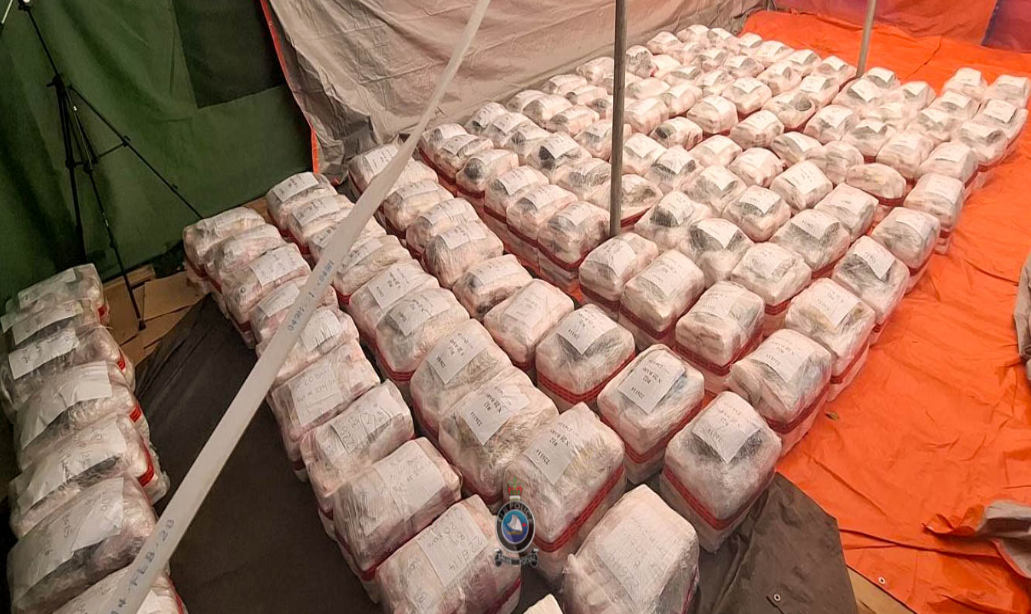
Cocaine untouched TAI SMITH NASINU SEC SCH RD, KINOYA, NASINU SERIOUSLY, do we need to keep the cocaine in storage? Burn the ****** thing.
Baulevu house fire DINESH KUMAR BA MY heart is deeply saddened by this tragic incident. I extend my sincere sympathies and heartfelt condolences to the members of the grieving family. May the souls of the five who perished, rest in eternal peace in the Heavenly Kingdom. Om Shanti!
The Drua and rua FLOYD ROBINSON MICRONESIA TO our favourite Drua, you have got the match under control this weekend. Let’s make this number rua and two wins in-a-row. I am holding my breath for now and cannot wait anymore for a tough and torrid battle amongst the frontrowers, and especially the loose forwards. Let’s cast a black out amongst their All Back reps. Let’s deliver some of those bone crunching tackles previously associated with Vili Satala and Noa Nadruku. Go Drua go.
Common factor WISE MUAVONO BALAWA, LAUTOKA DIFFERENT ethnicity, different religion, different gender and different age but we all have a same common denominator. Every single one of us is in an abusive relationship with the cost of living. Sobo!
Thank you RAKESH CHAND SHARMA NADI THANK you PM for the $56million allocated from Government savings for sugar cane price top – up, fuel rebates for bus operators and $24million for a ‘temporary’ social welfare increase to ease the cost of living of the poor. What I understand is, this temporary increase is for up to June, 2026. What happens if the situation doesn’t normalise? How will the poor of this country feel if the temporary increase is taken away?
Fighting drugs DAN URAI LAUTOKA IT’S in the public domain. If you see your neighbours selling drugs, dial 1681. It’s a toll free number.
Fuel price A. SHARIFF SHAH SAVUSAVU WHEN our good PM said, there won’t be any increase in the fuel prices, it made sense to me. We have so much fuel in reserves. Some on its way, left even before the war started. One of my very good friend from the USA told me that the USA has 50 years of fuel in reserves. So why the panic and increase in the fuel prices? Worst case scenario, the increase should have come into effect some six months later. Is this just another way of making money. First was COVID where most businesses made more money than ever before. This fuel crises is just another.
Crying for help! TAI SMITH NASINU SEC SCH RD, KINOYA, NASINU “CRIES for mercy” was an eye-catching caption! Where are our ears when we hear the innocent plead for mercy when they are being raped, robbed and assaulted by a drug fueled predator or predators? Where are our ears when people are burnt to death because they can’t escape the inferno that is engulfing the burglar proofed homes? Burglar proofed to protect them whilst they sleep at night from predators searching for money to buy drugs. Where are our hearts when we see our youth as young as 11-years-old locked in the asylum because drugs have ruined them. Our country is ravaged by aids and there is no outpouring “cry for help” to save our future generation from this scourge that drugs contribute to. How much do we really love our beloved nation? How much are we willing to sacrifice to set ourselves back as “Fiji the Way the World Should Be”? I know only of one way right now and unfortunately it almost takes away the very core of my being and that is to live in a democracy and that is let our Republic of Fiji Military Forces do what is necessary to rid Fiji of the scourge of drugs. No one has anything to fear if they live according to our laws and if they love Fiji more than life itself. I am so heartened by the number of citizens of this beloved nation of ours who are supporting our military cleanse our nation of this drug scourge. It promises a better tomorrow for our children. Me Bula ga ko Viti, ka me toro ga ki liu.
Hard work pays off! RAJNESH ISHWAR LINGAM NADAWA, NASINU THE University of the South Pacific graduation stories are one for the ages and a huge inspiration to those students who are in secondary school and those who are studying at a tertiary institution and will be graduating. I congratulate those who graduated from USP last week. Months of sacrifice, late night studies in preparation for exams, and their hard work, perseverance and commitment paid off. The joy of holding that precious certificate in one’s hand is best known to those who have followed the channel. The joy and smiles on the faces of the graduating students spoke of their emotions and that of their families who also make endless sacrifices when their loved ones are studying. Those graduates who were awarded medals and prizes for standing tall are warmly congratulated and commended for their achievements! Hard work, determination, dedication and commitment pay off!
May increase? DINESH KUMAR BA MAY I say that in the month of May, the fuel price may increase. Definitely it may not decrease due to the war between US and Iran which may not end soon. Vehicle owners may pay around or above $4 a litre in May.
Value of our forests FLOYD ROBINSON MICRONESIA THE current conflict in the middle east has raised anxiety about the potential for increased fuel prices and cost of living but from a cultural perspective, it is making us better appreciate the value of neighbouring bushlands and forests. Firewood in the form of branches, twigs and dried leaves will assist with need for fuel but more importantly, this is free from nature. Herbal medicine may reduce the pressure of increased medical bills. Food such as wild yams, breadfruit, jackfruit and ota from nearby creeks is another plus. Professor Randy Thaman used to emphasise that ecosystems such as our forests serve as both banks for our current and future generations. Enjoy the week and do not forget the value of our forests.
FNPF pensions KIRTI PATEL LAUTOKA TAHIR ALI, hope is something that keeps people going forward. In this case that hope being fulfilled will not only bring relief to those affected but blessings to the ones showing initiative from those big chairs. Imagine when you have to wait, cry, beg, get humiliated only for your own money. No one wants to go through that. Some great lives have been lost in the process of waiting. God is keeping the tab on everything. He holds the power and time has its own way of revealing situations. We can only raise our voices where it matters the most but unfortunately, there are many who suffer silently. We are leaving in a very noisy world thus we win not with those who understand our voices but those who understand our silence. Dear authorities including the board of FNPF. Please have some humanity and let’s correct this. It’s all for a good cause. God will bless you all big time.
Support package DINESH KUMAR BA PRIME Minister Sitiveni Rabuka deserves a standing ovation for announcing the four-month rebate package for bus companies and Energy Fiji Limited. What about taxis, minivans, private vehicle owners and school RSL services? Are they somehow less affected by rising fuel costs? Moreover, were bus companies and EFL not already receiving fuel subsidies? If relief is the goal, a broader measure, such as temporarily removing fuel tax and VAT, would surely benefit all Fijians more fairly. Otherwise, this “support cushion” risks looking less like relief and more like selective generosity.
TISI and TIV Sangam celebrations DEWAN GOUNDER MELBOURNE, VICTORIA, AUSTRALIA I WISH to express my sincere appreciation to TISI and TIV Sangam for the meticulous planning and outstanding organisation of the 100th Centennial Celebrations held in Fiji. This year’s convention was truly remarkable, bringing together more than one hundred soccer and netball teams, along with thousands of supporters and well-wishers from across the country and abroad. The scale, spirit, and success of the event have set a new benchmark, making it one of the largest cultural and sporting tournaments in the world. The seamless coordination was evident throughout — from the engagement of both overseas and local media, to the convenient location of games, and the commendable effort in ensuring matches finished on time. The thrills and spills of the matches, the shouts and cheers of the crowd, the rhythmic beating of the dapla, and the beautiful sounds of the shenaai created an electrifying atmosphere that brought the entire event to life. Equally commendable were the hundreds of volunteers and supporters of the Sangam Games who travelled from far and wide to be part of the event, as well as the thousands of people who turned out in large numbers to support the torch relay. Their enthusiasm and commitment added greatly to the success and spirit of the celebrations. I would like to extend my heartfelt thanks to the Sangam board and the TIV executives for their dedication, leadership, and tireless efforts in making this historic occasion such a memorable and unifying experience for all involved. Their commitment to preserving culture, promoting sportsmanship, and strengthening community ties is deeply commendable. To the overseas teams and players, I encourage you to continue supporting Sangam. It is not about individuals, but about preserving our cultural roots and identity for generations to come. Events like these not only celebrate a proud legacy but also inspire future generations to stay connected to their heritage and values. Thank you once again to everyone who contributed to the success of this milestone celebration.
The Cibi TAI SMITH NASINU SEC SCH RD., KINOYA, NASINU I REMEMBER reading that Glen Jackson was upset because the Cibi could not be performed before one of the Drua matches. Why exactly sir, it is your job as coach to set the mindset of your players for the game and if you see them upset about not being able to perform the Cibi, then let it be a further motivator for the boys to show the organisers that anything we consider disrespectful of our culture be utilised to strengthen our resolve to win so they know who we are. I don’t know about anyone else’s opinion, but I believe the Cibi to be our for national teams. When we reach the finals — I’d love to see the Drua be allowed to do it then after the National Anthem. I love the Drua and I’m fiercely proud of them. Go guys we’ve beaten the Chiefs at home, now beat them on their soil.
Denied or what? COLIN DEOKI AUSTRALIA JUSTICE. It’s a word we hear often and invoked loudly, demanded urgently and promised freely. But for more than 1400 elderly pensioners, justice hasn’t merely been delayed. It’s been silently denied. How can this be so? How can an institution entrusted with safeguarding the retirement security of its people allow such a profound wrong to linger unresolved for over 14 years? The very organisation meant to protect the dignity of pensioners now stands accused, in the court of public conscience, of abandoning them. Let’s ask a simple question: If those in positions of authority were personally wronged, would they tolerate a 14-year wait for justice? Of course not! Yet that’s precisely what’s been imposed on those least able to fight back – elderly citizens who spent a lifetime working, contributing and trusting that their savings would be honoured especially in their twilight years. What makes this matter even more troubling is its origin. An unelected illegal regime, through decree, altered lawful agreements and stripped pensioners of what was rightfully theirs. That alone should have triggered urgent review and restitution the moment democratic governance was restored. And yet, silence. Delay. Inaction. Why? Is this a failure of courage? Of leadership? Or something deeper – a quiet erosion of ethical and moral responsibility? A nation isn’t judged by how it treats the powerful, but by how it treats the vulnerable. When injustice against the elderly is tolerated, it sends a message far beyond the individuals affected. It tells every citizen that trust can be broken without consequence. And when trust erodes, so too does the moral fabric of a society. We cannot pretend that such unresolved injustices exist in isolation. They shape culture. They influence behaviour. They determine whether fairness is upheld or quietly discarded. The consequences of neglecting justice are never contained; they ripple outward, weakening institutions and diminishing national integrity. This isn’t merely about pensions. It’s about principle. It’s about restoring faith. And it’s about correcting a glaring wrong that’s endured far too long. The call is simple: Do what’s right. Not what’s convenient. Not what’s politically safe and politically expedient. Justice delayed for 14 years is justice denied. But justice delivered, even now, would still restore dignity to those who deserve it most. The question remains. Will you act? Will you correct? Will you bring years of pain, suffering and tears to a close so that these pensioners can enjoy a sense of peace and dignity for the few years they have left. Or will you continue the charade of an illegal regime’s decree to hold sway over the lives of vulnerable citizens who’ve given their all for the country that was supposed to honour them and protect them?
Not acceptable SURESH CHAND NADI THE growing absence of effective engagement by local law enforcement in tackling significant issues, such as ongoing tourist harassment, incessant traffic congestion, and the regular incidents of public intoxication and disorderly conduct, has emerged as a critical concern for the inhabitants of Nadi. These challenges not only disrupt the everyday lives of those residing in Nadi but also undermine the town’s aspirations to develop into a more organised, secure, and welcoming community for both residents and visitors. As these problems continue to adversely affect the quality of life and progress within the town, a vital and urgent question arises: why are these issues not being sufficiently addressed? The community seeks answers from the council and police department. Is it because of limited resources, a lack of prioritisation, or a deficiency in accountability? What specific barriers are hindering those responsible for maintaining order and ensuring the safety of the town from fulfilling their obligations? If these entities are unable or unwilling to meet the challenge, then who else can assume the responsibility of resolving these pressing issues? For a town as vibrant as Nadi, addressing these urgent concerns should remain at the forefront of its mission to cultivate a cohesive and flourishing environment. Consequently, it is imperative for those in leadership positions to provide transparency, propose effective solutions, and take decisive action to uphold their responsibilities to the community they serve. As residents, we can no longer tolerate the ongoing negligence exhibited by the town authorities.
Ancient civilisation RAKESH CHAND SHARMA NADI JAN Nissar should learn that only Greece is a civilisational state of the three he mentions. Iran (Persia), Turkiye (Anatolia), Egypt (Kemet) had their original inhabitants, language, religion, culture and traditions and were civilisational states. The Islamic invasions altered everything and plunged West Asia into a continuous Shia Sunni divide and war. The historians aligned with Wikipedia may claim that Iran, Turkiye and Egypt are civilisational states, but there are many who disagree. They say that a civilisational state should have continuity in language, religion, culture, traditions etc. With the development of social media, many of the theories of the Western historians are being challenged.
Drua brace for rampaging Chiefs! RAJNESH ISHWAR LINGAM NADAWA, NASINU THE Swire Shipping Fijian Drua face the biggest test of this weekend’s Super Round as they face the rampaging Chiefs who outmuscled the Wellington Hurricanes 22- 17 last Saturday. The Chiefs, having played one match more than the Hurricanes, are tied with them at the top with 31 points. The Drua face a mountain ahead of them and with the match played at the FMG Stadium, expect the hosts to come out firing. In 2022, the Chiefs got a scare at Churchill Park, winning by one point 35-34. In 2023, the Chiefs thrashed the Drua 50-17. In 2024, the Chiefs thumped the Drua 46- 29. Last year, the Drua created history as they upset the table toppers and visiting Chiefs 28-24 at Churchill Park. The Drua also recorded their first win of the Shop N Save Super Rugby Pacific season. The Chiefs showed their dominance in the first half through Samisoni Taukeiaho and Jimmy Tupou’s tries while Isaiah Armstrong Ravula converted two penalty kicks. Ratu Meli Derenalagi’s super try gave the Drua the lead, and they never looked back from then as Vuate Karawalevu gave the Drua the 18-17 lead. Ponipate Loganimasi extended the Drua’s lead to 25- 17 and Ravula converted a penalty to extend our lead. Tupou Vaa’i managed to cross over with a consolation try for the Chiefs as Drua fans celebrated the historic win. Last Saturday, the Drua created history by beating the Brumbies 33-28 away from home and recorded back-toback wins over the Brumbies. They face a strong Chiefs outfit who are gunning for maximum points. The Chiefs have far too much class for the Drua, but I’m not counting out the boys who can upset the Chiefs at home. Wishing the boys all the best for the crunch test!
Calling out bullies! COLIN DEOKI AUSTRALIA DID you get bullied as a kid? I did. And it didn’t stop there. It followed me like a bad dream into my teenage years. It chipped away at something invisible but vital: selfworth. Confidence. Identity. I remember asking myself questions no child should have to carry: What’s wrong with me? Why me? Was it my size? The way I looked? My name? My ethnic background? My faith? Something I said or didn’t say? Nothing ever quite added up or made any sense. So, I did what many do when the world feels hostile. I retreated. Became quieter. Smaller. More guarded and introverted. Until I found an outlet that gave me a voice without needing permission: music. A guitar in my hands did what words couldn’t. Slowly, something shifted. Respect replaced ridicule. Applause drowned out the echoes of taunts. And just like that, the bullying stopped like it never happened. Strange. But true. The silence was almost euphoric. But the questions never really left. Because here’s what I’ve learned: no one introduces themselves as a bully. They’re “just being honest”. They’re “under pressure”. They’re “keeping people accountable”. They’re “just having a laugh”. Anything and everything but the truth. Because the word bully doesn’t sit well in the human psyche. It collides with the image we hold of ourselves – fair, decent, in control. And when behaviour clashes with identity, the mind rewrites the script. Psychologists call this cognitive dissonance – that quiet tension between who we believe we are and what we actually do. So, the narrative shifts: They deserved it. It’s not that bad. I’m helping them improve. But strip away the justifications and something more fragile often sits underneath – ego, insecurity and even fear. Because bullying isn’t always about power. Sometimes, it’s about protection. A shield for a bruised sense of self worth. Admitting “I’m a bully” requires something far harder than aggression: humility. Accountability. Change. And change comes at a cost. So the denial continues. The bullying continues, unabated, causing more suffering and pain for the hapless victims. Here’s the truth we don’t say out loud enough: You don’t need a bully’s confession to validate your experience. Harm is harm even when it’s dressed up as humour, leadership, “tough love” or some other nondescript description. The real question isn’t why bullies won’t admit who they are. It’s whether we have the courage to call their behaviour what it is and the strength to ensure it doesn’t live on through us. Call out bullies for what they are: Cowards.
Different complex BERNARD CHANDRA NADI I AM appalled by many years of neglect of the potholes to the entrance, back exit and more recent craters facing the side of Courts and New World complex near the Votualevu roundabout. On rainy days it’s a challenge to take a trolley to the car park and I avoid going there as much as I can. This is no criticism of Courts and New World as I believe the complex is owned by a company. Much as the Grace Road group has been maligned for reasons I won’t go into, they have set a very high bar for the quality of their supermarkets with ample and convenient tarsealed car parking. I would invite the owners of the Votualevu complex to visit one of their supermarkets (for their information the closest is at Nasoso!) and to see an organisation that truly values and respects its customers, including providing clean toilets.
Political garnish ASH DEE LAUTOKA TOKENISM has become Fiji’s favourite political garnish — carefully arranged to signal inclusion, but rarely intended to influence the outcome. Across boards, commissions, and inquiries, Fiji Indian “representation” often comes in a familiar mould: safe, agreeable, and, more often than not, male. The pattern is hard to ignore — and harder still to defend. In an age where overt racism is widely condemned, its quieter forms have become more sophisticated. Selection replaces exclusion, but the effect can look remarkably similar. When representation is curated for compliance, it ceases to be representation at all. We are reminded that with great power comes great responsibility. Yet when power is exercised through carefully chosen intermediaries, responsibility becomes diffused — and accountability even more so. Fiji does not need symbolic presence. It needs voices with the independence to question, the courage to dissent, and the integrity to represent. Anything less is not inclusion. It is presentation.

