
Family planning SURESH CHAND NADI CHILD care starts with planning a family, not just having children. It can be very costly and unaffordable for many. Yet, there are few consequences for having kids without the financial means, aside from the poverty that affects the child. Many people are bringing too many children into the world without considering their financial situation and the responsibilities that come with raising a child. This group often shifts their financial obligations onto society. They find it hard to support their children and complain about the high costs of child care, expecting others to cover their future health care, housing, and education expenses that they cannot manage. Even more troubling, those who often voice their concerns about the cost of raising children are single parent families who continue to have more kids while already living in poverty. What about the absent fathers of these children and their responsibilities?
Fiji and Drua rugby EPELI RABUA RAGG AVENUE, SUVA IN the last two decades or so, we see Fiji rugby players point to the sky and touch the crosses/crucifix drawn on the strappings on their wrists in acknowledgement of God’s given talent to enable them score tries and the awesomeness of their game leading up to the said try. For most, it is a reflexive action, just mimicry for those who have done it before. But do they really know what is involved? Rugby, like all sport involves intelligence, fitness, discipline and the heart to conquer not just your own game but your opponents! As a Christian, Jesus is the epitome of intelligence itself. To speak in parables requires profound wisdom. In His time, Jesus walked the length and breadth of Judea then. To thwart the devil’s decisions required discipline. And He had the heart to walk to His death on Calvary for all of us. So, for all Fiji rugby players, do you have those traits? When you point up to the sky in acknowledgement of God’s talent, innate in all Fiji rugby sportsmen and women, have you trained yourself to the maximum needed to earn your place on the team? Or as a prop forward, benching 40/80kg in weight training and playing in the first 15 team? A lot of Fiji rugby players shirk at weight training. By rule of thumb, the minimum you should be able to lift, is your own weight. For game IQ, we have it in spades and yet lack the discipline to keep it together for 80 minutes only and 20 minutes for 7s rugby. And if all Fiji and Drua rugby players can train themselves like the One they are pointing or alluding to, then the heavens themselves will open up and they will hear the great Prophet from the Old Testament, Isaiah 40 – 28-31 say; “….but those who hope in the Lord, will renew their strength. They will soar on wings like eagles; they will run and not grow weary, they will walk and not be faint”. Toso Viti!
Super El Nino RONNIE CHANG MARTINTAR, NADI IT is both troubling and very worrying for all in Nadi. In the huge expansion of various developments in upmarket 5-star resorts, hotels, businesses, housing, etc, I believe Water Authority of Fiji, has paid very little or no attention to our water supply. Martintar continues to have water cuts most evenings. Am I wrong? Do I stand corrected? When will fast growing township of Nadi start receiving badly needed new reservoirs to cater for ever-growing need for daily water. Is supply meeting demands? If I err on the side of caution, I apologise, publicly. The World Metereology Organisation is now reporting a “Super El Nino” towards the end of 2026 or early 2027 for the greater South Pacific Ocean. Their forecast must not be taken lightly, in my view. This is serious. Will the Line Minister care to take a moment to make an official comment for the sake of all in Nadi, please? I ask this with every respect, tact and diplomacy. We are the tourism capital of Fiji. Tourism still brings in about 40% of Fiji’s GDP. Some very serious planning must be made to meet Nadi’s water, sewage, garbage disposal (not W.T.E.), and a public cemetery via Coalition Government (Privately donated Enamanu Cemetery is full to capacity for the general public). It costs most Nadi citizens around $500 for each burial. Cities like Suva and Lautoka are very fortunate. They get away with paying less than $60 to their Correctional Services for one burial. Nadi is totally overlooked. This must not be. Our very basic infrastructural needs and demands need immediate attention. The National Budget for 2026 to 2027 must make sizeable provisions. This is the basic work of every knowledgeable “town and city planner”.
Thanks to the gatekeepers LUCY BLACKMORE SAWENI BEACH YOU know, these two guys, Messrs Malouf and Cromb, must have thought to themselves, ‘okay this didn’t work in Western Sydney but let’s just sneak it into this little backyard corner of Fiji’. Thinking maybe that we’d barely notice or push back, or maybe even welcome it if we could be made to believe that it would clean up the place a bit and bring in a few jobs. I can still picture them at the community consultations deflecting our concerns, obfuscating at our questions, boasting that the project had Government backing and even that a special taskforce had been set up – headed by the Commissioner Western no less – to “fast track” approvals, and then smirking at our expressed confusion. The hubris of them! Thinking that their money and their (self-perceived) social capital would just let this one slide right on past the keepers. The Department of Environment gave them the chance to answer those same legitimate questions and they tried the same tactics on the DoE – deflect, obfuscate, put off till a later date, try and ride the social capital wave. They grossly underestimated the people, the gate keepers, and the integrity of the process. Thank you Dr Michael, members of the DoE, and the Technical Review Committee, for your honourable gate keeping service. Thank you to the traditional landowners for your unwavering and united stewardship of our land, seas, and shores. Thank you Protect the Heritage Coast committee for giving everyday ordinary people a voice and a place to speak it freely. Thank you to the “watchers” for taking complex and confusing situations and distilling them into a narrative that everyday people can understand and connect with – Charlie Charters chief among them. Thank you people near and far for speaking truth to power. Now TNG, keep your promise and walk away from this project. Stop. Go. Understand, for once, that NO means NO!
Fuel, gears, grace DONALD SINGH NAUSORI THE current diesel price is a menace for some of us. But one’s driving behaviour can be quite helpful. Around 90km/h is about the most fuel efficient speed, when the gearbox has engaged the top gear. The engine RPM at speeds between 85 and 100km/h falls below the 1500 mark, well, in my diesel at least. At $4.58 per litre, I must quickly accelerate to reach that speed to save fuel. Kerekere to our good cops and the camera operators, please allow a grace speed of an extra 10 so we can drive at 90 to fight the fuel crisis. A brother called the other day complaining about those portable cameras being placed in 50 zones. At 50 or below speeds, fuel consumption is at the highest. Going over 60 shifts a few gears up, increasing fuel economy. It’s a mixed bag though. Some gang will be almost idling in slow speed zones or maybe driving their manuals in the higher gears at low speed, which could wreck the gearbox in no time. Small gain now, big loss in the future. High fuel price, increased speeding fines, bad fuel economy, there’s barely room for more. We need grace, to drive at economical speeds. Thank God, that we still have His Grace. We’ll manage.
Polycrisis ELISHA BANO SUVA THE recent push to “stick to issues in Fiji” overlooks a fundamental reality of our time. One where we are living through a polycrisis. This is a world where multiple, interconnected crises, economic, environmental, political, and social, are unfolding simultaneously and intensifying each other. We simply can’t treat Fiji as an isolated entity from global dynamics. What happens beyond our shores does not remain external. It directly shapes our economy, our environment, and our daily lives. Geopolitics is not an abstract concept reserved for academics. It is the lived reality of interdependence, where trade, climate systems, migration, technology, and political decisions across borders are deeply linked. To dismiss global engagement as “not our concern” is to overlook how fully Fiji is already embedded in these systems. The climate crisis is the clearest example. Rising sea levels in Fiji are not the result of local actions alone. They are tied to global patterns of industrial emissions, energy policy choices, and decisions made by major economies far beyond our region. Our combined advocacy influences global negotiations that determine funding, adaptation support, and policy commitments that return directly to our communities. This is the essence of a polycrisis. The local and global challenges reinforce each other in complex and often unequal ways. No issue exists in isolation. In a polycrisis era, strong advocacy, both locally and globally, is not a distraction from “real”. It is precisely how those issues are addressed. Fiji’s voice matters not in spite of global interconnectedness, but because of it.
Able to appeal RAJEND NAIDU SYDNEY, AUSTRALIA WHAT an irony that the multi million dollar developer of the proposed Vuda mega waste to energy plant and port facility can appeal the Fijian State decision to reject the proposal but the elderly destitute FNPF pensioners whose money was stolen — through the illegal arbitrary reduction of their contracted payment — can’t do that because the law, or rather the decree of the post coup dictatorship, does not allow it. What a crying shame!
Begging your vote JUKI FONG CHEW NADAWA, NASINU THIS is the time where various political parties will come around begging for your vote as we are in the campaign mode. Flowery promises will be made and on the same token bad mouthing other parties. Voters this is the time to scrutinise all promises made and what each party may offer once they make it to parliament. The power is in your hands to make informed decisions about who represents us in government. Power to the people and your vote matters.
Highly likely MOHAMMED IMRAZ JANIF NATABUA, LAUTOKA AT the current rate, do you think it is highly likely that in the third quarter the price of diesel and unleaded petrol will become more than the minimum wage rate.
Fashion show TAHIR ALI HAMILTON, NEW ZEALAND The Fiji Times reports with pictures of a fashion parade (FT 30/5) may be an indication that people are doing reasonably well adjusting themselves in this fuel and food crisis. We all know our priorities and rights. Family, food first and savings for our rainy days
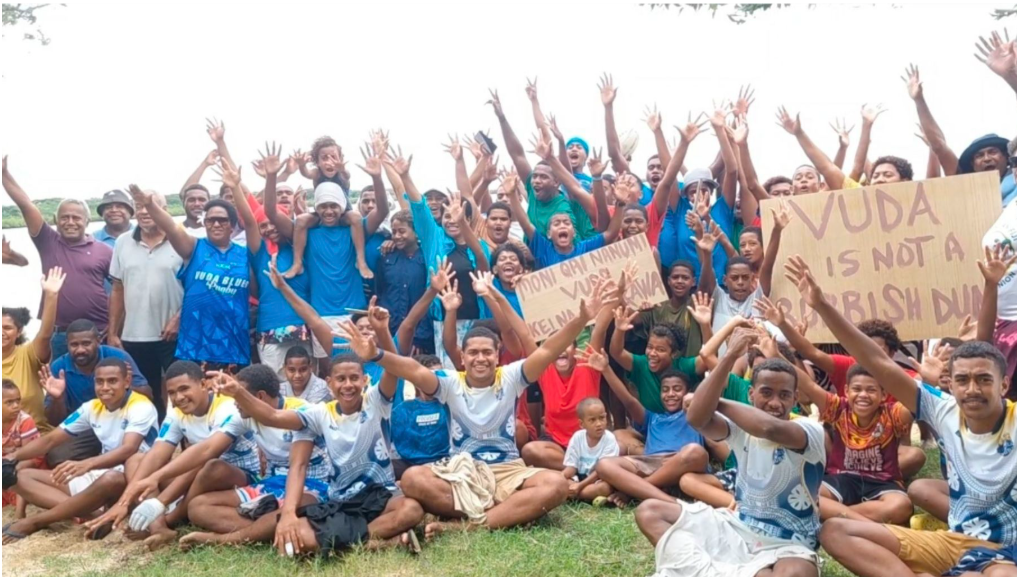
Waste to energy Vuda DONALD SINGH NAUSORI THE recent jubilation and keke cutting about the Vuda waste to energy project being rejected is understandable and was indeed anticipated. The environment ministry reportedly rejected TNG’s proposal, citing concerns over public health, emissions, hazardous waste management, and gaps in environmental data, which actually translates as: come back with a better plan on the above. So they will come back after the above conditions are met and their EIA is no longer bogus, let’s say, next year. So, celebrating before the final whistle is never a good idea. And the PS Environment seems to have grown teeth when he says he won’t open Infinite Power’s WTE submission until they go through the EIA processes. I’d like to believe he refers to not-bogus processes. WTE projects are a necessity, just not with imported benu, please.
Words with action INDAR DEO BISUN TAMAVUA, SUVA THE recent statement by the Land Transport Authority (LTA) reaffirming its commitment to “good governance, transparency, and ethical service delivery” sounds impressive on paper. However, the reality experienced by many Fijians tells a different story. Across Fiji, particularly in urban and peri-urban areas, private vehicles are openly operating illegally as taxis under the so-called “pari” system. These vehicles continue to transport passengers daily without proper Public Service Vehicle (PSV) permits, insurance compliance, or adequate safety monitoring. In many cases, operators own multiple vehicles running illegally for commercial purposes. According to social media discussions and public knowledge, one individual in Vanua Levu allegedly controls close to 50 private vehicles operating through informal rental arrangements. Similarly, in places such as Sakoca, an individual is reportedly running more than 10 rental vehicles from informal settlements and residential areas. Residents have continuously raised concerns about noise, congestion, suspicious activities, and public inconvenience caused by this illegal operation. What is more concerning being that these activities are not hidden? They are widely known, openly discussed, and repeatedly reported to relevant authorities. Many members of the public believe that some LTA officers are fully aware of these illegal operations, yet enforcement remains weak or selective. While LTA proudly reports conducting audits, inspections, awareness campaigns, and defect checks on buses and PSV operators, little attention appears to be given to the rapidly growing illegal transport network operating outside the law. Genuine taxi operators and legal rental companies continue to suffer unfair competition while illegal operators earn substantial income without meeting the same regulatory requirements. This raises an important question: Are the principles of transparency, accountability, and good governance being applied equally to everyone? The minister responsible and LTA executives must understand that public confidence cannot be restored through media statements alone. The public judges institutions by their actions, consistency, and fairness in enforcement. If illegal “pari” and rental operations continue unchecked despite repeated complaints, then the gap between official statements and reality becomes increasingly obvious. LTA must now move beyond public relations exercises and demonstrate genuine enforcement. Illegal operators should be properly investigated, monitored, and prosecuted where necessary. Authorities must also ensure that no individual or group receives protection while law-abiding transport operators continue to comply with costly legal requirements. Good governance is not merely about issuing statements. It is about having the courage and integrity to act fairly, consistently, and transparently for the benefit of all Fijians.
Civil servants pay rise DR SUSHIL K. SHARMA LAUTOKA THE Fiji Public Service Association’s call for a 10 to 20 per cent Cost of Living Adjustment for civil servants is understandable, but it also highlights a deeper issue: our unions are reacting far too late in the budget cycle. With the National Budget due on June 26, this is the moment when every union should already have been at the table, armed with data, modelling, and clear proposals — not emerging only now from the woodwork. Civil servants have endured the same cost–of– living pressures as every other worker in Fiji. Fuel, LPG, transport, food, rent — everything has risen sharply. The FCCC’s June 1 announcement confirmed the highest fuel and LPG prices in Fiji’s recorded history. A worker on $12,000 to $25,000 per year cannot absorb these increases without real hardship. FPSA is right to say that many are leaving the service. But the question is: why did it take until June for this advocacy to surface? A proper Job Evaluation Exercise, restoration of long service leave, and fair overtime arrangements are not new issues. They have been raised for years. What civil servants need now is not only a call for COLA, but a union that is proactive, data–driven, and present throughout the entire budget process — not only in the final month. The Government has repeatedly said that ministries are returning unspent funds because projects were not completed. If that is true, then FPSA should be demanding transparency on where those funds went, and why essential workers were denied overtime while budgets were underspent. These are questions that require strong, early, and persistent representation. Civil servants are the backbone of government delivery. They deserve more than last–minute appeals. They deserve a union that anticipates economic pressures, prepares evidence–based submissions, and negotiates from January — not June. FPSA’s call for COLA is justified. But the timing shows why unions must evolve. Workers need advocacy that is strategic, not reactive; informed, not improvised; and present at every stage of the national budgeting process.
Let’s see some difference SURESH CHAND NADI THE Crime Stoppers program is organised and broadcast every Sunday by Fiji TV. We are thankful to Fiji TV for offering this segment for the benefit of the public. Crime Stoppers, in collaboration with the police, uses this airtime to share lists of wanted individuals and those who are missing, along with their photos. The people on the wanted list are dangerous and should not be hidden by anyone. They commit serious crimes like fraud, causing physical harm, theft, and aggravated robbery, among others, while some are fugitives wanted under bench warrants. What is concerning is that the list seems to stay the same each week. I think we need a more active approach to catch and bring these dangerous people to court quickly. According to the list, several fugitives are still missing, which leaves the public anxious. If anyone has information that could help the police, they should come forward without delay, as helping a fugitive is a crime itself. It appears that the current method is not producing results for the police, as shown by the ongoing list. We cannot allow these criminals to avoid capture for too long. It is in everyone’s best interest to do everything possible to catch the wanted individuals sooner rather than later. I also believe our country is not too large to hide anyone. So, let’s take this issue seriously and ensure their capture. With that in mind, can we expect the list to decrease?
Israel and Hamas COLIN DEOKI AUSTRALIA IS Israel committing genocide in Gaza? Few words in human language carry the emotional, historical and moral weight of the word, genocide. It’s a word forever associated with some of humanity’s darkest chapters – the Holocaust, Rwanda, Cambodia, Iran, Nigeria and other horrific attempts to destroy entire peoples because of who they are or were. Today, that same word sits at the centre of one of the world’s most bitter and divisive debates: Is Israel committing genocide in Gaza? The answer depends largely on whether one is speaking politically, emotionally, morally or legally. These aren’t always the same thing. From a legal standpoint, the matter remains unresolved. South Africa brought a case before the International Court of Justice (ICJ), alleging that Israel’s military campaign in Gaza violates the Genocide Convention. The Court has ruled that the allegations are serious enough to warrant examination and has ordered provisional measures aimed at protecting civilians. However, it hasn’t yet delivered a final judgment or verdict determining whether genocide has occurred. That distinction is important. In a court of law, accusations and guilt are not the same thing. Yet legal technicalities alone cannot erase the devastating reality unfolding before the eyes of the world. Tens of thousands of Palestinians have been killed. Entire neighbourhoods have been reduced to rubble. Hospitals, schools, homes, roads and critical infrastructure have been damaged or destroyed. Families have been displaced repeatedly, often with nowhere safe to go. For many observers, the sheer scale of destruction raises profound moral questions that cannot simply be dismissed. At the same time, Israel argues that it’s fighting a war against Hamas following the horrific attacks of October 7, 2023, in which civilians were murdered, kidnapped and terrorised. Israeli leaders maintain that their objective is the destruction of Hamas, not the destruction of the Palestinian people. While that remains a highly contentious issue, supporters of Israel point out that Hamas deliberately embeds itself within densely populated civilian areas, making warfare extraordinarily complex and increasing the likelihood of civilian casualties. Critics counter that regardless of Hamas’ tactics, international law requires civilians to be protected and that the humanitarian consequences have reached catastrophic proportions. This is where the debate becomes intensely polarised. Some see Israel as defending itself against a ruthless terrorist organisation. Others see Gaza as a humanitarian catastrophe that’s crossed legal and moral boundaries. Still others recognise elements of truth in both realities. What often gets lost amid the political arguments is the suffering of ordinary human beings. Behind every casualty statistic is a name. A father. A mother. A child. A grandparent. A family forever changed. The tragedy is that innocent people on both sides have paid an unbearable price. Israeli families continue to grieve loved ones murdered or taken hostage. Palestinian families continue to mourn loved ones lost beneath collapsing buildings, amid shortages of food, water, medicine and shelter. History teaches us that when hatred becomes louder than humanity, everyone loses. The world may continue arguing about legal definitions, court rulings, political responsibility and historical grievances. Those debates matter and should continue. But perhaps the greater challenge is remembering something far more fundamental. Every innocent life has equal value. Every child deserves safety. Every family deserves peace. And every conflict, no matter how complex, eventually reaches the same unavoidable question: How many more lives must be lost before peace becomes more important than victory? Until that question is answered, the people of Gaza, the people of Israel and countless families caught in the middle will continue bearing the terrible cost of a war that has already scarred a generation. The final legal verdict may still be some time away. But the human tragedy is already here.
Thriving pari SHAMAL CHAND KUKU VILLAGE, NAUSORI WHILE illegal taxis are a serious concern in Nausori, the Nausori Taxi Association must also accept some responsibility for the situation. Many passengers turn to illegal taxis (pari) because they cannot get reliable taxi services when they need them. Complaints about long waiting times, unavailable taxis during peak hours, poor customer service, refusal of short trips, and a lack of professionalism have contributed to public frustration. If licensed taxi operators consistently provided timely, reliable, and customer focused service, fewer passengers would seek alternative transport options. I reckon rise of illegal taxis is not only an enforcement issue, it is also a reflection of gaps in the current taxi service. Before blaming illegal operators alone, the industry should look at why customers are choosing them in the first place. Improving service standards, accountability, and customer satisfaction must be part of the solution. So Nausori Taxi Association, the reality is simple, illegal taxis are growing because they are providing a service that people are using. If licensed taxis were always available when customers needed them, illegal operators would struggle to find passengers. Demand creates supply, and the rise of illegal taxis in Nausori reflects a gap in transport services that cannot be ignored. End of the day it’s the pari clearing streets of Nausori during peak hours while legal operates are nowhere to be seen. I believe passengers have a right to choose convenience over waiting, and that’s when pari comes to the rescue. Correct me if I’m wrong.
The anxious generation ARVIND MANI NADI MY wife and I were in the US from March to May of this year. We went for some medical procedures and visiting family and friends. I also had time to visit my favourite store – a bookshop called Barnes and Noble. One of the books I read was quite disturbing. It is something I have been thinking about, but this books spelled it out in a very succinct manner. It is a book called The Anxious Generation by a leading social psychologist Jonathan Haidt. He gave a TED talk about a new concern – the impact of AI toys Children risk becoming attached to AI companions if they bond with them, he said. This could weaken children’s bonds with their parents. Haidt, whose book helped spark a global debate about the impact of smartphones and social media on young people’s mental health, recently spoke at a TED talk where he said the rapidly growing market for AI-powered toys and chatbots could interfere with children’s relationships with their parents by becoming emotional attachment figures. While he didn’t single out specific products, a growing category of AI-powered toys and companions has emerged over the last couple of years. Haidt said these products are designed to be highly responsive to children, offering comfort, conversation, and companionship whenever they’re needed. That constant availability could make them especially appealing to young users. “These chatbots are super responsive to the child. They’re always there to offer comfort, to be there for the child — and of course, the parents are often busy,” Haidt said. Young children naturally gravitate toward people who consistently respond to their needs, he said. If AI companions become more reliably responsive than parents, they could begin to occupy an unhealthy role in a child’s emotional development. “If the chatbot is super responsive while the parents aren’t as responsive, the child’s attachment system, which is looking for who in my environment is the person who responds to me, may well imprint or focus on the chatbot, which is going to compromise their relationship with their own parents,” Haidt said. The warning is part of a broader argument Haidt has been making about what he calls “technoscepticism”. He said society moved too quickly in allowing social media companies to shape children’s social lives and educational technology companies to reshape classrooms. Now, he said, AI companies are targeting an even more intimate part of childhood: Relationships. “AI companies are coming for their relationships, to be their friends, their therapists,” Haidt said. While he said AI therapists may eventually have a role, he said companies should not be allowed to deploy emotionally persuasive AI products to children without years of safety testing. “Give them nothing that conveys that it understands the child or that it cares,” Haidt said. “Because it doesn’t.” I am not sure if the stakeholders who need to be concerned are concerned. Which should probably make the parents more anxious. But the parents themselves seems seem quite oblivious. And that is even more concerning.
Banks on Saturday KIRTI PATEL LAUTOKA PRANAV Chand (FT 05/06) is spot on to suggest that banks should be open on Saturdays for working people who have to take leave to go to banks during week days. Digitalisation is not of help in everything and people do need to visit the banks in person for various matters. Also, not many people are at ease or literate enough to operate digital process. Just not banks, but many other important organisations that are widely used by the general public should be mandatory to be open on Saturdays. Therefore, I fully support this suggestion and I hope authorities take this into consideration.
Salary reduction? Why? PENI VULA VUNISINU TACIRUA AS ordinary Fijians continue to grapple with rising fuel prices and the increasing cost of living, many are struggling to understand why salary reductions are being considered at a time when household expenses are climbing. Fuel price increases affect almost everything from food and transportation to essential goods and services. When wages stagnate or decline while living costs rise, the burden falls squarely on working families who are already stretching every dollar. If the objective is economic recovery and financial stability, should the sacrifice not be shared more equitably? Before asking workers to tighten their belts further, policymakers must explain how reducing incomes will help those who are already feeling the greatest pressure. The question many Fijians are asking is simple: if life is becoming more expensive, why are workers expected to earn less?
Suppressed people RAKESH CHAND SHARMA NADI I WONDER what Rajend Naidu had to say when the Palestinian people failed to report Hamas activities in digging tunnels and then launching October 7 attack on Israeli people. Today’s war between US, Israel and Iran emanated from 10/7 incident. Similarly, the Pahalgam attack by terrorists and Delhi car bombing by Al-Falah University doctors resulted in almost 40 deaths and Rajend Naidu had nothing to say. Why Rajend Naidu is being selective? I have my sympathies for the West Papua, Kanaki, Aboriginal (Indigenous Voice Referendum voted ‘No’), US native populations and all other persecuted people.

