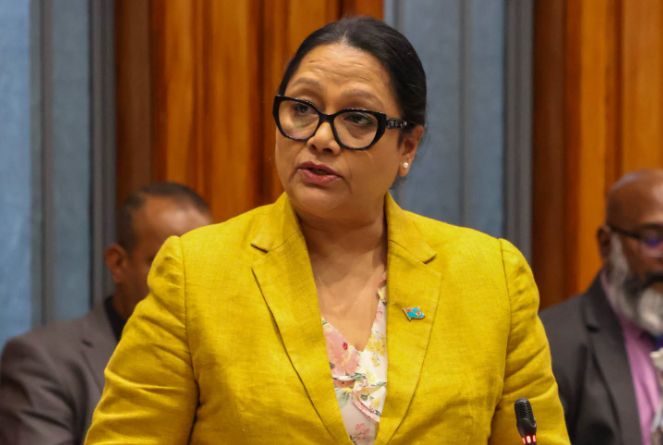
OPPOSITION MP Premila Kumar has warned that the proposed Fiji National University Bill 2026 could undermine the institution’s independence by increasing Government influence over its governance and decision-making.
While acknowledging the need to modernise the Fiji National University Act 2009, Ms Kumar questioned whether the proposed legislation would genuinely strengthen institutional autonomy, transparency and accountability.
Speaking during the parliamentary debate on the Bill, she said FNU was one of the country’s most important public institutions, providing thousands of students with opportunities to gain qualifications and develop skills needed for Fiji’s economic and social development.
She supported efforts to strengthen the university but warned that changes to its governance structure must not compromise its independence.
“One of the greatest merits of a university is its ability to operate independently while remaining accountable to the public,” Ms Kumar said.
She argued that the proposed composition of the university council would increase ministerial influence, with the minister appointing 19 of its 25 members, compared with 15 under the existing legislation.
She also questioned provisions that would give the minister greater appointment and regulatory powers while reducing the role of elected academic representatives in the senate.
Ms Kumar said university autonomy must extend to academics, researchers and students, allowing them to conduct research, express opinions and challenge established ideas without fear of interference.
She called for clearer accountability mechanisms for the vice-chancellor, arguing that while the Bill outlined detailed procedures for removing council members, it lacked an equivalent process for addressing the suspension, discipline or removal of the vice-chancellor.
On financial management, she raised concerns about provisions allowing FNU to borrow internationally, invest, acquire shares and enter commercial partnerships without clearly defined borrowing limits or adequate financial safeguards.
She recommended explicitly recognising the Auditor-General’s role in auditing the university’s accounts to strengthen public confidence in the management of public funds.
Ms Kumar also questioned the proposed employer levy, calling for a clear ceiling, proper consultation with employers and transparent reporting on how the funds would be collected and spent.
She warned of potential conflicts of interest arising from FNU’s proposed responsibility for regulating training providers while also delivering its own training programs.
On academic and individual rights, she called for stronger protections for academic freedom, equality, freedom of association and whistleblowers.
She also highlighted drafting inconsistencies and the need to clarify the Bill’s relationship with the Higher Education Act 2008.
Ms Kumar recommended referring the Bill to a parliamentary standing committee for wider consultation with university management, staff, students, employers, unions and the Higher Education Commission.
She suggested considering deferring the legislation until after the next general election to allow the incoming Parliament to examine the university’s long-term governance arrangements.
“A strong university requires an independent council, strong leadership requires accountability, sustainable funding requires transparency and effective regulation requires fairness,” she said.
Ms Kumar said strengthening FNU must go hand in hand with protecting its independence, safeguarding public resources and maintaining confidence in the quality of higher education.