Six civil society organisations have raised serious concerns over new Electoral Commission rules which they say expand the definition of election campaigning to include debates, interviews, meetings, public forums and publications, even when these activities are not intended to influence how people vote.
In a joint statement, the organisations strongly condemned the Campaigns and Foreign Funding Rules 2026, warning that the changes could bring ordinary democratic activities under the regulatory control of the Supervisor of Elections.
They argued that the Electoral Commission had gone beyond the definition of campaigning provided under the Electoral Act 2014.
“Under this interpretation, simply discussing an electoral issue could constitute campaigning, even without any intention to influence voting,” the organisations said.
“The Commission has effectively blurred the fundamental distinction between partisan campaigning and independent public-interest discussion.”
The organisations said Section 2 of the Electoral Act defined campaigning by reference to promoting or opposing political parties or candidates, or activities intended to influence voting.
However, they claimed the new rules expressly included election-related debates, interviews, meetings, public forums and publications as campaigns “regardless of whether or not the purpose of the activity is to influence the voting at an election”.
They warned that the broad interpretation could mean journalists, academics, political parties and civil society organisations receiving foreign assistance might need official approval before carrying out certain election-related activities.
According to the organisations, a newspaper receiving foreign assistance for journalism training or equipment could potentially require approval before interviewing a political leader or publishing election-related analysis.
Similarly, a civil society leader approached by a journalist for urgent comments on ballot tampering or electoral integrity could face a possible seven-day wait for permission to respond.
University professors receiving international research funding and community organisations hosting discussions on poverty, the cost of living or political party policies could also face uncertainty over whether approval was required.
The organisations questioned the Electoral Commission’s authority to expand the definition of campaigning through subsidiary rules.
“While section 115 itself contains troublingly broad language, the Commission cannot use subsidiary Rules to expand statutory restrictions beyond what Parliament has lawfully authorised,” they said.
“We consider this definition legally questionable and potentially beyond the Commission’s powers.”
They also raised concerns about the duration of the restrictions, saying the campaign period began on May 25, 2026, and could extend until February 2027.
The organisations warned that restrictions previously applying for approximately 45 days before an election could potentially cover more than eight months, subject to the commencement of the amendments.
“Almost every significant public policy issue, from healthcare and education to corruption, human rights and economic management, can become an election issue,” they said.
“Does that mean discussing these matters now requires the Supervisor’s permission?”
They stressed that independent research, public education, electoral analysis and policy advocacy were legitimate democratic activities and should not automatically be classified as election campaigning.
“The fact that independent information may influence public opinion does not automatically make its publication an election campaign,” they said.
“We do not endorse parties or candidates, instruct citizens how to vote or conduct partisan campaigns.”
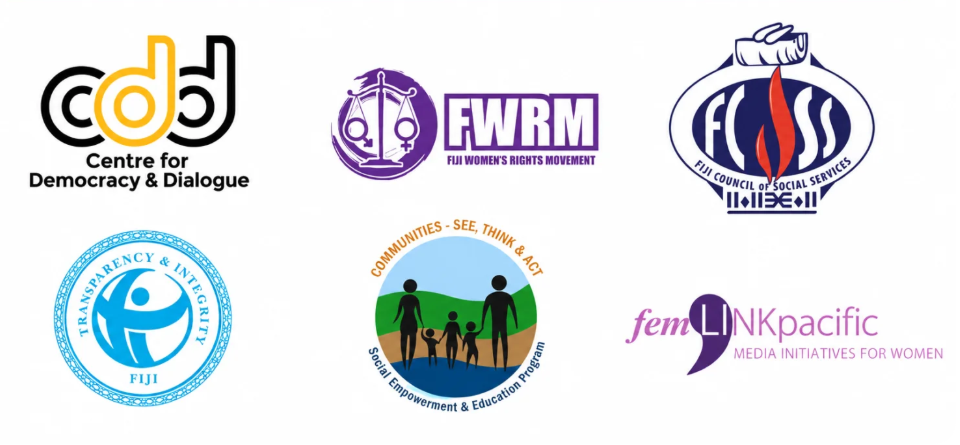
The statement was jointly issued by the Centre for Democracy & Dialogue, femLINKpacific, Fiji Council of Social Services, Fiji Women’s Rights Movement, Social Empowerment and Education Programme, and Transparency & Integrity Fiji.
The organisations maintained that their role was to inform citizens, scrutinise institutions and contribute to public debate.
“These are fundamental democratic functions,” they said.