
INVESTMENT Fiji is stepping up efforts to accelerate the delivery of investment projects as Fiji targets sustained annual economic growth of 5 per cent.
The investment agency said it was tracking 112 active projects across key sectors, including tourism, commercial real estate, renewable energy, manufacturing and telecommunications.
Of those projects, 61 are expected to be completed in the 2026-27 financial year, while a further 51 are progressing towards completion from 2027 onwards.
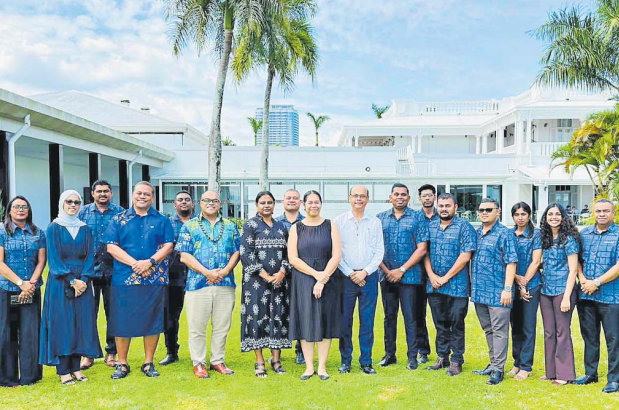
The targets were established following a recent Board meeting and strategic planning workshop, as the organisation seeks to ensure investment commitments translate more quickly into economic activity.
Investment Fiji said achieving annual gross domestic product growth of 5 per cent would require investment to consistently exceed 20 per cent of GDP.
The organisation said its strategic focus would therefore be on facilitating gross capital formation at a level that supports Fiji’s long-term growth ambitions.
CEO Kamal Chetty said the board’s targets provided the organisation with a clear operating mandate.
“Ambition at this scale is only meaningful if it translates into action on the ground and ultimately translating to jobs and income for the Government,” he said.
“Our role is to be the partner that moves commitments from paper to practice – resolving the labour, land and infrastructure friction that slows investors down, and doing it through a whole-of-government approach.”
It identified lengthy regulatory processes, labour shortages and infrastructure readiness as continuing challenges for investors.
The agency said stronger coordination among Government agencies would be critical to fast-tracking viable projects and reducing administrative bottlenecks.
It said platforms including the Transformational Investment Taskforce and Investment Facilitation Committee provided a foundation for improving coordination and speeding up investment decisions.
Despite cost pressures and broader economic challenges, Investment Fiji said the 112 active projects showed continued momentum in the investment sector.
The investment portfolio is also becoming more diversified, with capital flowing into manufacturing, commercial agriculture, renewable energy and information and communications technology infrastructure.
Domestic direct investment accounts for 56 per cent of the portfolio, while foreign direct investment makes up the remaining 44 per cent.
Mr Chetty said Investment Fiji would focus on proactive execution and rapid response to ensure investment commitments were converted into jobs, infrastructure and sustained economic growth.
The agency’s approach reflects a broader push to move investment projects beyond commitments and into implementation, with faster project delivery expected to play a key role in supporting Fiji’s five per cent growth ambition.

