
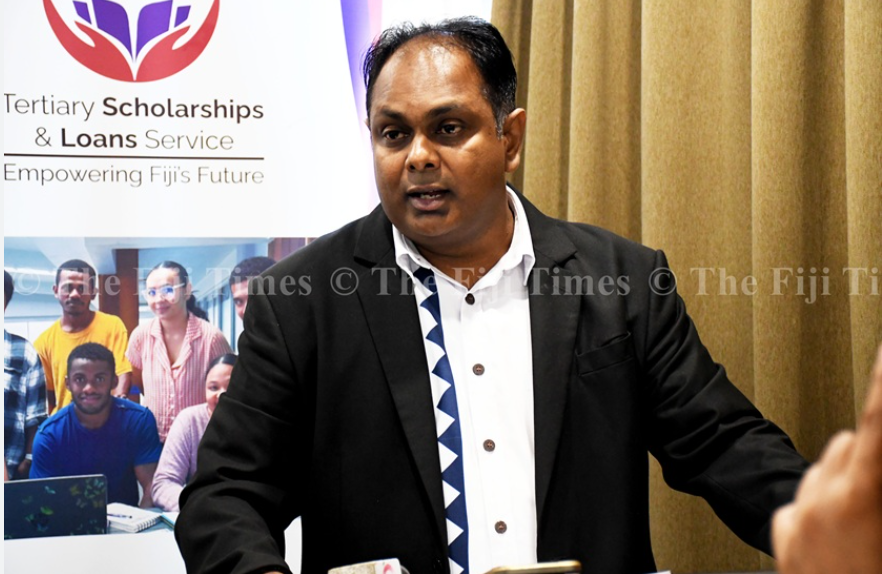
Education investor and former Tertiary Scholarships and Loans Service chief executive Dr Hasmukh Lal has welcomed three key skills development initiatives in the 2026-2027 National Budget, saying they will help address Fiji’s growing skills shortage.
Dr Lal praised the Government’s decision to restore 60 percent of the one percent training levy for workforce development, describing it as a significant step towards strengthening national productivity.
“The three decisions are cogent that training and development is a strategic priority for the industries in next financial year. I thank the Government for listening to the private sector voices and aligning decisions with the National Skills Gap Survey Report. This is a sign of a healthy democracy,” he said
The Budget also introduces a 200 percent tax deduction for eligible employer training and upskilling expenditure, as well as a 150 percent investment allowance to encourage private sector investment in training institutions.
Dr Lal said these measures would improve the quality and relevance of training while encouraging greater private sector participation in skills development.
However, he argued that regulatory oversight of the training levy requires urgent reform.
According to Dr Lal, the decision made in 2018-2019 to merge the collection, distribution and regulatory administration of the training levy with Fiji National University created conflicts of interest.
“These two should have been independently managed to avoid conflict of interest, cast any monopolistic status and fairness to all providers.”
He called on the Government to introduce an interim arrangement under the current Budget debate, proposing that grant-claimable courses be approved by an independent committee comprising the Higher Education Commission of Fiji, the Fiji Commerce and Employers Federation and the Ministry of Civil Service or Public Service Commission.
“FNU, as the national training provider should not approve grant claimable courses of other providers and for themselves. The current arrangement is nationally unfair to other providers and must be handled by independent oversight.”
Dr Lal also urged Government to review and repeal Section 35A of the Fiji National University Act, which assigns regulatory responsibilities to the university.
Based on 2024 figures, he estimated about $30 million was collected through the training levy and said under the revised distribution around $15 million would support private sector employee training, $3 million would go to the Public Service Commission and $12 million to the ACCF, less administration costs.
To better coordinate workforce development, Dr Lal proposed establishing a National Steering Committee on Skills Development, chaired by the Minister for Finance, Commerce and Business Development.
He said the committee should include key government agencies, employer organisations, industry groups, training institutions and education regulators to improve policies and remove barriers to skills development.
“Research and data are evidentiary that training and development yields 20% to 30% in organizational productivity and innovation. Government and private sector companies will, both be winners in this approach.”
Dr Lal also encouraged employers to engage only training providers recognised by the Higher Education Commission of Fiji, saying this would strengthen the credibility and recognition of qualifications awarded to employees.
He further welcomed the additional $7 million allocated for scholarships and student loans in the 2026-2027 Budget, describing it as another positive investment in Fiji’s human capital development.

