MULTIPLE Pacific red lines appear to have been crossed in the third iteration of the COP31 cover decision text in Antalya, Türkiye, leaving out explicit commitments to transition away from fossil fuels, omitting direct recognition of the 2025 International Court of Justice advisory opinion, dropping concrete financial floors and Small Island Developing States (SIDS) safeguards, and keeping provisions to scale up carbon capture technology.
Released in bits late into Saturday night after failing to materialise on Saturday morning, the slimmed-down, 10-page, 94-paragraph draft dated 2am on November 22 restructures the COP31 outcome around global progress and accelerating implementation while shifting key political and technical signals that have left Pacific delegations deeply concerned.
On energy, while an earlier November 16 draft included options for accelerating a fossil fuel phaseout and welcomed the COP30 Presidency Roadmap for Transitioning Away from Fossil Fuels in Energy Systems, the November 22 text omits explicit fossil fuel phaseout language altogether. Instead, it emphasises falling renewable energy costs and energy security benefits, calls for global cooperation to increase electricity’s share of total final energy consumption to 35 per cent by 2035, and retains language scaling up Carbon Capture, Utilization, and Storage (CCUS) toward 500 million tonnes annually by 2035 alongside carbon dioxide removal — noting that removal technologies must complement rather than substitute for or delay deep emission reductions.
In the area of finance, the third draft commits to efforts to at least triple adaptation finance by 2035 under the new collective quantified goal, launches the “Antalya-Addis Ababa road map” on adaptation and resilience finance, sets up discussions on a tripling implementation pathway for CMA 9 in November 2027, and highlights the need for grant-based and concessional finance for developing countries, particularly least developed countries and Small Island Developing States. Yet it drops the specific $US120 billion floor, references to Oxfam’s grant-equivalent baseline methodology, explicit SIDS minimum allocation floors, and direct recognition of the Pacific Resilience Facility that had appeared in the earlier November 16 version.
On temperature and loss and damage, the November 22 text reaffirms the Paris Agreement goal of holding warming well below 2 Degree Celsius and pursuing efforts to limit it to 1.5 Degree Celsius, while expressing “deep concern” that peak warming is expected to exceed 1.5 Degree Celsius in the next few years and recognising that overshoot and every increment of warming increases loss and damage and risk irreversible impacts. However, it softens earlier resolve to return warming below 1.5 Degree Celsius as early as possible within this century, even as it notes observed warming alongside the ongoing El Niño event and welcomes progress in operationalising the Fund for responding to Loss and Damage.
The latest draft also spotlights oceans, science, and international processes, expressing deep concern over ocean warming and sea-level rise while inviting the development of the “Antalya Ocean Current” multi-year plan for 2027-2028 and the “Blue Imece” synthesis report by March 2028 as an input to the newly launched second global stocktake. Alongside recognising the Intergovernmental Panel on Climate Change and its Seventh Assessment Report, establishing a two-year Work Programme on Mountains and Climate Change, and scheduling a high-level dialogue on 1.5 Degree Celsius overshoot at CMA 9, the text notes concerns over cross-border impacts of climate measures and trade dialogues and recognises voluntary cooperation and high-integrity carbon markets under Article 6 while still omitting direct reference to the 2025 International Court of Justice advisory opinion.
For Pacific nations in overtime negotiations at COP31, the central battle remains survival, keeping warming within 1.5 Degree Celsius, and holding major emitters accountable for transitioning away from fossil fuels.
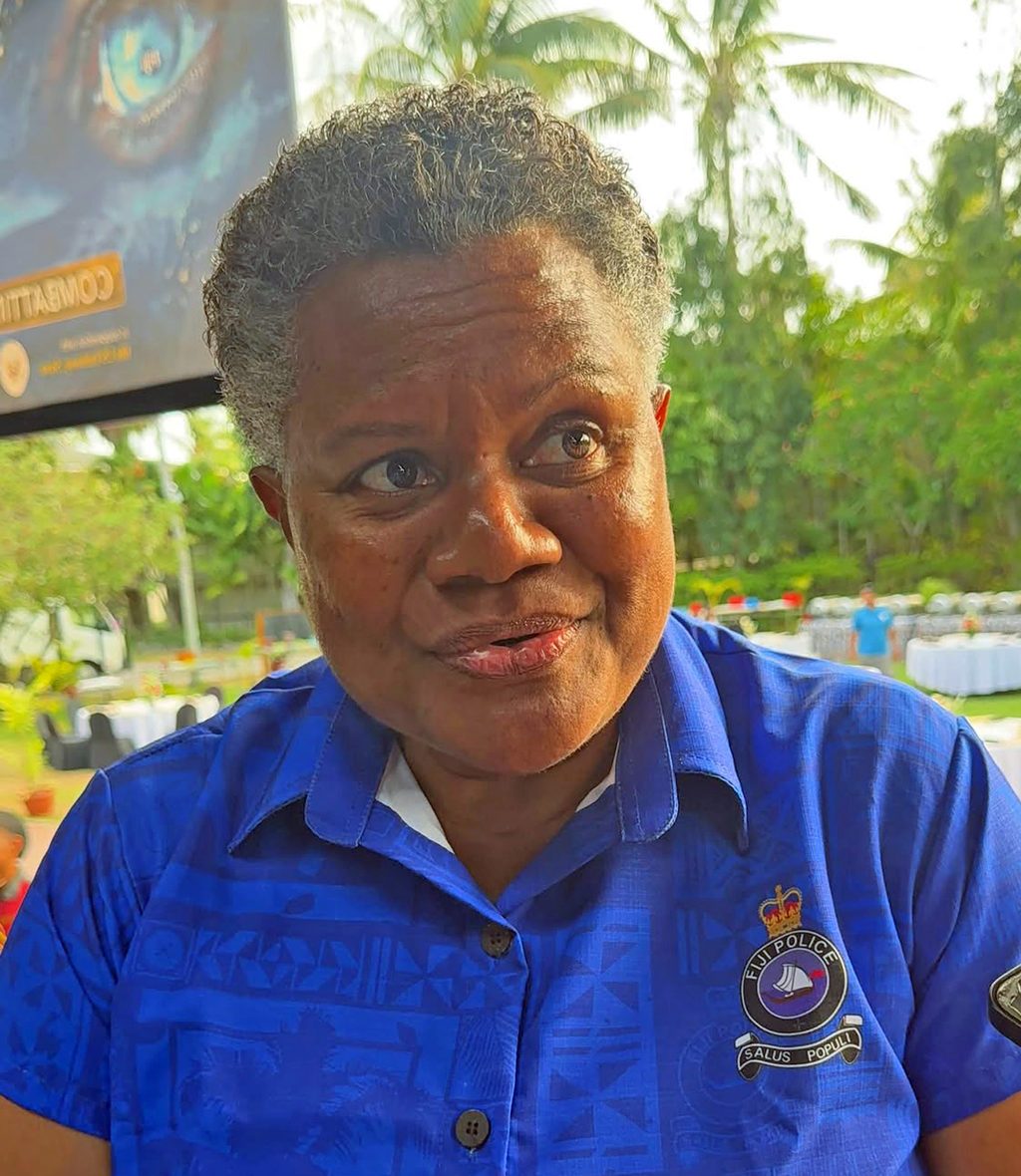
Pacific Small Island Developing States (PSIDS) chair and Minister for Environment and Climate Change Lynda Tabuya said the region is fighting to stop more communities from relocating to higher ground, keep the planet cooler, and confront the “super El Niño” driving states of emergency and unprecedented drought in Fiji, Tonga, and neighbouring states where 27 of Fiji’s 44 water sources have reached critical levels and dam closures loom by January.
“For us, it’s about survival,” Ms Tabuya said, confirming she has extended her stay in Türkiye until Monday to continue fighting for the Pacific’s priorities.
“It’s about ensuring that no more communities have to relocate to higher ground, that we need to keep the earth cooler, and we need to hold our large emitters, our fossil fuel producing countries, to the table. They have a moral obligation to do so. At the very least, they also have a legal duty under the International Court of Justice advisory opinion.”
Pacific leaders have flatly rejected trading away fossil fuel phaseout language for CCUS and electrification targets. Ms Tabuya noted that 75 per cent of CCUS technology is deployed for enhanced oil recovery — pumping carbon underground to extract more oil.
“If we don’t get what we are asking for to acknowledge a transition away from fossil fuel, then they need to remove the specific reference to CCUS in the text as well,” she warned, adding that if major emitters refuse to budge, Pacific nations will stay in the closing plenary to formally reject the cover decision rather than quietly walk out.
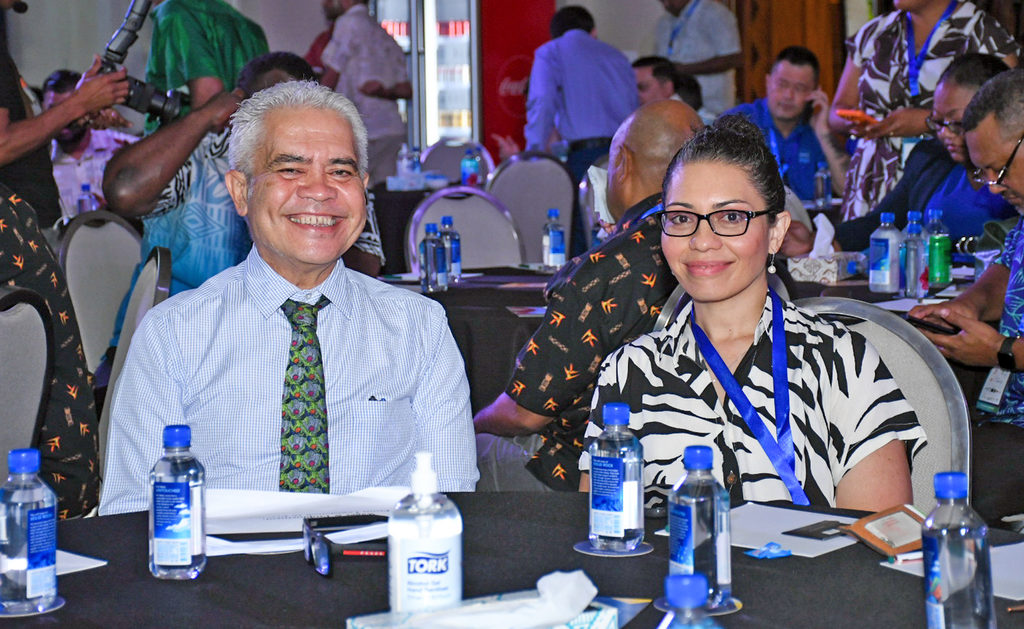
Tuvalu’s Minister for Climate Change and Environment, Dr Maina Vakafua Talia, echoed that defiance in a tense media huddle and an official statement. Having already rebooked his flights to stay through overtime, Dr Talia dismissed suggestions that COP overtime is business as usual.
“You might say, ‘We have been here before.’ But have we?” Dr Talia asked. “Have we been here, beyond the 1.5°C safety limit in the territory of overshoot? Have we been beyond the tropical coral reef tipping point?”
Citing the latest UNEP Emissions Gap Report projecting 2.8 degree Celsius of warming under current policies, Dr Talia stressed that addressing fossil fuels is non-negotiable. “We’re talking about the root cause of all of this. If we cannot address the fossil fuel crisis, then we are wasting our time here.”
Speaking about the long hours of waiting for the coveted text, permanent secretary for Environment and Climate Change and PSIDS lead technical negotiator, Dr Sivendra Michael, described negotiators working until 4am and 5am taking a heavy physical and mental toll.
Dr Michael revealed that earlier draft iterations crossed multiple Pacific red lines, dropping the Transition Away from Fossil Fuels (TAFF), weakening links to the second Global Stocktake, diluting International Court of Justice language, and failing to establish concrete pathways to triple adaptation finance by 2035. Attempts to walk back consensus language agreed at previous summits, he said, amount to “negotiation in bad faith,” particularly after the road to COP31 began with the Pacific Pre-COP.
Outside the closed negotiating rooms, frustration boiled over among civil society demonstrators. Activists who dubbed Antalya “the worst COP ever” and hung “missing” posters for a cat named “Ambition”, staged dramatic interventions.
A day after the summit’s official deadline, countries remained bitterly divided. A coalition of roughly 130 nations spanning the Pacific, Latin America, Europe, and Africa is demanding the restoration of fossil fuel transition language and concrete adaptation finance targets, clashing with resistance from petro-states led by Saudi Arabia.
Today, as Pacific negotiators and their heads of delegations continue to hash out language that could hopefully reach a consensus, the fact remains that this year’s Summit has caused a number of deep divisions.
Yet even if Antalya falters, the region is forging ahead. Dr Talia announced that Tuvalu and Ireland will co-host the second international conference on the Transition Away from Fossil Fuels in July 2027, building on Colombia and the Netherlands’ 2026 Santa Marta summit. Guided by the Tuvaluan spirit of tuakoi, good neighbourliness and solidarity, the Pacific is proving that whether inside the UN text or beyond it, its resolve will not be extinguished.