
SINCE the passing of the 2026-27 National Budget, Government expenditure has come under increasing scrutiny, with questions being raised over how public money is being spent at a time when Fiji continues to carry a significant debt burden and households are feeling the pressure of rising costs.
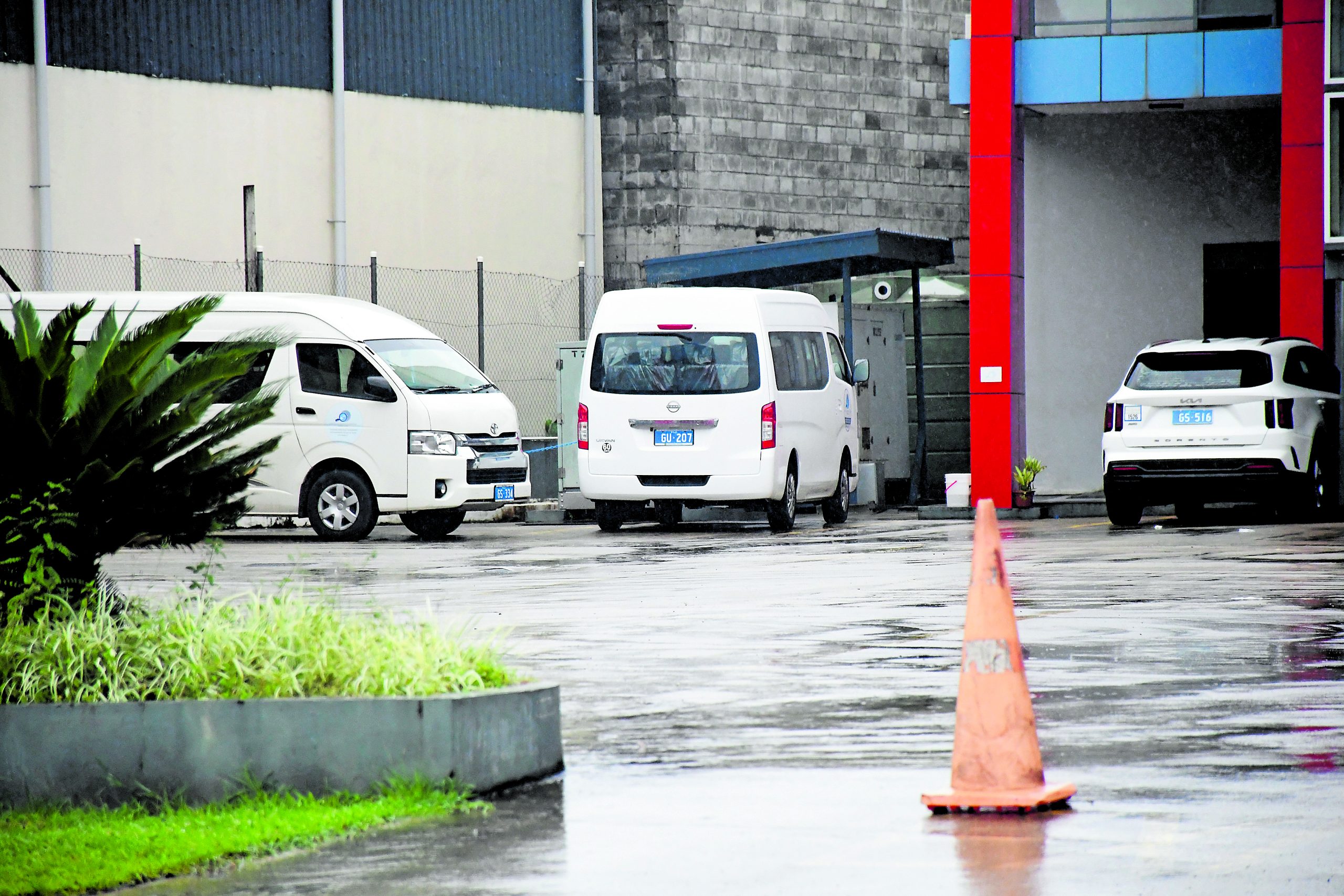
And perhaps few things are as immediately recognisable as the Government’s fleet of vehicles.
We have all seen them. The shiny black “Land Cruiser Prados” on our roads, carrying the blue number plates that tell you the person inside is not just another driver on the road.
Someone important is inside. And to be fair, many would argue that they should be.
These are the people making the decisions of Government, sitting in Cabinet, representing the country and, ultimately, entrusted with looking after the welfare of its people.
There is an argument, therefore, that the vehicles transporting the country’s highest decision-makers should reflect the positions they hold, the responsibilities placed on them and the image Government wants to project.
But that argument is increasingly being tested against another one — that Government should also be looking for ways to save money. And the numbers are not insignificant.
According to former finance minister and senior economist Professor Biman Prasad, Government spends between $30million and $35million every year on vehicle leasing, with the current arrangements potentially costing between $100million and $108million over three to four years.
For a public already questioning the size of Government expenditure, that is a substantial amount to spend on vehicles.
Some have gone as far as suggesting ministers should share vehicles, particularly against the backdrop of rising fuel prices and growing concern over Government spending.
It is an argument that sounds reasonable. After all, when families are being asked to absorb higher costs, why shouldn’t Government also be looking for areas where it can cut back?
But the answer is not quite as simple as saying Government should buy cheaper cars or stop leasing them altogether.
There is, however, very limited public understanding of the process behind these vehicles — why particular models are chosen, what Government actually considers when selecting them, and how the decision is ultimately made.
Until now, at least.
The history behind the bill
Speaking to this newspaper Prof Prasad said before 2008, Government had its own system for managing and maintaining its vehicles.
There was the Public Works Department, maintenance units, divisional engineers, garages, mechanics and technical staff. Government owned the vehicles and had the infrastructure to service them.
Prof Prasad said that changed in 2008 when the then interim government moved towards leasing, particularly for non-specialised vehicles used for everyday government operations.
“By 2022, that arrangement had been in place for 14 years,” he said.
“But what had also disappeared, and what the Coalition inherited, was that during those 14 years was the infrastructure that made government ownership practical.
“There was no longer a PWD vehicle maintenance system. There were no government maintenance units and no network of garages and mechanics operating in the way they once had.”
Prof Prasad says this was central to the assessment made when the Coalition Government came into office.
The Government looked at whether it should return to purchasing its own vehicles, but the calculation was not simply about the cost of buying the cars.
It would have had to rebuild the infrastructure to maintain them or pay private companies to do so.
That would have meant a significant initial capital outlay followed by the recurring costs of servicing, insurance and maintenance.
Leasing, by comparison, puts those costs into the contractual arrangement. Prof Prasad says Government therefore concluded that returning to ownership was not financially viable.
And that argument is difficult to dismiss simply because the headline leasing figure looks large. Government is not comparing $35million a year in leasing with the purchase price of an equivalent fleet.
It is comparing two different systems, with two very different cost structures. That is why the ownership-versus-leasing argument, by itself, does not really settle the issue.
The numbers
When the Coalition Government took office in 2022, Prof Prasad estimates there were around 1300 government vehicles.
Today, he puts the figure at roughly 1500. Prof Prasad himself says that when Government examined the issue in 2023 and 2024, the question was not whether leasing was bad.
It was how many vehicles Government actually needed.
“We have not been able to control the number,” he said.
That is arguably the more important admission. Because even if leasing is the most economical way of providing Government with vehicles, the savings from leasing become less meaningful if the fleet itself continues to grow.
Prof Prasad points to the creation of additional ministries and departments and the growth in the size of the civil service as reasons for the increase.
“There are political imperatives as well. We had a three-party coalition and now we have additional 11 members joining from the deregistered FijiFirst party.
“There have been more ministries created. And so, naturally, there was a political imperative, and I think people understand that, why it happened.
“I think those who are, especially the Opposition, they have no leg to stand on any of the criticism of the size of government and what happened, because even if they, what we inherited was a system that was built on extravagance.
The cost of choosing cheaper
There is also a legitimate argument against simply assuming that the cheapest vehicle is the best vehicle.
Finance Minister Esrom Immanuel told this newspaper that the Government considers more than the purchase or lease price when deciding what vehicles are required.
Rural accessibility is one of the greatest considerations.
“The ones that will service us and also enable to service the rural areas where some of the cars have difficulties,” Mr Immanuel said.
“So that’s why we choose those cars plus efficiency in the fuel consumption.”
That last point is particularly relevant now, as Fiji navigates the consequences of higher international fuel prices as conflict in the Middle East puts pressure on global energy markets.
And as Prof Prasad puts it, a vehicle that is cheaper to acquire but significantly more expensive to operate is not necessarily the better value for taxpayers.
So there is a reasonable basis for Government specifying vehicles according to operational requirements rather than simply choosing the cheapest models available.
However, permanent secretary for Finance Shiri Goundar also clarified another important part of the arrangement.
The leasing companies do not decide what Government gets. Government does.
Ministries, departments and agencies submit their requirements, including the type and number of vehicles needed.
“The Ministry of Finance then consolidates those requests and conducts the procurement process, with vehicle specifications included in the tender documents,” Mr Goundar said.
“The bids are assessed against administrative, technical and pricing criteria before the appropriate authority approves the contracts.”
That means the six companies currently offered contracts — Asco Motors, Carpenters Motors, Niranjans Autoport Pte Ltd, Kia Motors, Palas Auto Services and Vision Motors — are responding to specifications set by Government.
Mr Goundar says the procurement cycle provides opportunities for Government to assess vehicle requirements, specifications and pricing when planning future leasing arrangements.
The abuse problem
Prof Prasad also addressed concerns around the misuse of government vehicles, saying the Goalition Government had taken a number of measures to try to prevent it.
His claim is that misuse has not been completely eliminated. He acknowledged that there are still “delinquent” cases involving drivers or others who may misuse government vehicles, but said Government now has stronger systems in place to identify and monitor that behaviour.
One of those measures is GPS tracking across government vehicles. The system generates reports, including information on speeding and idling, which are provided to ministries and agencies to assist with fleet management and driver accountability.
Government has also introduced a toll-free number through which members of the public can report suspected misuse.
“These measures were put in place to minimise abuse and make drivers and those responsible for government vehicles more accountable for how they are used,” he said.

