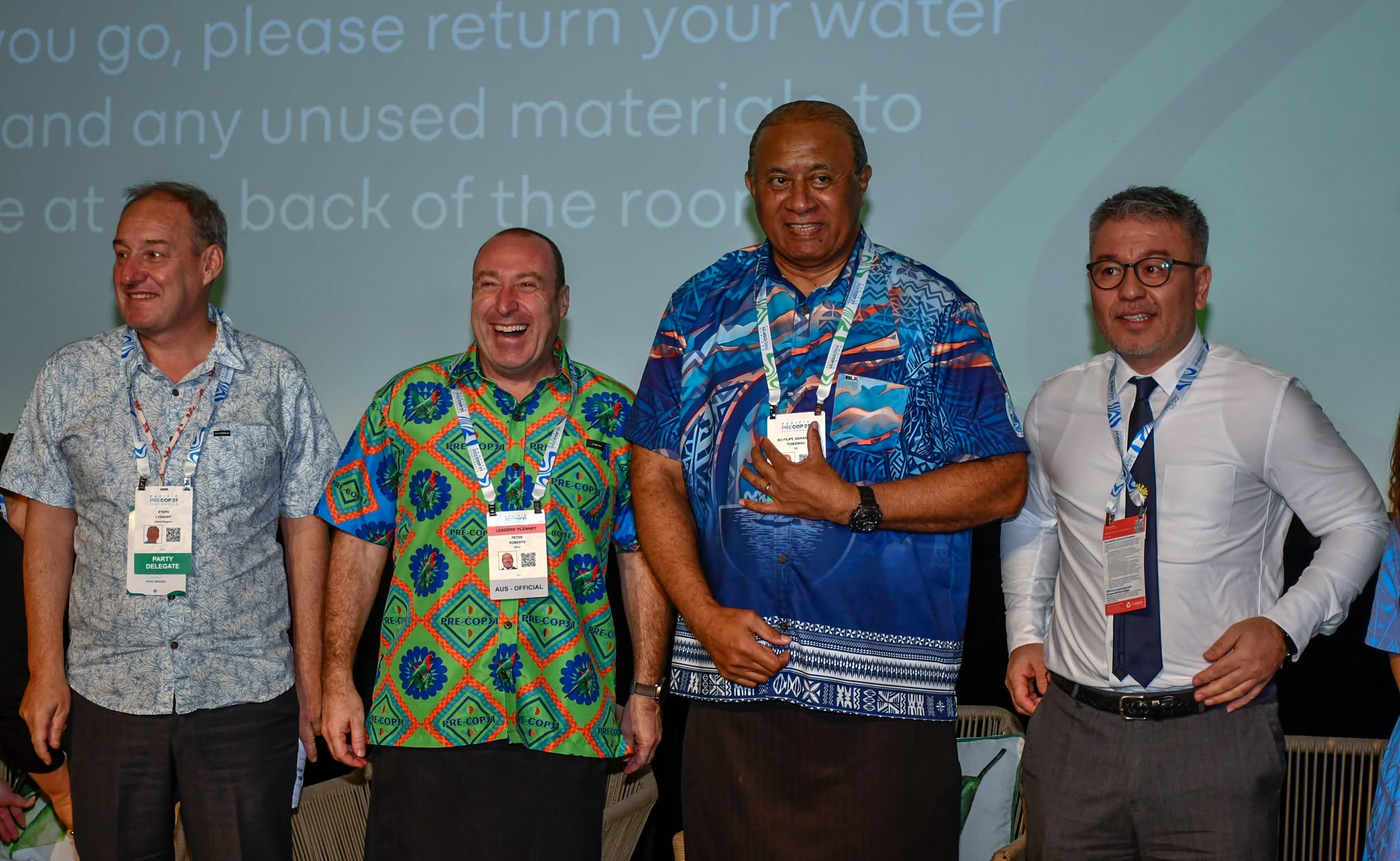
FIJI’s thermal generation still accounts for about 44 per cent of electricity generation, says Minister for Public Works Ro Filipe Tuisawau.
Speaking at the Rural Electrification Blended Finance Showcase at the pre-COP31 Summit in Nadi, Ro Filipe highlighted the immense work still needed for Fiji to realise its 100 per cent renewable energy goals by 2035.
“Our transition requires significant investment in new renewable generation, storage transmission, and grid modernisation. We must reach those communities when extending the main grid,” he said.
“The energy transition must reach the last mile. That is why our national policy explicitly prioritises decentralised mini-grids and off-grid renewable energy solutions.”
Ro Filipe said Fiji’s energy goals could not be deemed complete when rural communities were still living without electricity.
“We cannot declare Fiji’s energy transition complete because Suva and Lautoka have become greener when a family on an outer island still does not have reliable electricity.
“Therefore, a just energy transition must reach every household, every community and we must think beyond our current locations.
“Reliable power supports fisheries, food storage, water systems, telephones, businesses and operations.”
While pointing out Fiji’s Rural Electrification Program, Ro Filipe highlighted the need for investment in rural development.
“Rural electrification is not simply an electricity access program.
“A renewable energy project serving 60 to 80 households on a remote island may be socailly essential, economically transformative and consistent with our climate commitments
“This is the reality of small island developing states and this is why public and conservative climate finance remains essential.”
The summit ended yesterday.