THE history of the museum is the living proof of the passion of the people working there.
The Fiji Museum has an extensive collection of Fiji’s heritage and arts including that of other races in Fiji.
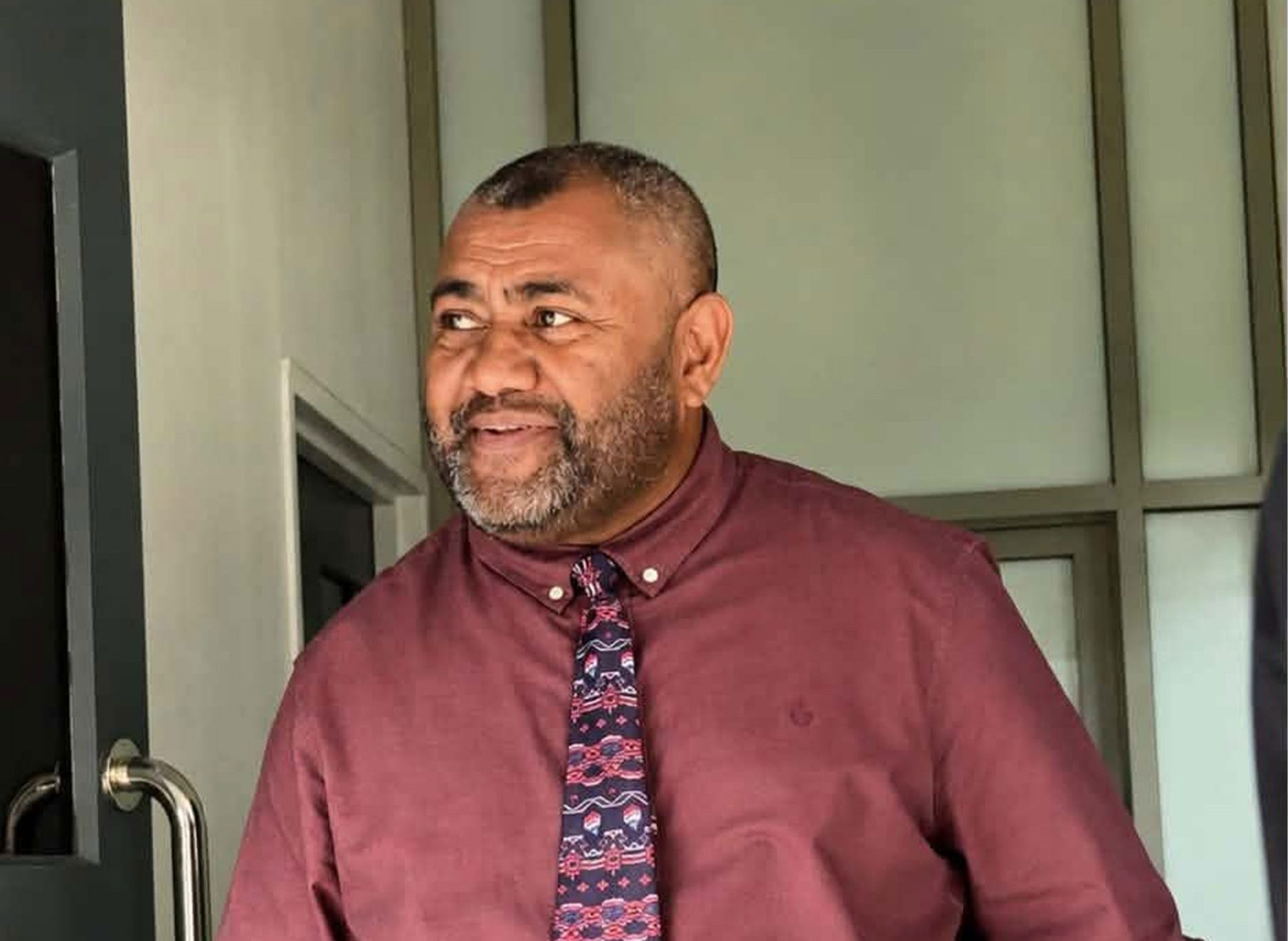
Ratu Sela Rayawa, 63, originally from Nabudrau in Noco, Rewa is the oldest worker at the Fiji Museum.
He shares how the building holding Fiji’s rich heritage must be preserved and celebrated.
Ratu Sela said he first worked as a front door cashier and was now the chief librarian and registrar. Ratu Sela said the passion for his profession grew after working throughout the years.
“I have seen this place develop artefacts and relics. I have seen this place grow,” Ratu Sela said.
“I love my job, it is a very interesting place to work in.
“I have learnt a lot about Fiji’s history and had the honour of holding in my hands documents and artefacts that our forefathers made or wrote.
“What I love most about what I do is that I get to help preserve and enhance the care of Fijian history.
“But I want more young people to visit the museum, to see for themselves where Fiji originated from, what its history is and the colourful stories of our ancestors. The museum is the celebration of Fiji’s long history.”
How it began
He said people thought the museum was just a place with old stuff, but really it was a house of treasures.
“The idea for a museum first started when William Allardyce presented his prized collections to the Suva Town Board which constituted the first collections.
“This was from 1906 and there was a discussion to preserve the collection until 1929 when the museum was legally instituted under the government.
“Since then it has always been state-owned.
“There have been several locations of the museum from the Carnegie Library to the Veivueti House and also Vaileka because it was not until 1952 when the current building was built and was officially opened by the Governor later in 1955.”
Two most popular artefacts
According to Ratu Sela the most popular artefacts at the Fiji Museum today includes the Drua and the rudder of Captain William Bligh’s vessel, the HMS Bounty.
Ratu Sela said Fijians in the past developed a highly complex culture.
“It took our early ancestors thousands of years of experience to succeed in gaining remarkable control over their environment.
“They had developed the art of building and operating large ocean-going canoes which could carry up to 100-200 men and remain at sea for months.
“Fijian canoe or drua was the large double canoe. Instead of the outrigger being formed out of a log of light wood it is a smaller canoe connected to the larger canoe by strong outriggers, on which is built a platform and a deckhouse.
“In the old days these drua double-hull canoes were very large, 100-feet or more in length carrying over 100 men.”
Ratu Sela said the rudder of the HMS Bounty was raised from the wreck of the Bounty by Parkin Christian in 1932.
“It then measured roughly 13 feet by 3-feet.
“Unfortunately it remained at Pitcairn until 1942, and pieces were broken off by tourist, reducing the fragment to extreme measurements of 7’6 x 2′.
“The governor of Fiji, then responsible for administering Pitcairn Island, intervened in 1942, writing to the secretary of State for the Colonies.
“At the Lords Commissioners of the Admiralty — legal owners of the Bounty agreed that the rudder remnant should be housed at the Fiji Museum, and it has been here ever since.
“One fragment of the rudder was sent to the National Maritime Museum in Greenwich.
“Other Bounty relics we hold here in the Museum include a bronze belaying pin, a nail, some lead sheeting, and pig iron.”
He said the bilibili exhibits also drew a lot of attention from museum goers.
“The bilibili or HMS No Come Back rafts of this type are used for transporting farm produce from the most inland part of Viti Levu where there is no road access to the coastal markets where they can be sold.
“Today river transport of this kind is still very much the major transportation link for the river villages up the interior.”
Ratu Sela also explained the Fiji Museum is the only institution that annually publishes materials on cultural and archeological work done in Fiji.
“We also have this printed in our Domodomo scholarly journal which is subscribed to by overseas institutions, both museums and universities as well as a number of local persons here.
“Our library also contains a wealth of old books and archival material as well as old photographs of Fiji which is useful in finding out more of our history. Also the research work that comes out of archeological and paleontological work and surveys here adds to our knowledge of our history.
“The artefacts themselves, also attest to our history, in the mats they used to weave, chants/songs they chanted that are available in our oral history tape collection, old musical instruments — now no longer even recognised as Fijian — the nose flute — a recording of it was done back in the 1970s.
“We have roughly 10,000 artefacts in storage, approximately 10,000 photographs and slides, 10,000 archeological materials so a total of 30,000 approximately. I say approximately as we do have each year, people who come in to donate artefacts or photographs adding to the number.”
He said other artefacts not Fiji focused were also available at the museum.
“They are from all over Fiji and Rotuma, some coming from overseas (taken by missionaries and their families and brought back by their descendants), some of the collections were given as a large collection to the museum by collectors from well-known families, some of whom want to remain anonymous.
“Some collection does not see the light of day and these are for safe-keeping purposes only, they do not trust themselves or their families to look after the piece in good museum conditions so such items are left with us to keep for them until they need to use them — either for installation of chiefs.
“Some families would ask for complete confidentiality so these requests are also respected.
“Not all our collections are Fiji focused — we do have collections from our neighbouring countries in the Pacific region and also from other areas in the world, but this is minimal.
“We do try to accept Fijian artefacts first and then from the Pacific and the world later — in that order.
“However, we have tried to collect more from our communities such as from the Kiribati, Rabi, Tuvalu, and so on people living here in Fiji. And also collected more from the Indian community, especially stories relating to the Girmit era.
“Our oral traditions collection on tape, CD and video are increasing. We have been actively, when funds are available, trying to collect stories from the Indian community and the Solomons, PNG, Vanuatu communities, brought to Fiji via the blackbirding period prior to the Girmit era to work on plantations and roads here in Fiji. This was made possible through a grant given to us by the US Embassy back in 2003/2004.”
His own top five artefacts
• Lapita pottery which was believed to have originated since 1290 BC and was found in Ba.
• The drua (double-hull canoe).
• Rudder of the HMS Bounty.
• The shoe of Reverend Thomas Baker.
• The walking cane of the Tui Macuata.
Other collections available at the Fiji Museum
• Early European discovery of Fiji (1643-1799).
• Fiji’s relationship with western Polynesian i.e Tonga and to a lesser extent, Samoa — (1750-1850).
• Sandalwood trade (1804-1814).
• Beche-de-mer trepang trade (1820-1860).
• Whaling trade (1820-1860).
• Introduction of Christianity (1830).
• Vanuatu New Hebrides and Solomon Islands labourer trade 1865-1911).
• Cakobau Government (1871-1974).
• Cession to Britain (1874).
• Colonial Government (1874-1970).
• Indian indentured or Girmit (1879-1919).
The third or Costume Masi Gallery is a small airconditioned gallery in which part of the museum’s very valuable collection of old masi (barkcloth), some of which dates from the 1830s is displayed.
You also get to see the newest additions to the museum the Indo-Fijian Gallery and the Art Gallery.
The fourth gallery is the Indo-Fijian Gallery, which gives an insight into the culture and lifestyle of the Fijian of Indian decent community in Fiji focusing particularly on their past the indentured labours period Girmit.
The fifth gallery is the Art Gallery, which was developed to showcase the Fiji Museum art collection and other collections.
The sixth gallery is the Natural History Gallery, which includes coral and marine shells, birds of Fiji and reptiles.
More appreciation needed
Adi Meretui Ratunabuabua, the director of the Fiji Museum, has encouraged more people to visit the museum and celebrate Fiji’s history.
“I hope that more young people will visit the Fiji Museum to appreciate the history of the country and their heritage.
“Heritage is the identity wherever you come from. If you don’t know where you’re coming from you don’t know where you’re going in the future.”
She said so many people may claim to know about their heritage but rarely preserved it.
“You’ve got to look deeper for your identity, engage with heritage what you do or not do but if you don’t do you should appreciate it. But the interesting part about Fiji is that there are living traces of history and that is through people and they must learn while they are still alive.”