
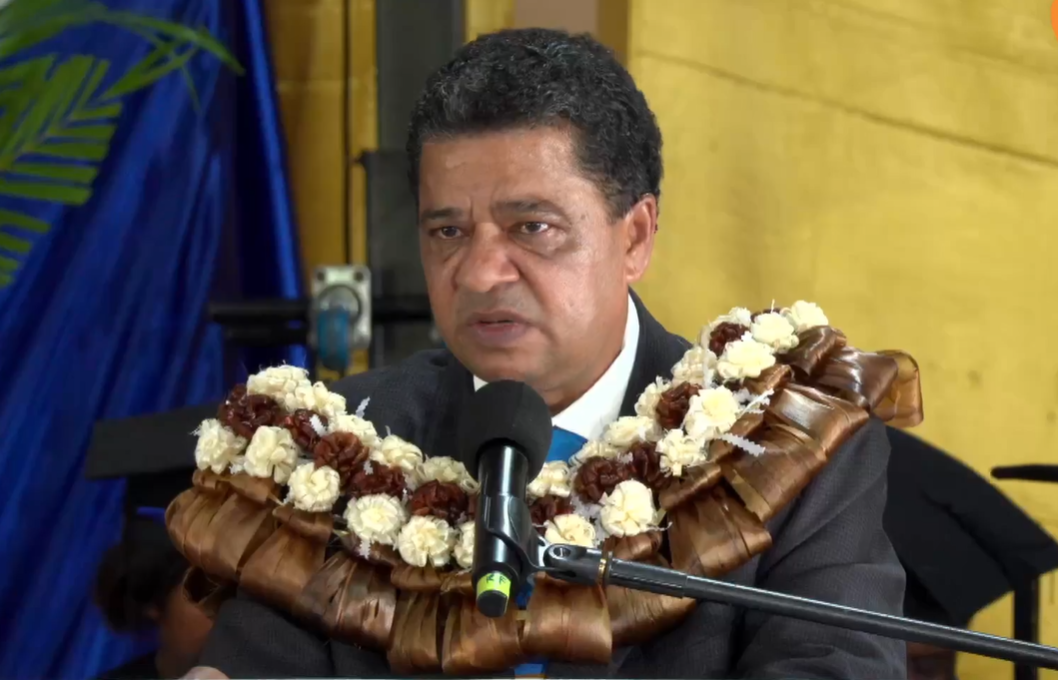
Higher Education Commission of Fiji chair Steve Chand says national qualifications must remain firmly under the control of Fiji’s education institutions, warning that poorly targeted training programmes in the past failed to meet the needs of students or communities.
Speaking at the Fulton Adventist University College graduation yesterday, Chand said he was pleased that the current government supports strengthening nationally accredited qualifications.
“The previous government — and I’m glad the current institutions — please take charge of our national qualification, which we will give to you free of charge,” he told graduates.
“Because with the national qualification, which is government accredited and vetted by the Fiji Higher Education [Commission], an individual or child can get some level of employment.”
Chand also revealed that he had removed what he described as a “one-size-fits-all policy” from past training initiatives, saying it had led to courses being rolled out simply to satisfy donors rather than community needs.
“When we had a donor give us a million dollars and say, ‘go train students,’ we would identify a course — whether it suited them or not — just to tick the boxes for our donors,” he said.
“We’d get the numbers in and disperse the course.”
He cited one example involving a small outboard engine repair course, which was delivered to groups from maritime areas as well as inland communities.
“I saw there was a course in small outboard engine repairs,” he said. “There were 20 students from Lau, 20 from Kadavu, 20 from Levuka — all maritime islands. There were also 20 students from Bemana.”
Chand questioned the relevance of the training for the inland community.
“What would the 20 students from Bemana, located up in the hills, do with a qualification in outboard engine repairs? That doesn’t make sense to me,” he said.
He said this experience underscored the need for community-specific, needs-based training, which he described as a key focus moving forward.
“We took that off the shelf, and now we are custom-designing our courses. This is the first government that has supported such an initiative,” Chand said.
The Commission will continue working with tertiary institutions to ensure national qualifications meet labour-market needs and improve job prospects for graduates.

