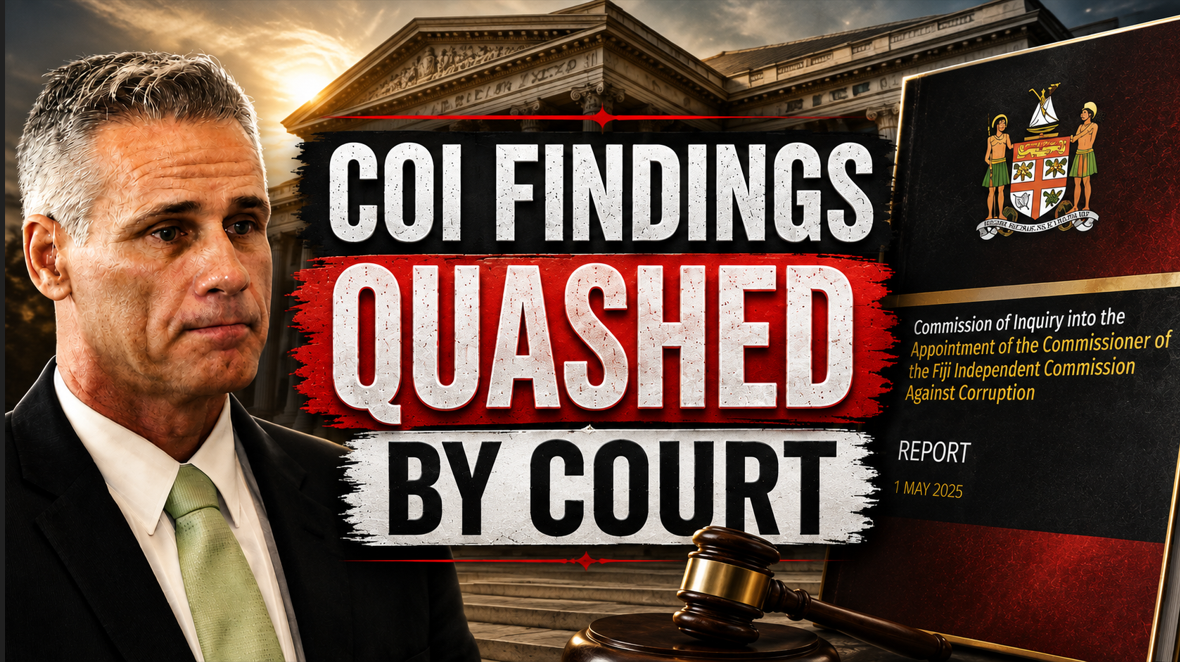
Former Attorney-General Graham Leung was “blindsided” by adverse findings made against him by the Commission of Inquiry and should have been given an opportunity to respond before its report was completed, the High Court has found.
Justice Dane Tuiqereqere, in his judgment quashing the COI findings, said Leung had not been given notice before or during the hearings that his conduct would become the subject of adverse findings.
“Mr Leung would have been blindsided by the Commissioner’s adverse findings,” Justice Tuiqereqere said.
“He was not given any notice before or during the COI hearings that his conduct would be the subject of adverse findings.”
The judge said Leung could not have anticipated the “harsh criticisms” ultimately levelled against him, which caused reputational harm and were followed by the termination of his appointment as Attorney-General.
The judgment notes that Leung’s involvement in the appointment process was limited to September 2 and 3, 2024.
Justice Tuiqereqere said Leung’s involvement was required as part of the statutory process and his evidence was not controvertible.
The COI, however, was highly critical of Leung, including over his decision to withdraw his endorsement of the appointment before later confirming it.
Justice Tuiqereqere noted that the Commissioner described Leung’s conduct on September 3, 2024 as potentially constituting interference with a FICAC investigation and obstruction or perversion of the course of justice.
The COI recommended that Leung be investigated by FICAC or Police for possible criminal offending and concluded he was one of 12 people who had used “undue influences” in Malimali’s appointment, albeit “perhaps unwittingly”.
Justice Tuiqereqere noted the Commissioner did not recommend Leung’s removal from office as Attorney-General.
However, the adverse findings caused Leung “considerable reputational harm” and the Prime Minister expressly acted on those findings to terminate his appointment.
Leung told the court that “at no point was I put on notice of any allegations which had been against me personally” or of potential adverse findings to be made by the COI.
He also maintained that nothing in his evidence amounted to an acceptance that he had acted improperly, unlawfully or in breach of his duties.
Justice Tuiqereqere found that natural justice and procedural fairness required Leung to be notified of the draft adverse findings and given an opportunity to respond before the Commissioner completed the report.
“As a matter of natural justice and procedural fairness Mr Leung was entitled to receive notice from the Commissioner of the draft adverse findings with an opportunity to provide a response before the Commissioner completed his report,” Justice Tuiqereqere said.
The judge added that because the Commissioner had not provided that opportunity, the Prime Minister and President should have done so before Leung’s appointment was terminated and before the report containing the adverse findings was released publicly.