
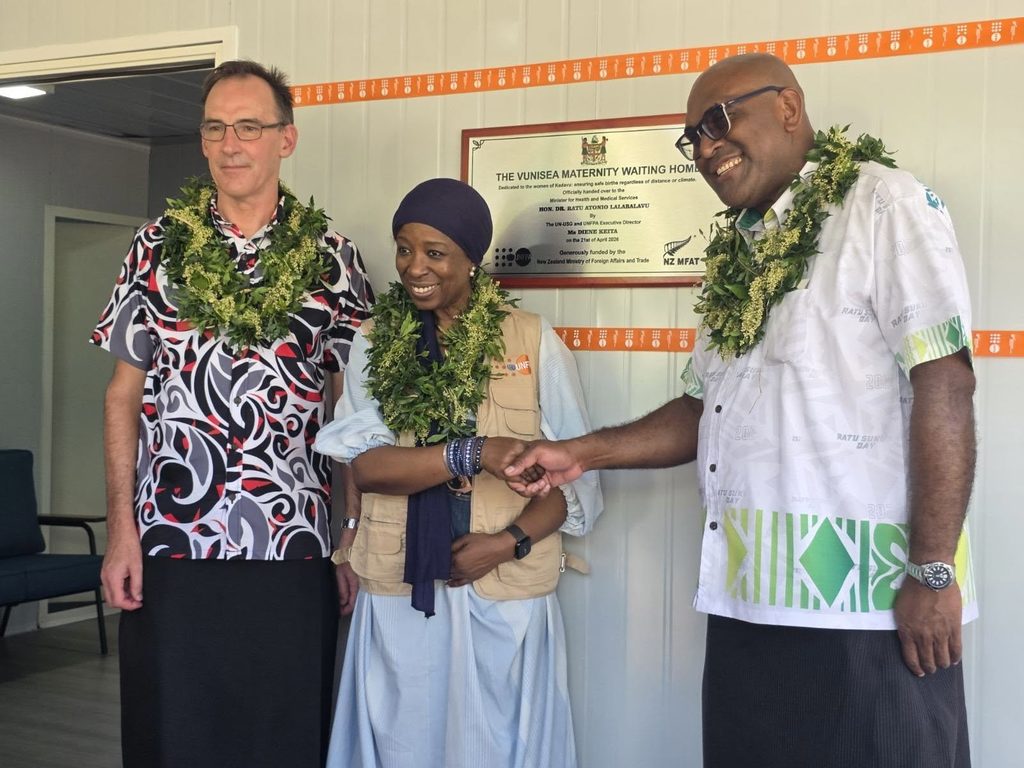
A NEWLY opened maternity waiting home in Kadavu is being hailed as a lifeline for expectant mothers across the island, offering safer access to care in one of Fiji’s most geographically challenging regions.
United Nations Population Fund (UNFPA) executive director and United Nations Under-Secretary-General, Diene Keita, described the facility as a “symbol of hope” following her visit to the island yesterday.
Officiating at the opening, the executive director said the home would serve women from around 70 villages, many of whom face long and difficult journeys to reach the nearest hospital.
“It represents hope that many, many women can get all the care they need before getting to the nearest hospital,” Ms Keita said.
“And I think that changes the community, the way they can bring themselves to believe in the future.”
The visit to Kadavu marked the highlight of Ms Keita’s brief trip to Fiji, during which she also met Prime Minister Sitiveni Rabuka, Health Minister Ratu Dr Atonio Lalabalavu and Assistant Minister for Foreign Affairs Lenora Qereqeretabua.
She said what stood out most during her visit was the strong sense of reassurance among villagers.
“I saw women and men very happy. I saw the elders and the leaders reassured, so that at least young women can benefit from every care that is needed,” the under-secretary-general said.
Bridging distance in island health care
While Fiji’s health system benefits from a well-trained nursing workforce, Ms Keita noted that geography remains a significant barrier to equitable access.
“The nurses are educated, they are everywhere, but there are a lot of islands.”
“So to make services closer to the population, having a maternity waiting home is extremely important.”
Facilities such as the one in Kadavu are designed to accommodate expectant mothers in the final stages of pregnancy, allowing them to remain close to medical support rather than risking late or emergency travel.
The executive director said the strategic placement of such infrastructure was also critical.
“It should not be too close to the coastline, and yet close enough to be able to be transported out,” she said, pointing to the need for climate resilience and accessibility in future health planning.
She added that investments in facilities like maternity waiting homes would strengthen the broader health system and lay the groundwork for further infrastructure development in remote areas.
Partnerships key to progress
UNFPA has been working closely with the Fijian Government to improve access to reproductive and maternal health services, particularly in hard-to-reach communities.
Ms Keita said her discussions with national leaders, as well as on-the-ground engagement with health workers in Kadavu, reinforced the importance of collaboration.
Travelling with the Health Minister, she met midwives serving rural communities, some of whom walk up to 25 minutes to reach their workplace.
“They were happy that at least there is a solution now.
“That maternity waiting room is so beautiful — two big rooms, sanitary, very well prepared. It is very nice.”
She emphasised that beyond infrastructure, the commitment of frontline health workers remained central to delivering quality care.
HIV prevention a growing priority
Ms Keita also addressed growing concerns around HIV in Fiji, particularly among young people.
She said UNFPA was supporting national efforts through a combination of prevention, education and access to services.
“HIV, we see it from two angles — mother-to-child transmission and prevention among young people.”
Prevention, she stressed, must be approached at multiple levels, from community leadership to formal education systems.
“At the community level, traditional leaders need to be aware so they can advise and give counsel. But also at school, and out of school — prevention at every single level.
“Ensuring young people understand how HIV is transmitted and how to protect themselves is critical.
“They need to know what services exist so they can take the right decisions,” she said, noting that UNFPA supports access to appropriate services and commodities.”
A lasting impression
Reflecting on her visit, the under-secretary-general described Fiji as a “blue continent”, defined as much by its vast ocean space as its land.
“The land may be small with 330 islands, yet it is more than one million square kilometres of sea.
Beyond geography, she said it was the warmth of the Fijian people that left a lasting impression.
“Fijians are extremely warm, extremely nice, extremely kind.”
She recalled joining women in dance during the Kadavu visit, an experience that underscored the strength of community bonds.
“What I saw in Fiji is that men and women can really showcase how, when they work together, they live together in harmony.
“The world can be a better place for everyone.”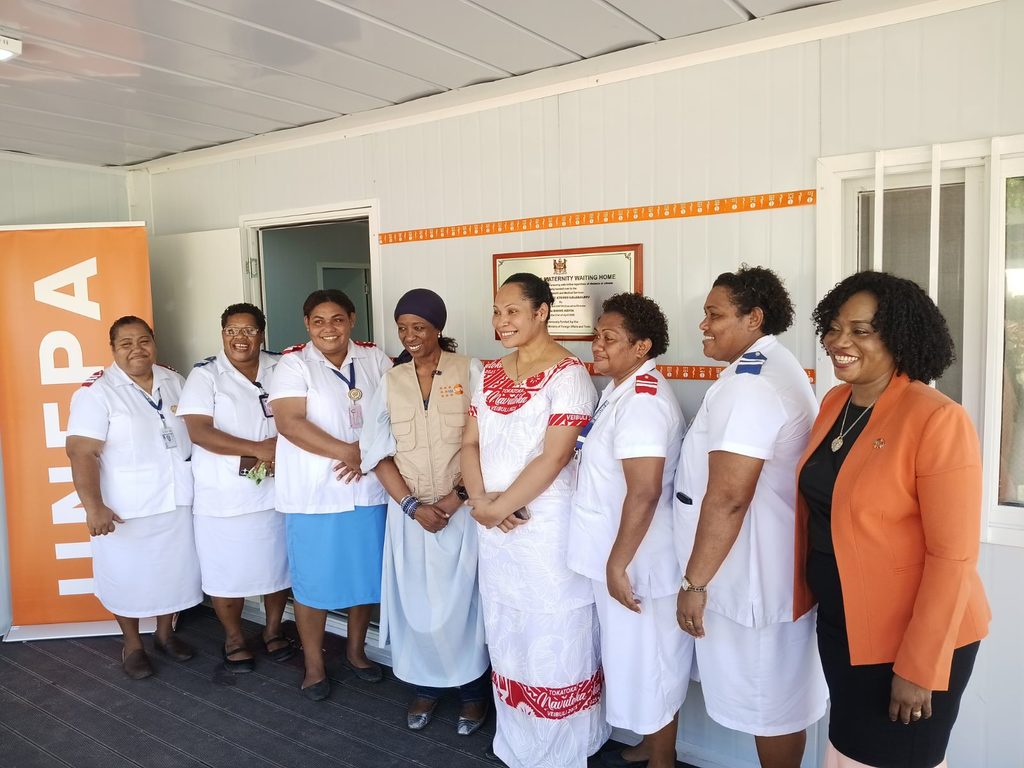
UNFPA executive director Diene Keita (fourth from left) with staff members of the Ministry of Health, Vunisea. Picture: SUPPLIED
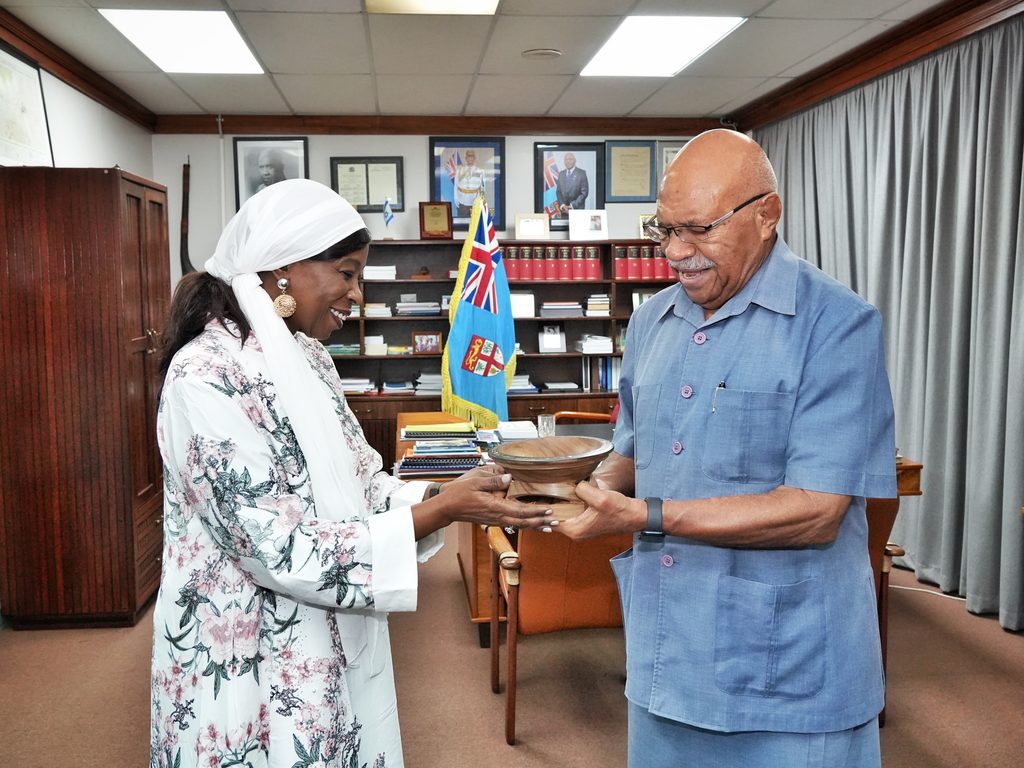
UNFPA executive director Diane Keita presents a token of appreciation to Prime Minister Sitiveni Rabuka in Suva.
Picture: SUPPLIED
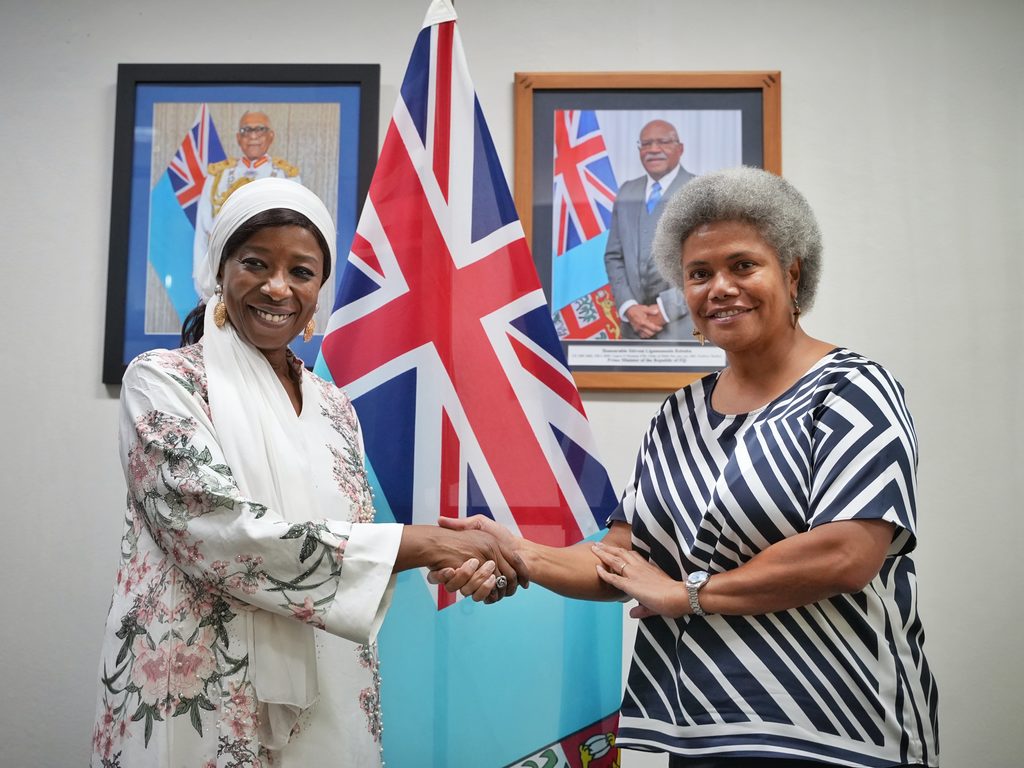
UNFPA Executive Director Diane Keita meets Deputy Speaker Lenora Qereqeretabua in the Ministry of Foreign Affairs office in Suva. PIcture: SUPPLIED

