
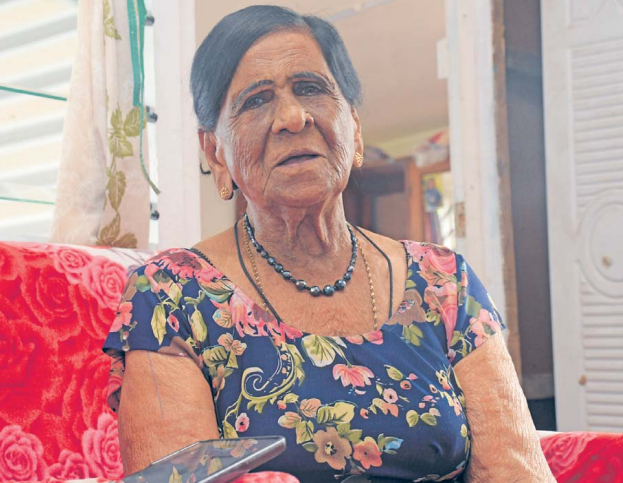
AT 95 years old, Sampat Lal still carries with her the memories, struggles and values of a generation shaped by hard work, sacrifice and unity.
Originally from Coloci, Seaqaqa in Labasa, Mrs Lal now lives with her son at Millennium Subdivision Stage 1 in Vuci, Nausori.
Born and raised in Baubale, Bulileka, she was the fifth among nine sisters and four brothers. Her parents, Deo Nandan and Kaushilya, were born in Fiji, while both her and her husband’s grandparents were descendants of girmitiyas.
Recalling her childhood, Mrs Lal said life was difficult, especially for farming families.
“Most of us during that time were unable to go to school because schools were far, transport wasn’t available and life was struggling for parents as they were mostly farmers,” she said.
“Our parents did everything they could in raising their children. We started working in the farm and doing household duties from a very young age.”
She said early marriages were common during that era and she married her husband, Bihari Lal, when she was only 13 years old while he was 17.
“After marriage, as a bride when I went to my in-law’s house, I was asked to cook a meal for everyone. I cooked it so nicely that everyone was so happy,” she said with a smile.
Mrs Lal said her father-in-law, Sarju, was a girmitiya who settled in Seaqaqa after completing his indenture. The family lived there until their land lease expired in the late 1990s.
“When I went to visit my families in Labasa, I got the chance to visit those places where we once lived. Tears run down from my eyes when I see those places which are left idle now.
“During our time those land were bearing fruits — sugarcane, rice, and many types of fruits and vegetables were grown on those land which are left idle now.”
Beyond the hardships, Mrs Lal remembers a Fiji where communities lived closely together regardless of ethnicity.
“We ladies used to wash our clothes together in the river, worked together in farms and ate together.
“Men used to work, eat and grog together and they all used to call each other bhaiya and bhaini (brother and sister).”
She said elders were deeply respected and treated like family.
“Those who were of our parents age, were called kaka-kaaki, mama-maami (aunty and uncle) and elderly were treated and respected as nana-nani, aja-aji (grandparents).
“We all lived a happy life. There wasn’t any division or hatred amongst us, unlike today.”
Mrs Lal believed modern-day politics had created divisions among people and said younger generations should learn from the lives of their forefathers and girmitiyas.
“Our forefathers and Girmitiyas had a struggling life but they were happy and lived a peaceful life.”
As we prepare to commemorate 147th Girmit celebration on Friday, Mrs Lal has a simple but heartfelt message for children and families – cherish and care for parents and the elderly.
“Children during our time had a lot of respect for their parents and elderly. We were very polite to our elderly as we had seen the sacrifices our parents were making for us.
“Our children should also do the same and never forget or ignore their parents and elders.”

