
Deputy Prime Minister Viliame Gavoka has called on political parties across the Pacific to create greater opportunities for young people to participate in leadership and decision-making, saying stronger democracies depend on stronger participation.
Speaking at the Regional Workshop on Youth and Democracy in the Pacific in Nadi yesterday, Gavoka said young people must move beyond being campaign volunteers and supporters and become active contributors within political parties.
“If we want stronger democracies, we need stronger participation,” he said.
“Political parties play a central role in democratic governance. They shape policy. They identify leaders. They contest elections. They influence national direction.”
Gavoka said young people should have opportunities to participate in executive committees, policy discussions and leadership structures.
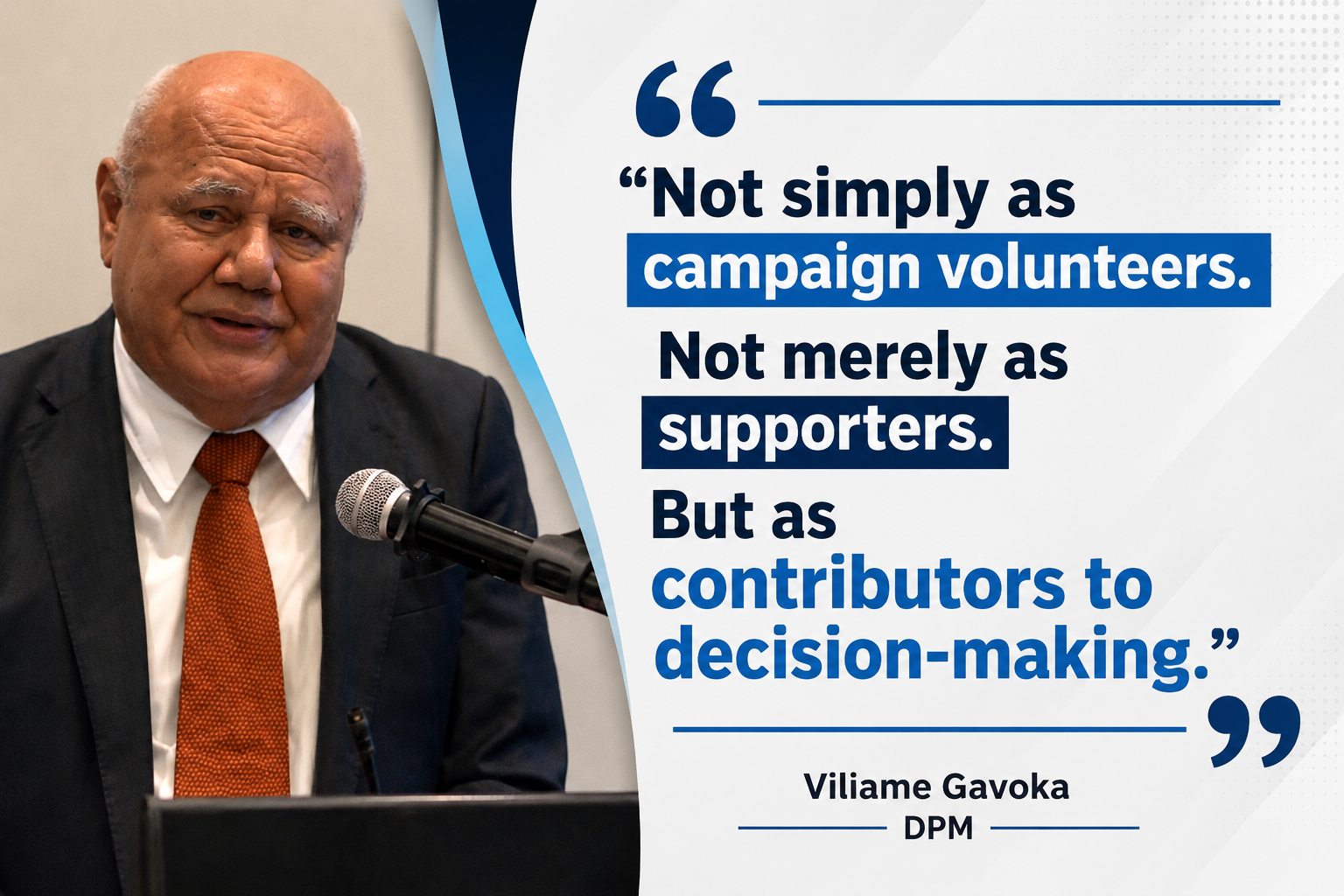
“Young people must therefore have a stronger presence within political parties. Not simply as campaign volunteers. Not merely as supporters. But as contributors to decision-making.”
He said leadership renewal was critical to maintaining healthy democracies.
“Fresh perspectives strengthen institutions. New ideas improve governance. And when young people are included, democracies become more representative of the societies they serve.”
Gavoka pointed to Fiji’s political transition following the 2022 General Election as an example of democratic participation in action.
“The formation of the current Coalition Government following the 2022 General Election was a significant moment in our country’s history.”
“It demonstrated the strength of democratic institutions and the peaceful transfer of power. But it also demonstrated the power of citizen participation.”
He said young people played an important role throughout the electoral process by participating in campaigns, mobilising communities, encouraging voter turnout and engaging in national discussions.
“Young people played an active role throughout that democratic process. They participated in campaigns. They mobilised communities. They encouraged voter participation. They engaged in national discussions. And they exercised their democratic rights.”
“Their involvement helped shape a democratic outcome.”
Gavoka told participants that young people should not view themselves solely as future leaders, but as individuals already making a difference in society today.
“That is why I say with confidence that young people are not simply the leaders of tomorrow,” he said.
“You are already shaping the realities of today.”

