

Rising fuel costs tied to the Middle East crisis have triggered a sharp decline in local fish supplies, forcing major Fijian distributors to absorb wholesale price hikes of up to 35 per cent.
At least two local retailers – Tebara Halal Meats and Fresh’et Super Butcher have reported that skyrocketing fuel prices were deterring fishermen from going out to sea, causing a severe shortage that has driven up the cost of everyday catches.
Tebara Halal Meats general manager Sabid Ali said local supply had plummeted compared to previous years.
“We are buying and paying according to grades,” Mr Ali told this newspaper in an interview.
“The prices we are paying to suppliers now is about a 35 per cent increase from what we were paying previously.”
According to Mr Ali, Grade A fish has leaped from $8 to $14 per kilogram. Grade B has climbed from $6 to $10, while Grade C has risen from $5 to $8 per kilogram.
To secure their stock, the company has had to absorb these higher costs.
“Otherwise, if we do not pay, we won’t be able to get those stocks,” he said, adding that the business was absorbing the pressure to shield consumers.
Tebara Halal Meats sources stock from Rakiraki, Labasa, and Vanuatu, alongside importing mullet fish from Vietnam and Australia.
Similarly, Fresh’et Super Butcher managing director Sean Chow reported that fish previously bought for $16 to $17 a kilogram had jumped to $20 or $21.
Fresh’et relies on local fishermen to supply the local market and its clients of government stakeholders, including prisons, hospitals, the military, and the hospitality sector.
Mr Chow said if conditions escalated, turning heavily to international imports would become their only viable option.
This wholesale pressure is now also rippling directly onto restaurant menus.
Dan’s Fish and Chips has been forced to increase its meal price from $11 to $13.
Restaurant office administrator Virginia Thaggard said their supplier, Khans Holdings, had raised Marlin prices from $13.50 to $15.75 per kilogram.
“We had to increase our food prices, otherwise we would be making a loss,” Ms Thaggard said, citing additional overheads like staff, gas, and ingredients.
Theresa Kean of Fish Lovers Cuisine shared a similar struggle, spending $50 to $60 for a single bundle of market fish.
She said her usual suppliers — who are family members — cannot fish regularly due to fuel costs, forcing her to consider a $5 menu price increase across the board just to keep her business operational.
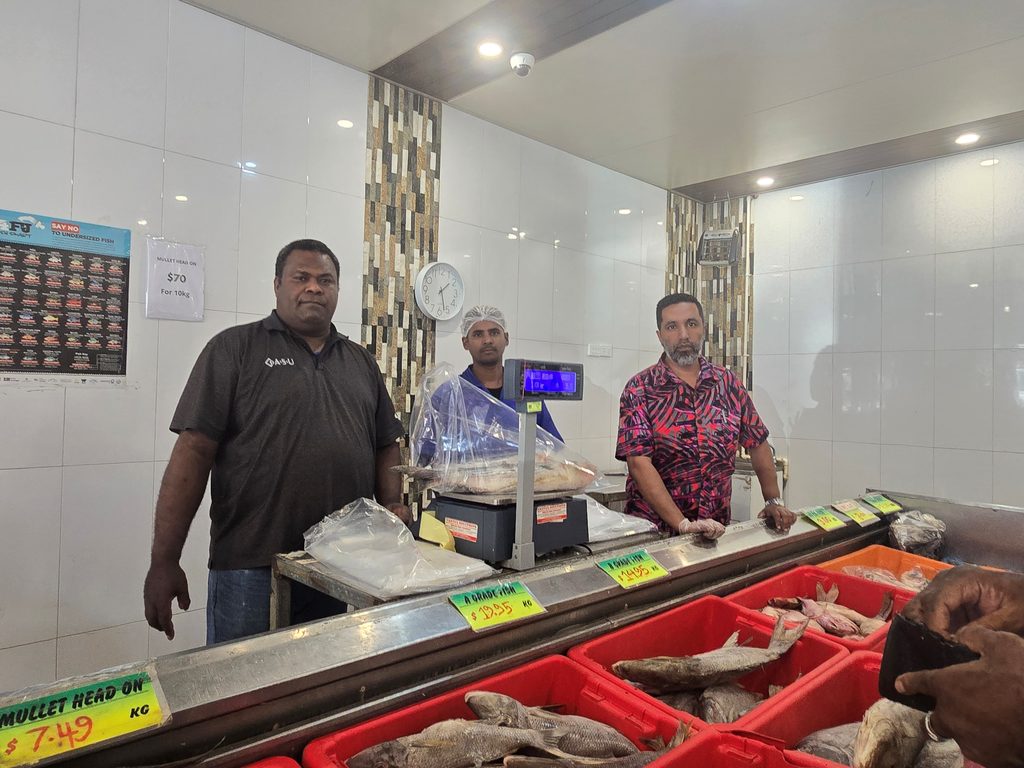
From L-R: staff of Tebara Halal Meats, Suva, Joeli Nadavu and M.S.Roni with supervisor Shameer Ali. Picture: KARISHMA KUMAR

