
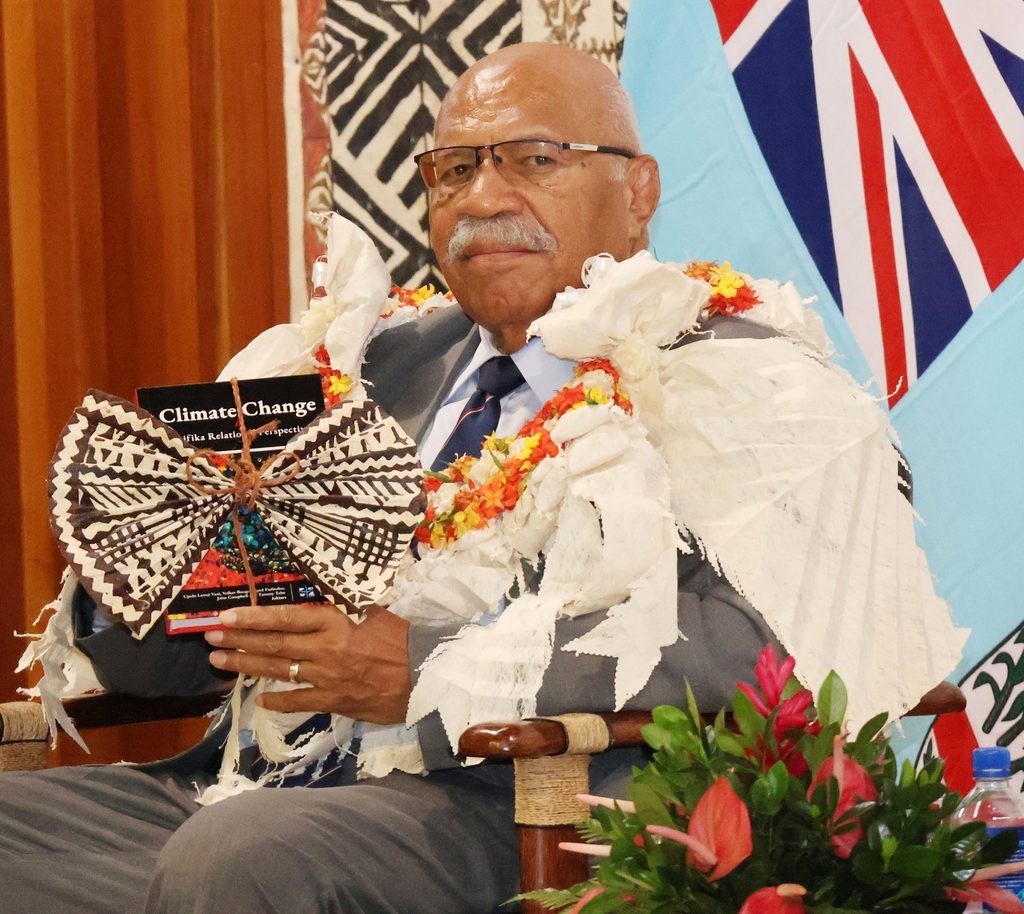
Prime Minister Sitiveni Rabuka has highlighted the importance of Pacific values, spirituality and traditional knowledge in addressing climate change, describing them as central to the region’s response.
Speaking at the launch of the book Climate Change in Pasifika Relational Perspectives in Suva on Tuesday night, Mr Rabuka said climate change in Fiji is experienced through people’s relationship with the vanua, ocean, communities and faith.
“For Fiji, climate change is encountered through our relationship with the vanua, ocean, communities, and in our faith,” he said.
The publication, produced by Pasifika Communities University Press under the Toda Peace Institute, brings together regional and international scholars.
Mr Rabuka said Pacific societies had never viewed life solely through technical or rational lenses, noting responses to crises were guided by spiritual responsibility, political relationships and moral obligation.
“While science, technology, and evidence-based policy remain vital, they cannot stand alone,” he said.
He described climate change as a complex global threat requiring equally comprehensive responses grounded in research and informed by the wisdom of communities and forebears.
“As climate change increasingly reshapes global conversations on security and stability, the Pacific offers an important perspective — one that is relational rather than transactional and grounded in long-term responsibility,” he said.
Mr Rabuka said the book framed a distinctly Pacific approach to climate change, combining cultural knowledge with academic insight and forward-looking perspectives.
“This volume stands as a testament to Pacific thought, leadership and collective goals,” he said.
“Beyond outlining the scale of challenges, it advances a vision linking climate action with peace, security and sustainable development.”
He said the publication addressed gaps in mainstream climate discourse by highlighting the relationship between scientific understanding and community-based knowledge, including faith.
Mr Rabuka said the work underscored the role of spirituality in tackling global challenges and moved beyond conventional Western frameworks, emphasising interconnectedness and shared responsibility.

