
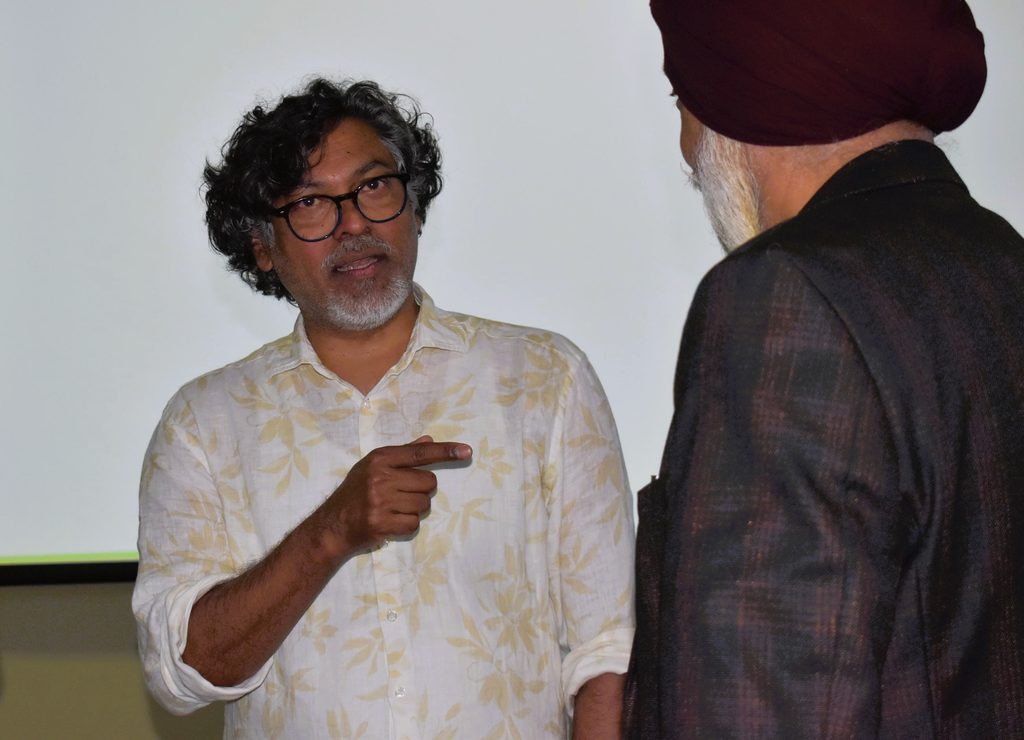
ECONOMIC growth has long been regarded as the ultimate measure of a nation’s success. Rising gross domestic product (GDP), stronger tourism earnings, increased investment and expanding exports have traditionally been viewed as signs of a healthy economy.
But according to International Labour Organization (ILO) Head of Education and Training Dr Naren Prasad, Fiji has reached a point where these traditional indicators no longer tell the full story.
While delivering his remarks at a public lecture at the University of the South Pacific this week, the Fijian economist argued that the country’s next development challenge is no longer simply growing the economy, but ensuring that growth creates productive jobs, retains skilled workers and improves the lives of ordinary people.
His central message hovered on the central message that Fiji needs to move from a “growth-first” model to a “jobs-first” economy.
A changing labour market
Dr Prasad believes Fiji’s labour market has changed more rapidly than its institutions, education system and policy responses.
Thirty years ago, unemployment dominated economic discussions. Today, businesses across multiple sectors report they cannot recruit enough workers despite thousands of young people entering the workforce every year.
Construction firms struggle to find tradespeople. Hospitals cannot retain nurses. Schools are short of teachers. Hotels compete aggressively for staff, while employers increasingly recruit workers from overseas.
At the same time, many young graduates continue to search for meaningful employment that matches their qualifications.
This apparent contradiction is, according to Dr Prasad, evidence that Fiji’s labour market has entered a fundamentally different phase of development rather than facing isolated problems.
The paradoxes behind the numbers
One of the strongest parts of Dr Prasad’s lecture was his description of what he called Fiji’s “six labour market paradoxes”.
The first is the growth paradox.
Although the economy continues to expand, employers increasingly report labour shortages. Economic growth is creating demand for workers faster than the country is producing the skills businesses require.
The second is the education paradox.
Fiji has never produced so many school leavers, university graduates and Technical and Vocational Education and Training (TVET) graduates, yet employers continue reporting widespread skills shortages.
The issue, he argues, is no longer educational access but educational relevance.
Employers need digital capability, technical trades, artificial intelligence skills, green technologies, communication skills and problem-solving abilities that are not always aligned with existing training pathways.
The third paradox concerns employment itself.
While unemployment remains a concern for many young people, thousands of vacancies remain unfilled because employers cannot find workers with the required skills.
This highlights the growing mismatch between education outputs and labour market demand.
Migration reshaping the economy
Perhaps Fiji’s biggest economic challenge today is migration.
Thousands of skilled workers—including nurses, teachers, electricians, engineers and hospitality professionals—continue to leave for Australia, New Zealand and other overseas destinations.
Migration itself is not necessarily negative.
Dr Prasad acknowledged it brings remittances, international experience and global professional networks.
However, the growing outflow of skilled workers has created shortages across critical sectors.
Ironically, while Fiji exports skilled labour, employers are increasingly importing foreign workers to fill vacancies.
Rather than attempting to stop migration, he argues Fiji should focus on becoming a country where talented people want to stay—or eventually return.
That requires more than patriotism.
Competitive wages, professional development, affordable housing, quality education and stronger public services all influence where skilled people choose to build their futures.
An untapped workforce
Another major issue highlighted during the lecture was women’s participation in the workforce.
Despite women being more educated than ever before, female labour force participation remains around 36 per cent compared with about 66 per cent for men.
At a time when employers complain about labour shortages, Dr Prasad believes Fiji is overlooking one of its greatest economic resources.
Policies such as affordable childcare, flexible working arrangements, safer transport and equal career opportunities could substantially increase workforce participation while boosting national productivity.
Rather than viewing gender equality solely as a social issue, he argued it should also be regarded as an economic strategy.
GDP doesn’t tell the whole story
Perhaps the most significant argument made during the lecture was Dr Prasad’s challenge to the dominance of GDP as the principal measure of economic success.
GDP measures production.
It does not measure opportunity.
It cannot reveal whether graduates are finding suitable work, whether wages keep pace with inflation, whether employers can recruit skilled staff or whether families believe their children have a future in Fiji.
People experience the economy through jobs rather than statistics.
Stable employment, rising incomes, career progression and job security shape household confidence far more than quarterly GDP figures.
In this sense, jobs become the bridge between economic growth and people’s daily lives.
Economic growth remains essential because it generates investment, tax revenue and public services.
However, growth without productive employment risks becoming disconnected from the lived experiences of ordinary citizens.
Putting jobs at the centre
Rather than offering a lengthy list of recommendations, Dr Prasad outlined five broad strategic shifts.
First, employment creation should become a central objective of every major economic policy, whether infrastructure spending, foreign investment, tourism promotion or trade agreements.
Second, Fiji must strengthen links between education providers and employers so graduates develop skills that match future labour market needs.
Third, the country must create conditions that encourage talented workers to remain or eventually return.
Fourth, barriers preventing women from entering the workforce should be systematically removed.
Finally, labour market policy should rely on better evidence through employer surveys, graduate tracer studies, skills forecasting and improved labour market data.
Taken together, these reforms aim to shift economic policy towards creating productive, high-quality employment rather than assuming jobs will naturally follow growth.
A broader development conversation
Dr Prasad also questioned whether Fiji’s long-term National Development Plan has slipped from the centre of public debate.
Economic discussions today often focus on inflation, debt, tourism arrivals and annual Budgets.
While these issues matter, he argued they can overshadow the country’s longer-term development vision.
Employment, productivity, skills and opportunity connect almost every pillar of national development.
Viewed this way, labour market policy becomes more than an employment issue—it becomes central to education, investment, migration, poverty reduction and economic resilience.
Beyond economic statistics
Dr Prasad’s lecture ultimately asks policymakers to reconsider what success should look like. GDP growth remains necessary.
But if economic expansion occurs alongside persistent skills shortages, growing migration, labour mismatches and households struggling with living costs, then growth alone cannot be regarded as sufficient.
His proposed “Jobs First” approach reframes economic policy around people rather than production.
The challenge is no longer simply producing more economic output.
It is ensuring that growth creates meaningful work, develops skills, raises productivity and gives young people confidence that they can build successful futures at home.
As competition for talent intensifies globally, that distinction may increasingly determine whether Fiji’s strongest economic asset—its people—chooses to stay or leave.
A skilled and adaptable workforce is central to Fiji’s long-term economic success. Economists say stronger links between education, industry and employment are needed to ensure economic growth translates into quality jobs, higher productivity and better opportunities for Fijians. Image: ALIFERETI SAKIASI/AI-generated

