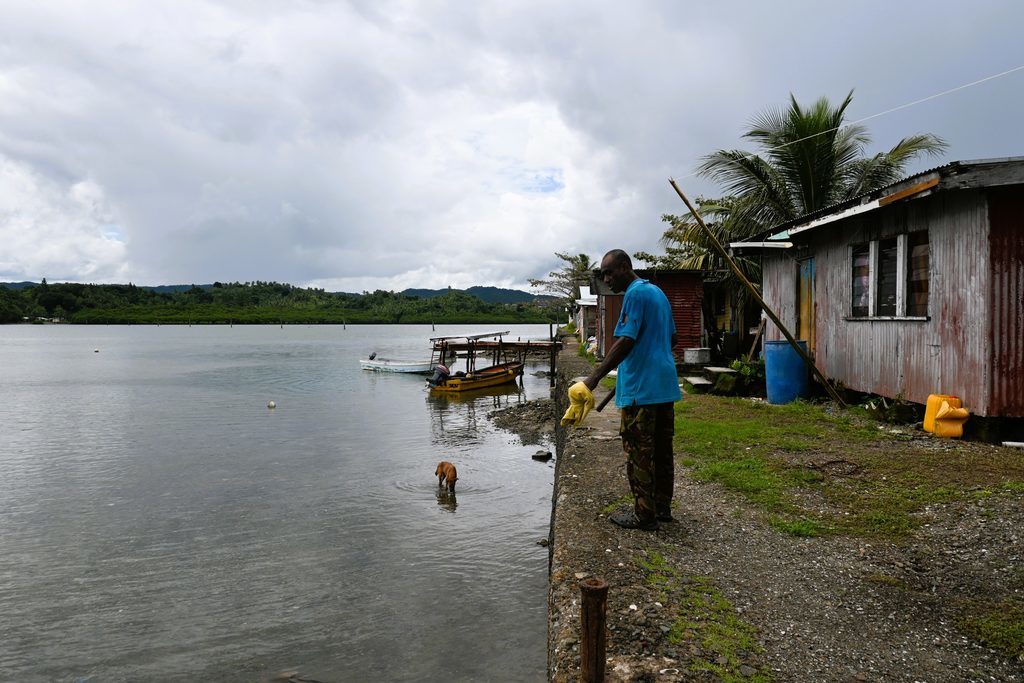
THE changing condition of the sea at Komave is no longer an abstract warning about the future for Rosa Nakulanikoro.
It is something she has experienced while searching the reef for clams, mussels and fish to feed her family.
The young mother had noticed that catches were becoming smaller and the quality of seafood was declining.
With her husband doing casual work, the sea remained an important source of food and a lifeline for the household.
In Komave, on the Coral Coast of Viti Levu, the consequences of environmental degradation were being felt at the dinner table.
Hundreds of kilometres of diplomatic discussions cannot fully convey what that means to a family whose food security depends on a healthy marine ecosystem.
Yet it is precisely these lived experiences that should inform the international climate debate.
Fiji’s hosting of the Pacific Pre-COP31 gathering in October brought governments, climate advocates and international delegates together ahead of the United Nations climate conference in Türkiye next month.
The gathering was an opportunity to elevate Pacific priorities, including the need to keep the 1.5-degree Celsius warming limit within reach, improve access to climate finance and give greater prominence to the ocean in climate negotiations.
But while the world debated climate targets and international commitments, communities across Fiji continued confronting environmental changes that affect their livelihoods, homes, food and cultural identity.
Two communities along Viti Levu’s coastline, Komave and Serua Island, illustrate why the success of climate diplomacy must ultimately be measured against what happens on the ground.
When the sea can no longer provide
In Komave, the decline in marine resources was not simply a matter of perception.
A two-year study by the University of Fiji found a relationship between the loss of seagrass meadows and dwindling fish populations in the village’s fishing grounds.
Researchers identified excessive nutrient pollution, including runoff from agricultural activities and domestic waste, as a threat to seagrass.
These underwater meadows provide shelter for juvenile fish, stabilise the seabed and support the wider marine ecosystem.
Their decline therefore threatens more than biodiversity.
It affects the food supply and livelihoods of coastal communities.
With support from researchers and development partners, Komave established a marine protected area in 2019.
The community began strengthening conservation practices, observing traditional tabu fishing restrictions and involving young people in protecting and restoring seagrass meadows.
Village elders also worked to pass traditional environmental knowledge to younger generations, while women fishers received training to identify seagrass degradation and adopt practices that minimise damage.
It is an example of a community responding to an environmental problem by combining scientific research, traditional knowledge and collective action.
The work remains unfinished.
Agricultural runoff, waste disposal, coastal development and other pressures continue to threaten the marine environment.
Climate change adds further uncertainty through warming seas, rising sea levels and stronger storms.
Nevertheless, Komave demonstrates that communities are not necessarily waiting for solutions to arrive from outside.
They are organising, adapting and drawing on their own knowledge to protect the resources on which they depend.
An island fighting to remain home
On Serua Island, the threat takes a different form.
Over generations, the island has held deep chiefly, cultural and spiritual significance for the people of Serua Province.
It is more than a place of residence; it is part of their history, identity and connection to their ancestors.
But the island’s physical landscape is under pressure from coastal erosion, flooding and unstable ground.
During a visit to the island, village elder Waisale Natuna described how many families had moved to the mainland, where they could use land for their daily needs while maintaining their ancestral connection to the island.
The community has long sought protection against the sea.
A seawall was constructed along the western shoreline in the 1980s, while rocks were placed along parts of the eastern coast to limit erosion.
However, residents have raised concerns about the effectiveness of existing protection.
Natuna explained that the seawall lacked adequate outlets for rainwater, contributing to water accumulating within the village during heavy downpours.
Heavy rainfall has also triggered landslides on the island’s hills, including areas of cultural significance.
To the community, the challenge is not simply to protect buildings or prevent the loss of land.
It is to preserve a place that carries the history and identity of an entire province.
Relocation, residents have made clear, is not an option they are willing to accept.
Their requests include raising vulnerable land, constructing a properly engineered seawall, improving drainage and creating better access between the island and the mainland.
These are practical demands, but they also reveal the limits of asking vulnerable communities to adapt without adequate technical and financial support.
Where Komave is working to restore a damaged ecosystem, Serua is seeking to protect the land on which its community and heritage depend.
Both demonstrate that climate resilience is inseparable from the everyday realities of food security, livelihoods, infrastructure and cultural survival.
The gap between diplomacy and delivery
These experiences provide a useful lens through which to examine the significance of the recent Pre-COP31.
During the gathering, Prime Minister Sitiveni Rabuka urged delegates to focus on keeping the 1.5-degree goal within reach, ensuring climate finance reaches communities that need it and giving the ocean greater prominence in international negotiations.
Those priorities reflect the challenges facing communities such as Komave and Serua.
But stating priorities is only the beginning.
For the villages and islands facing environmental degradation, the value of international climate discussions depends on whether they lead to accessible funding, effective adaptation projects, stronger environmental protection and meaningful reductions in global greenhouse gas emissions.
A declaration can express solidarity, a funding announcement can signal commitment, and a diplomatic gathering can draw international attention to the Pacific.
None, on its own, guarantees that a village will receive the support needed to restore its marine environment or protect its shoreline.
This is why scrutiny of climate conferences remains necessary, even when their objectives are worthy.
The number of leaders attending an event is one measure of diplomatic engagement. The more consequential questions concern what governments agree to do, how those commitments are financed and whether the resulting action reaches the people most exposed to climate impacts.
The responsibility cannot rest with Pacific communities alone.
Komave can establish conservation rules, restore seagrass and teach young people to protect the reef.
But it cannot independently eliminate pollution entering its coastal waters or control the global forces warming the ocean. Serua can request stronger coastal protection and explore ways to stabilise its land.
But it cannot be expected to finance and engineer every intervention required to safeguard its future.
Community initiative is essential, but it must be matched by government support, scientific expertise and international cooperation.
The Pacific is more than a warning
There is another lesson in these stories.
Pacific communities are often introduced to the world through images of flooded homes, eroding shorelines and islands threatened by rising seas. Such reporting is necessary, but it can leave an incomplete picture if people are portrayed only as victims awaiting rescue.
Komave’s conservation efforts and Serua’s determination to protect its ancestral home reveal something more complex. Communities with knowledge, agency and a clear understanding of what they stand to lose.
Their experiences should not be used merely to make international climate discussions more compelling.
They should help shape the decisions that emerge from them. As Fiji and other Pacific nations carry their concerns towards COP31 in Türkiye, the challenge is to ensure that local realities remain central to global negotiations.
The measure of progress will not be found solely in speeches or declarations.
It will also be found in whether fish return to damaged seagrass meadows, whether families can continue accessing food from the sea, and whether communities such as Serua receive the support needed to protect their homes and heritage.
The Pacific does not need the world merely to witness its vulnerability. It needs the world to act on what its communities have been saying for years.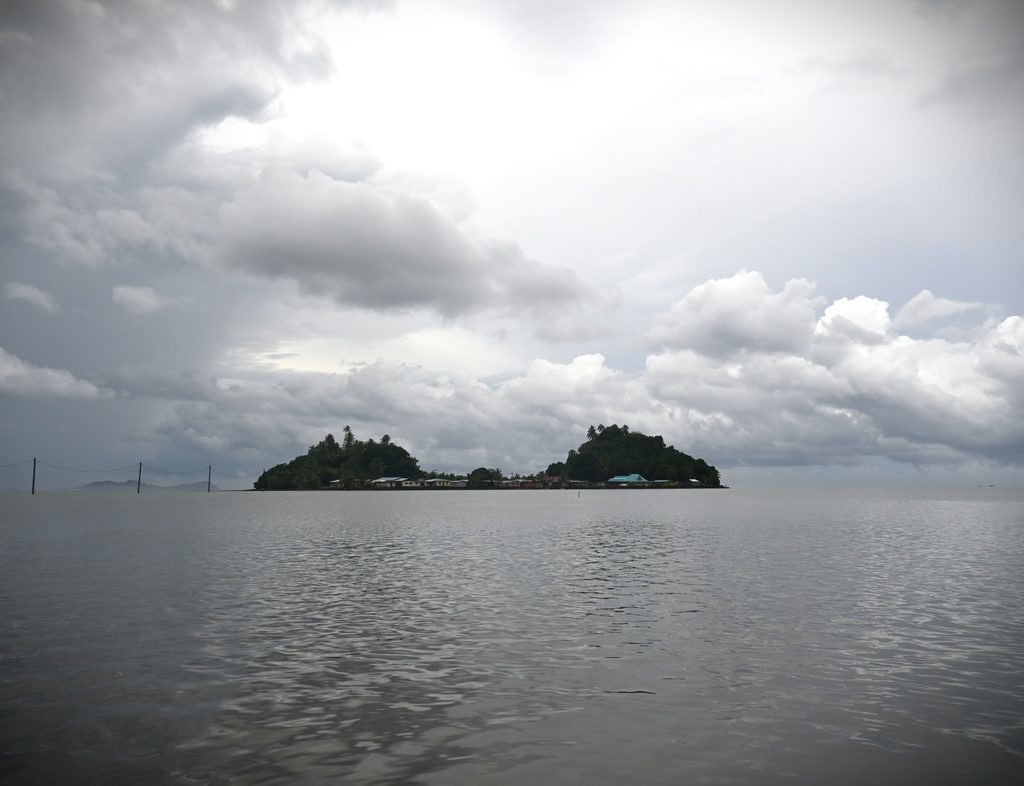
View of Serua Island from the mainland. Picture: ALIFERETI SAKIASI
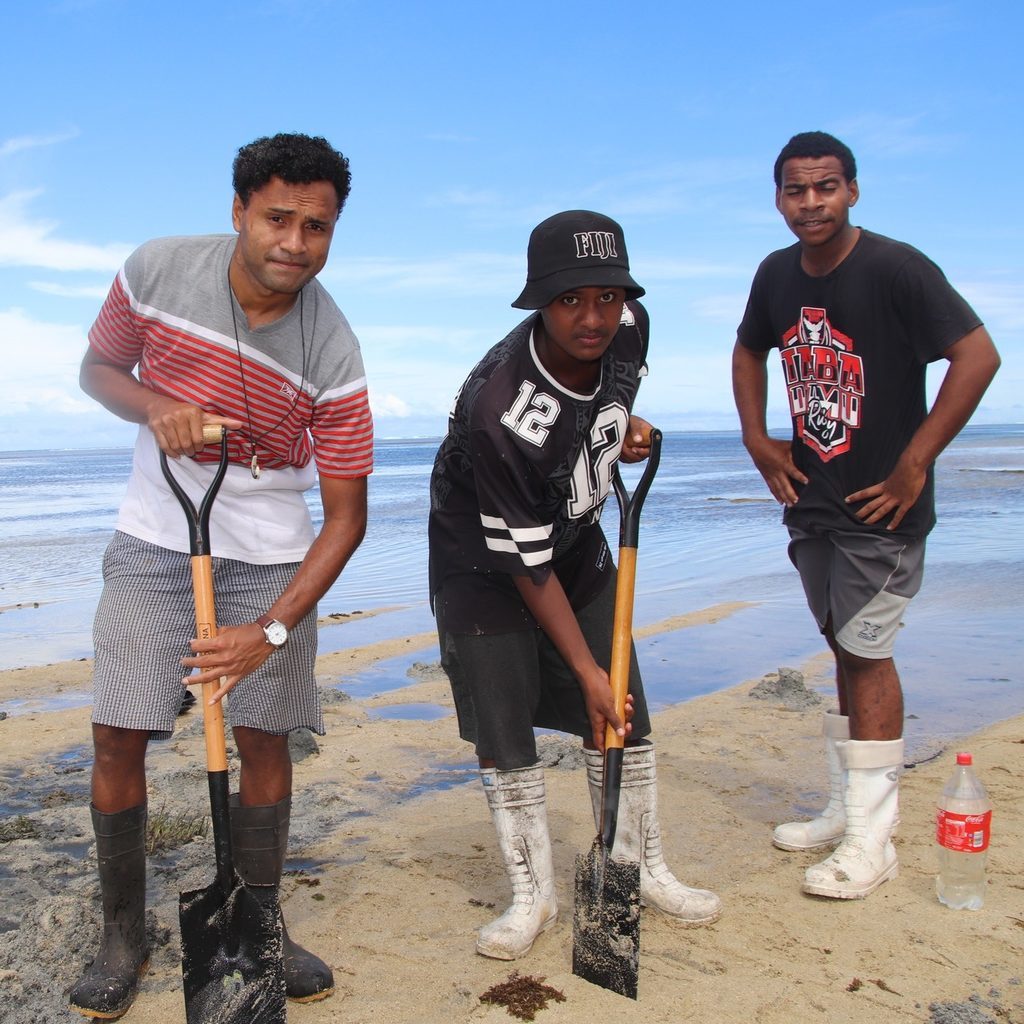
Komave youth coordinator, Jone Druma (left) with fellow youths during one of their routine seagrass restoration activities along Komave’s coastline. Picture: GIZ
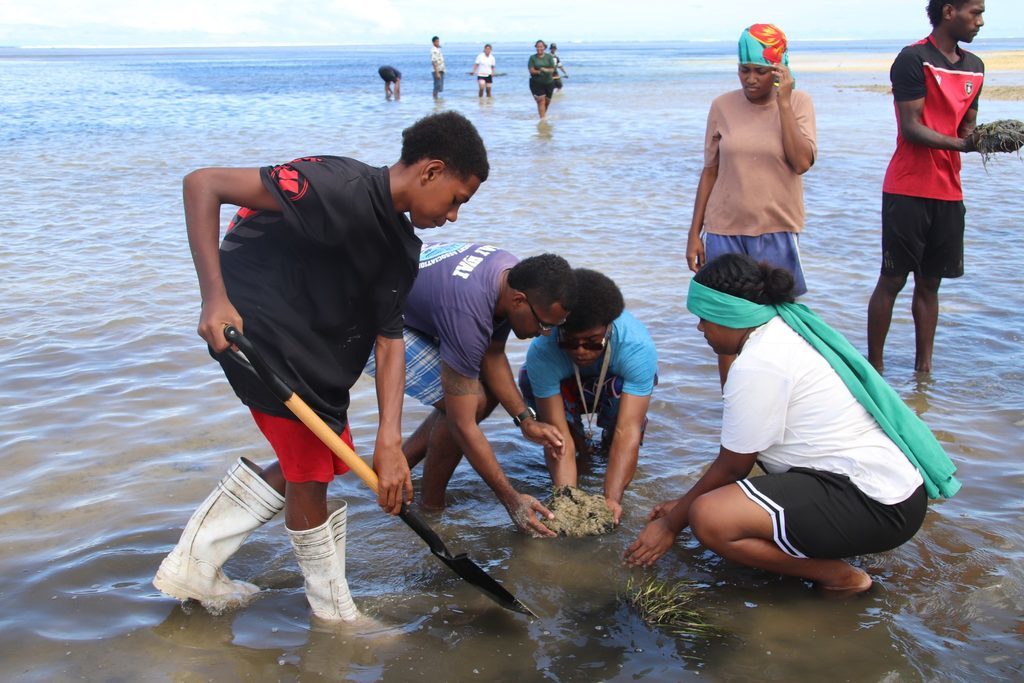
Komave youths hard at work replanting sea grass meadows. Picture: GIZ