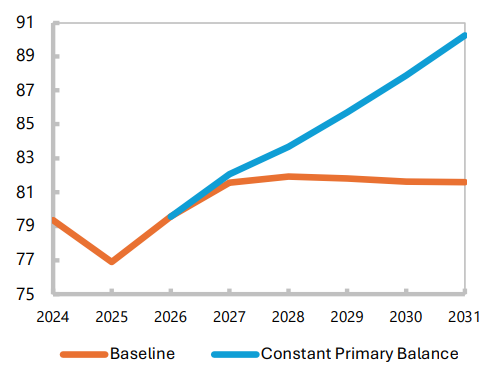
Fiji’s public debt could exceed 90 per cent of gross domestic product (GDP) by 2028 if a prolonged Middle East conflict, severe weather events and delays in government spending reforms combine to weaken the economy.
The warning is contained in the World Bank’s Fiji Economic Update released yesterday, which identifies rising energy costs, an intensifying El Niño and election-related spending as major risks to the country’s economic outlook.
“The main downside risk is a combination of a prolonged conflict in the Middle East that keeps oil prices and shipping costs elevated, an El Niño event, and delayed fiscal adjustment,” the report stated.
The World Bank warned that continued disruption to global shipping routes, including attacks on commercial vessels in the Red Sea, could keep freight, insurance and fuel costs high for import-dependent economies such as Fiji.
It also highlighted the possibility of worsening weather conditions.
“If El Niño intensifies to the levels projected by NOAA, Fiji could face drought-related agricultural losses in late 2026, followed by elevated cyclone risk in the first half of 2027.”
The report warned that a cyclone comparable to Tropical Cyclone Winston in 2016, which caused damage equivalent to 25 per cent of GDP, could severely disrupt tourism, destroy infrastructure and increase government emergency spending.
“Under this scenario, public debt could exceed 90 percent of GDP by 2028, and the reserve buffer would come under pressure.”
The World Bank also raised concerns about election-related expenditure, warning that delaying fiscal adjustments beyond 2026 would make debt reduction considerably more difficult in subsequent years.
“If fiscal adjustment is deferred beyond 2026, the consolidation burden in 2027–28 grows significantly larger,” the report stated.
Despite these risks, the Bank outlined a more favourable scenario in which an easing of Middle East tensions reduces fuel prices and inflation, while stronger tourism demand and decisive fiscal reforms support economic recovery.
Under those conditions, Fiji’s economic growth could approach 3.5 per cent by 2027, with public debt stabilising earlier than projected.
However, the World Bank warned that Fiji’s longer-term development ambitions would require sustained improvements in productivity and investment.
It estimated the country’s potential economic growth at approximately 3.5 per cent under baseline conditions, compared with the average annual growth of more than 3.6 per cent needed over 25 years to achieve the Government’s Vision 2050 goal of high-income status.
“Achieving the Vision 2050 goal of high-income status requires sustained growth averaging above 3.6 percent for 25 years.”
The report said achieving this would require greater economic diversification, investment in human capital and measures to increase women’s participation in the workforce.