FIJI is pushing back against one-size-fits-all global financial models at COP31, calling instead for direct budget access and homegrown, context-specific mechanisms to fund urgent community relocations.
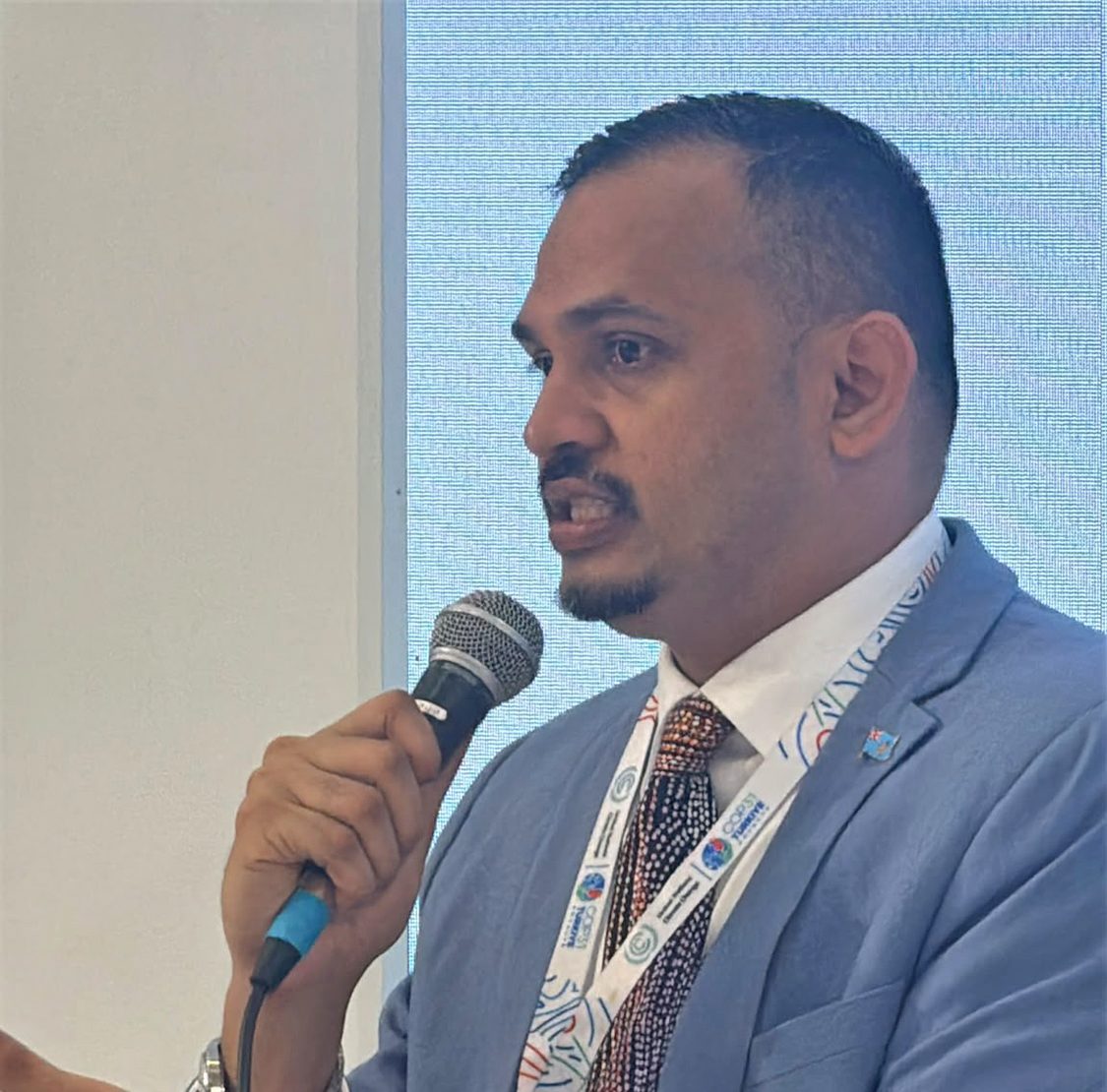
Speaking during a COP31 side event titled ‘Beyond the Frameworks – Pacific Leadership in Delivering Climate Mobility Solutions’ at the Moana Blue Pacific Pavilion on Tuesday, Fiji’s permanent secretary for Environment and Climate Change, Dr Sivendra Michael, outlined how Fiji was pioneering its own financial architecture while demanding global funds bypass costly intermediaries.
Dr Michael revealed that Fiji had submitted a $20million proposal to the newly operationalizsed Fund for Loss and Damage entirely dedicated to planned community relocation with a strict stipulation that the money flow directly into Fiji’s national coffers.
“We have proven concepts, proven solutions, and we are asking for direct budget access,” Dr Michael said.
“We are not asking for any secondary intermediary agency to facilitate this funding; we want it to come directly to the government because we have established a trust fund and the trust fund is working.”
Fiji’s Climate Relocation of Communities Trust Fund was initially capitalised through a 3 per cent Environment and Climate Adaptation Levy (ECAL) on tourism activities, later bolstered by bilateral replenishments from partners like New Zealand and Australia.
While bilateral appetite has grown as Fiji demonstrates tangible results on the ground, Dr Michael said that domestic levies alone could not keep pace with relocation targets.
To bridge the gap, Fiji is blending funding streams in innovative ways such as channelling Green Climate Fund (GCF) readiness grants into the Pacific Resilience Facility (PRF) to cover pre-feasibility and feasibility studies.
Doing so ensures countries can move straight into on-the-ground implementation the moment major loss and damage funds are released.
However, Dr Michael issued a sharp warning to global financial institutions championing private-sector derisking instruments as a silver bullet for climate adaptation.
He said having already issued Blue and Green bonds, Fiji knew firsthand that financial products designed in the Global North often failed to translate to small island economies.
“You have to show us solutions that work, that are context-specific,” he said.