
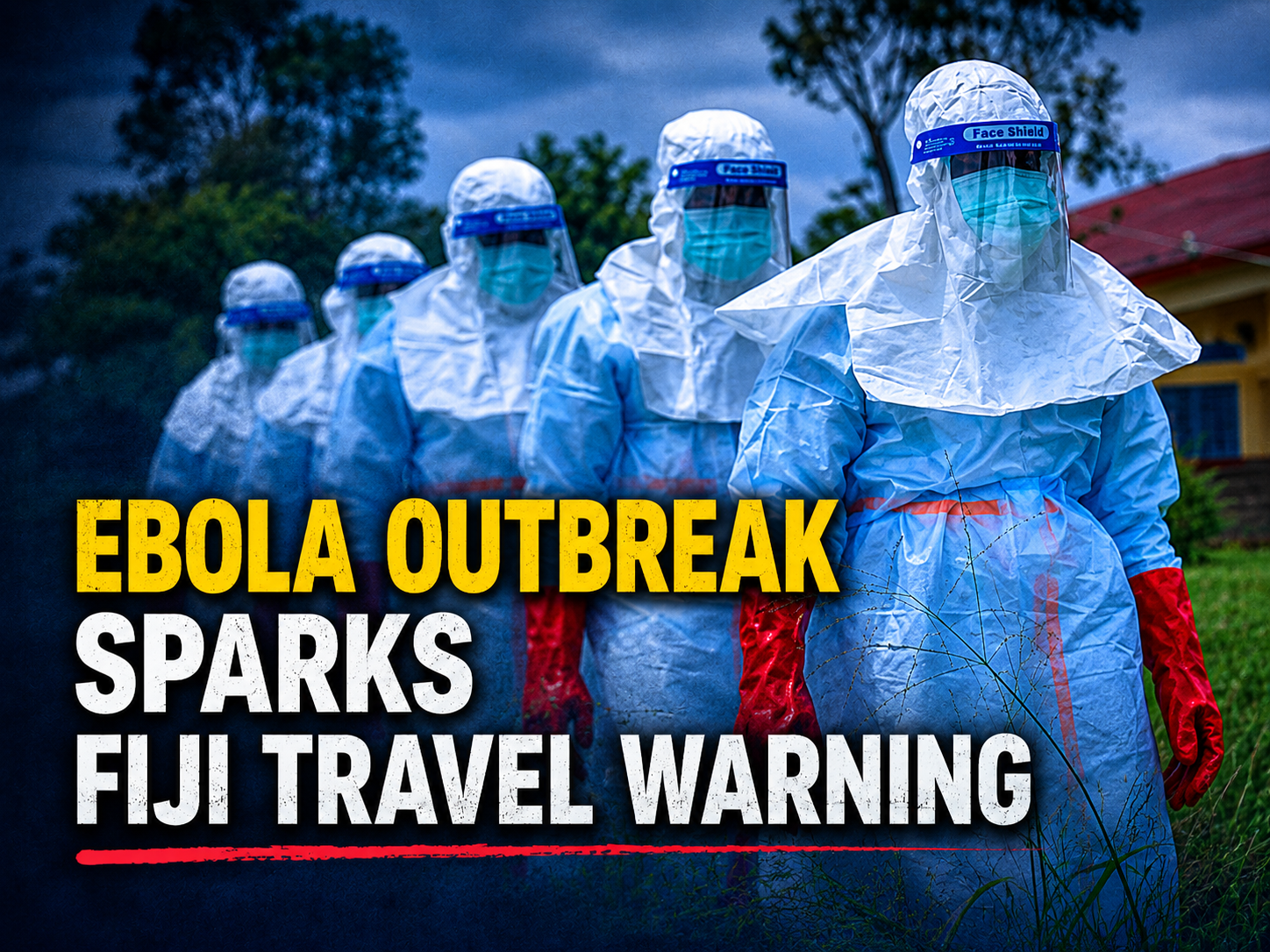
The Ministry of Health and Medical Services has advised Fijians to avoid non-essential travel to the Democratic Republic of the Congo, Uganda and neighbouring African countries following the World Health Organisation’s declaration of a Public Health Emergency of International Concern over the Ebola outbreak.
In a statement, the Ministry said the advisory also applies to countries sharing land borders with the affected areas, including South Sudan, Kenya, Tanzania, Rwanda, Burundi, Zambia, Angola, the Republic of the Congo and the Central African Republic.
Travellers who must visit the affected regions have been urged to take strict precautions to minimise the risk of exposure to Ebola disease.
The Ministry advised travellers to avoid contact with sick individuals and animals in forested areas, avoid consuming bushmeat or wild animal meat, and maintain good personal hygiene and regular handwashing practices.
It also warned travellers to closely monitor themselves for symptoms while overseas and for 21 days after leaving affected countries.
Symptoms of Ebola may include fever, severe headache, muscle pain, weakness, sore throat, vomiting, diarrhoea, rash and unexplained bleeding or bruising.
The Ministry said anyone developing symptoms during the monitoring period should immediately self-isolate and contact their nearest health facility or local health authority by telephone for medical advice.
“Early notification will help healthcare workers safely assess and manage suspected cases while protecting others from possible exposure,” the Ministry said.
Health authorities are also working with partner agencies at international entry points, including Nadi International Airport, to implement targeted health screening and follow-up measures for travellers arriving from affected countries within 21 days of travel.
The Ministry said Fiji’s risk from the Ebola outbreak currently remains low, but precautionary preparedness measures are necessary.
It said surveillance systems, border health protocols, laboratory testing preparedness and infection prevention and control procedures were being reviewed and strengthened.
The Ministry is also liaising with relevant agencies to determine whether any Fijian nationals are currently in the affected areas.
Health officials said Fiji would continue monitoring the global situation closely while working with the World Health Organisation and other partner agencies to adapt its national response if required

