A national covenant to join together as one
Every year as October 10 approaches, a familiar sense of pride, joy, and deep reflection sweeps across our beloved islands. For me, this time has traditionally been marked by a deeply cherished personal ritual: celebrating our nation’s independence alongside Tessa Mackenzie, the iconic co-designer of our beautiful national flag – the noble banner blue. Sitting with Tessa, listening to her recount the electric atmosphere of 1970 when our new flag was hoisted for the first time, has always served as my annual anchor. It is a poignant reminder of what it means to be Fijian: resilient, unified, and filled with hope.
This year, however, circumstances have kept me away from that annual tradition, and I deeply miss celebrating our independence in the way I usually do. Yet, being physically distanced from the celebrations has only intensified my contemplation of the path our nation is walking. Standing at this pivotal moment in our history, we must look beyond the standard fanfare, the parades, and the superficial displays of patriotism. We must listen to the quiet, profound counsel that Tessa herself shared with us through The Fiji Times: “Be honest, be kind, think of others, and be thankful for all the good things in Fiji.”
Today, those words are not merely a polite suggestion; they are an urgent, survivalist directive for a nation grappling with two existential crises that threaten to tear our societal fabric apart: the terrifying scourge of the illicit drug trade and the slow, relentless devastation of climate change. To survive these twin storms, we must remember a foundational biblical truth from Ecclesiastes 4:12, “Though one may be overpowered, two can defend themselves. A cord of three strands is not quickly broken”. If we are to overcome, we must join together as one.
When our flag was designed ahead of independence in 1970, the light blue background was chosen to symbolise the vast, blue Pacific Ocean that cradles our islands. The agricultural symbols on the shield – the cocoa, sugar cane, and bananas – represented the fertile earth and the honest labour of a people determined to feed themselves and build a self-reliant democracy. The lion atop the shield was crafted to embody power – not a distant colonial power, but the sovereign power of the Fijian people.
But today, as we gaze upon that noble banner blue, we must ask ourselves an uncomfortable, challenging question: Are we honouring the profound responsibility of that sovereignty, or are we letting it slip through our fingers?
We cannot talk about independence while our youth are being shackled by a different, insidious form of colonization: substance addiction. The current drug crisis sweeping across Fiji is no longer a distant problem confined to back alleys or foreign soil. It is in our schools, it is in our villages, it is on our street corners, and it is destroying our families. The rapid influx of hard drugs, particularly methamphetamine, is a direct assault on the future of our nation. It breeds violence, dismantles our traditional social support structures, and robs our young people of their potential, their health, and their lives.
True independence means autonomy and self-determination, but an individual trapped in the cycle of addiction has lost their freedom. A community paralysed by fear of drug-fuelled crime is not truly free.
To confront this crisis, we must look at our children with the radical honesty that Tessa Mackenzie advocates. We must acknowledge the terrifying reality hitting our educational sector, where thousands of drug-related cases are recorded annually across primary and secondary schools. Fiji is stepping up its institutional framework – evident in the historic passage of the Counter Narcotics Bill 2026 and the creation of a specialised Counter-Narcotics Bureau to serve as a principal, multi-agency hub targeting illicit trafficking networks.
But law enforcement alone cannot win this war. True victory requires a spiritual and moral awakening within our communities. Scripture teaches us that “If one part suffers, every part suffers with it” (1 Corinthians 12:26). The addiction of a single child is a tear in our collective fabric.
Our path forward must weave statutory defences with deep-seated compassion. We must support crucial grassroots efforts like the Salvation Army’s drug and alcohol recovery initiatives, alongside child protection frameworks launched through international partnerships to build safe, student-friendly spaces. Religious and traditional leaders must move from condemnation to Christ-like rehabilitation, binding up the brokenhearted. We must cultivate a society where our youth do not feel the desperate urge to escape reality through chemical means, but instead find purpose, belonging, and economic opportunity in the land of their birth.
As we lift our eyes from the plight of our social landscape to the our natural environment. The light blue of our flag, which proudly celebrates our ocean, now reflects a landscape of profound vulnerability. Climate change is not a future threat for Fiji; it is our lived reality. Our rising seas are slowly swallowing our coastlines, eroding the graves of our ancestors, and forcing entire communities to leave their ancestral lands to relocate inland.
The cyclones that strike our shores have grown increasingly erratic and severe, wiping out years of hard-earned infrastructure and agricultural development in a matter of hours. The agricultural symbols on our national coat of arms remind us of our historic relationship with the soil, but that relationship is being fractured by changing weather patterns.
Our mission to protect this land is a sacred mandate. In Genesis 2:15, God placed humanity in the garden to tend and protect it. Caring for our environment is an act of obedience to the Creator. In facing this global catastrophe, Fiji has consistently punched above its weight on the international stage, loudly demanding that developed nations unlock extensive climate financing ahead of COP31.
Confronting both the drug epidemic and climate change requires us to embrace the core values embedded in our national identity. In a column for The Fiji Times, Tessa Mackenzie wrote beautifully about identity and belonging, noting that the foundation of a resilient, caring society lies in the strength of our family relationships and our community spirit. She warned against the decline of this community spirit in the digital age.
If we are to survive the twin storms of environmental degradation and social decay, we must return to that foundational community spirit. We must rebuild our families as sanctuaries of love, discipline, and support.
Tessa has also frequently reminded us that our flag is a sacred emblem of history and unity, one that must be treated with absolute dignity and respect. This call for dignity must extend beyond the physical cloth of the flag to the way we treat the nation it represents.
To treat Fiji with dignity means to refuse to look away when our neighbours are suffering. It means standing up against corruption, rejecting the divisions of race and politics, and working hand-in-hand as an unbroken cord to safeguard our collective future.
Though I miss the joy of sharing this day with the flag lady herself, her unwavering faith in our country echoes loudly in my heart. She once remarked that while Fiji has walked through incredibly difficult political and social times, the flag remains a constant reminder of our resilience and faith. As she beautifully put it, “We’ve made mistakes, but we must have hope… God will not give up on us.”
Let this Independence Day be a turning point. Let us celebrate not with hollow words, but with a renewed national covenant. Let us link arms across every village, town, and denomination to protect our youth from the darkness of illicit drugs and to shield our islands from the wrath of a changing climate. May we carry ourselves with honesty, bind our communities with kindness, and fiercely protect the heritage of our noble banner blue.
Happy Independence Day, Fiji. Let us rise together as one to meet our challenges.
AMEN.
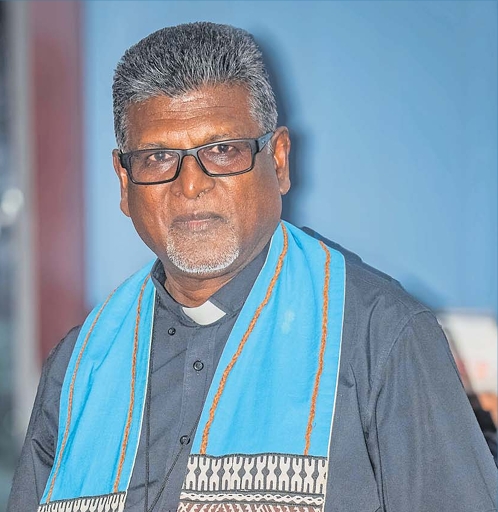
The Venerable Reverend Orisi Vuki
Archdeacon of Vanua Levu and Taveuni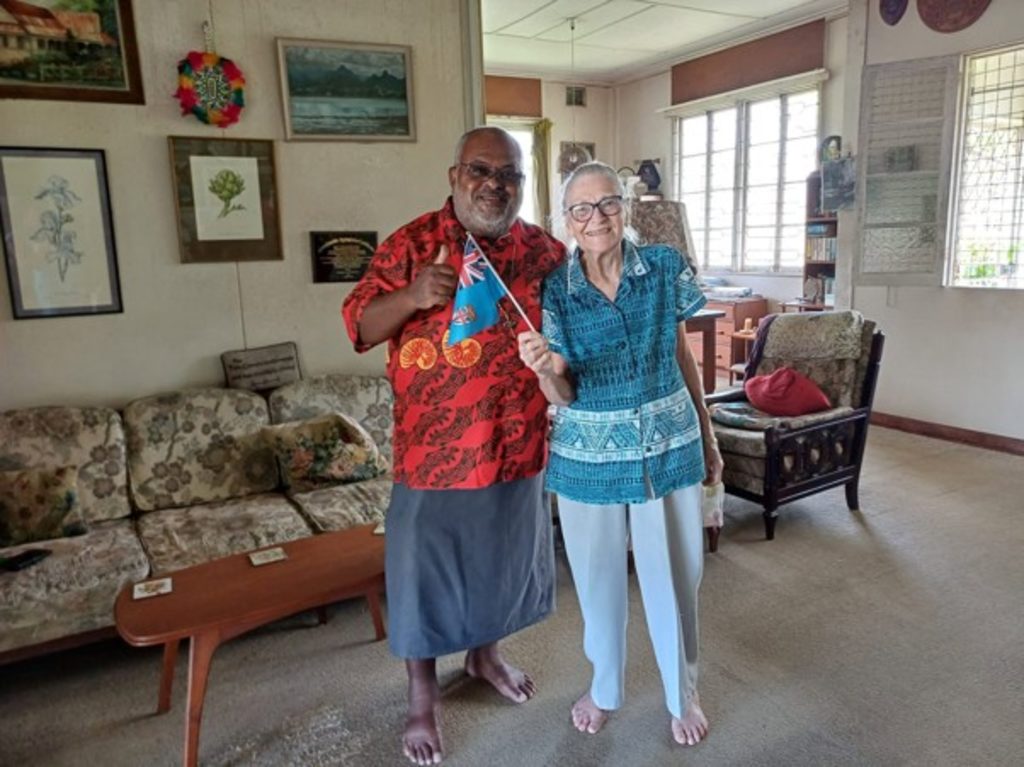
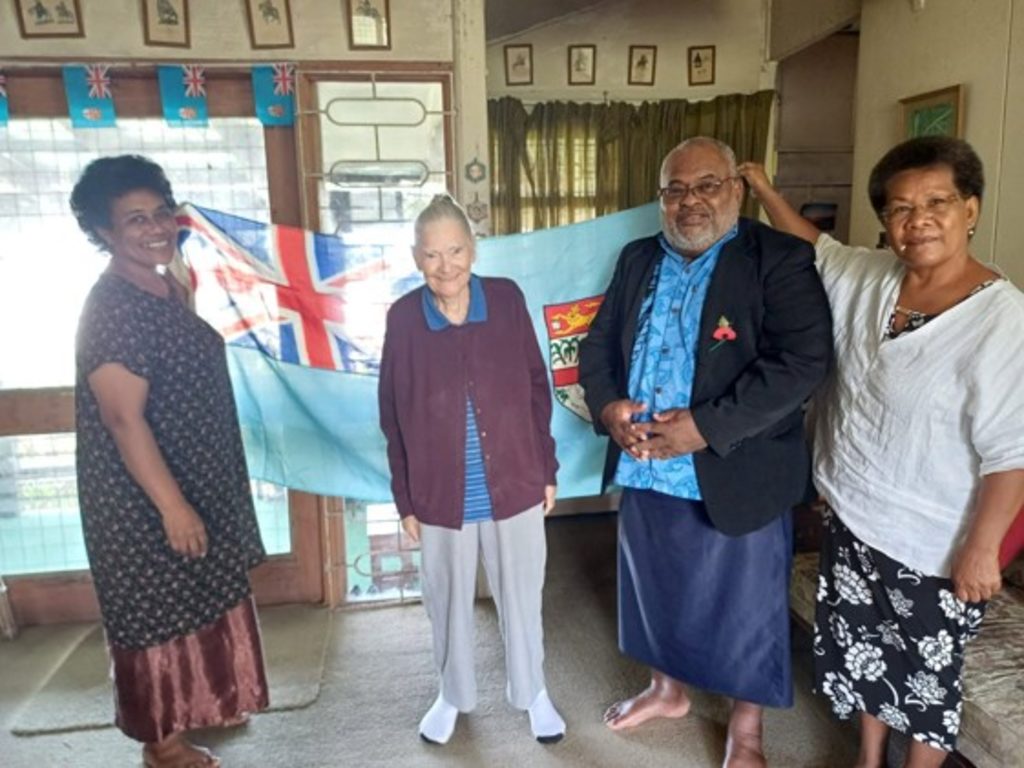
Father Orisi and Tessa Mackenzie suring Independence Day 2024. Picture: SUPPLIED
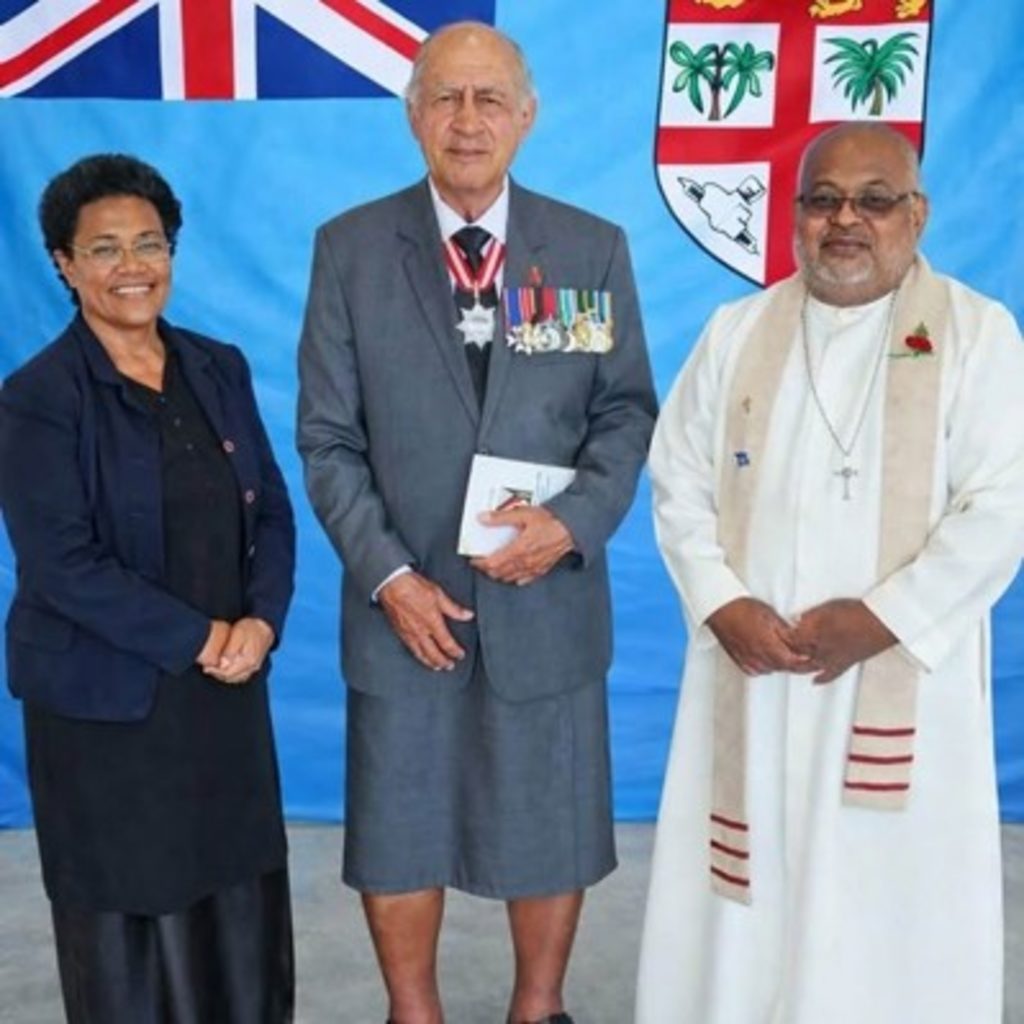
The late former president and Na Turaga Taukei Naisogalaca, Ratu Epeli Nailatikau centre during the Independence Day 2023. Picture: SUPPLIED
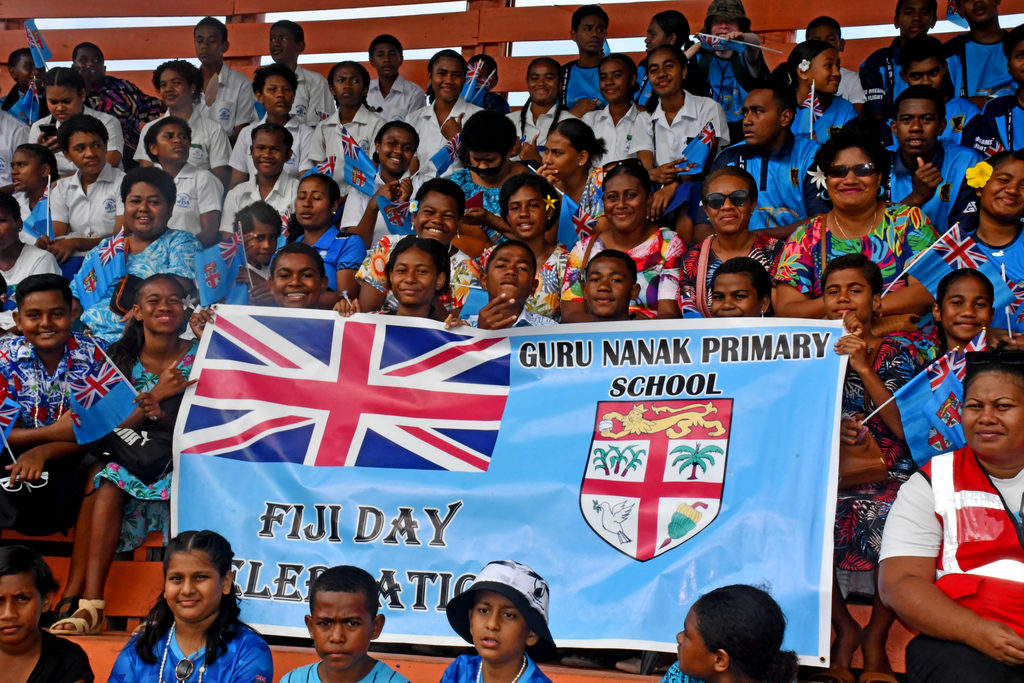
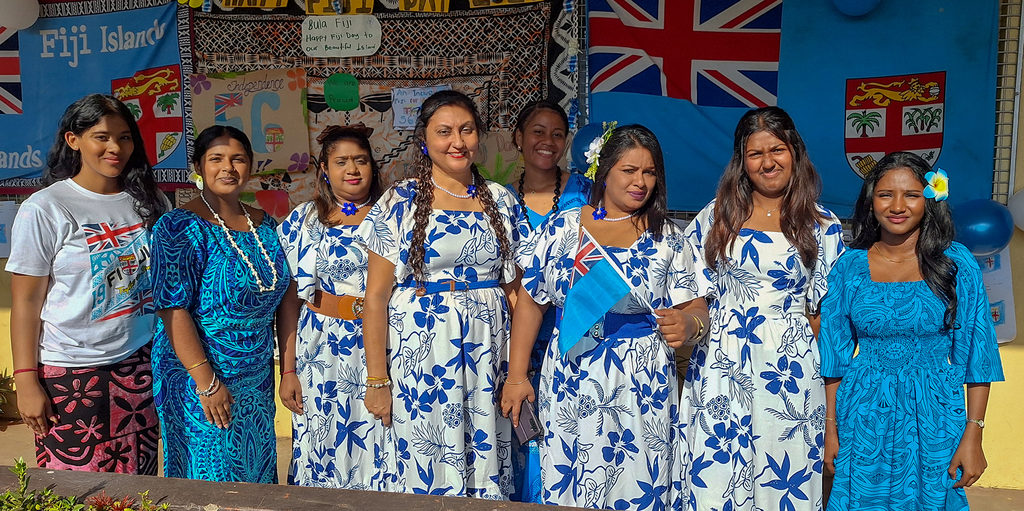
GURU Nanak Primary School students during the Fiji Day Celebration in Subrail Park in Labasa 2024. Picture: FT FILE