
The stories often missing from headlines are the quiet ones, children helping neighbours without recognition, students overcoming hardship to support their families, or young people showing leadership long before adulthood asks it of them.
For more than a decade, the Fiji Children’s Award has sought to bring those unique and inspiring stories to light.
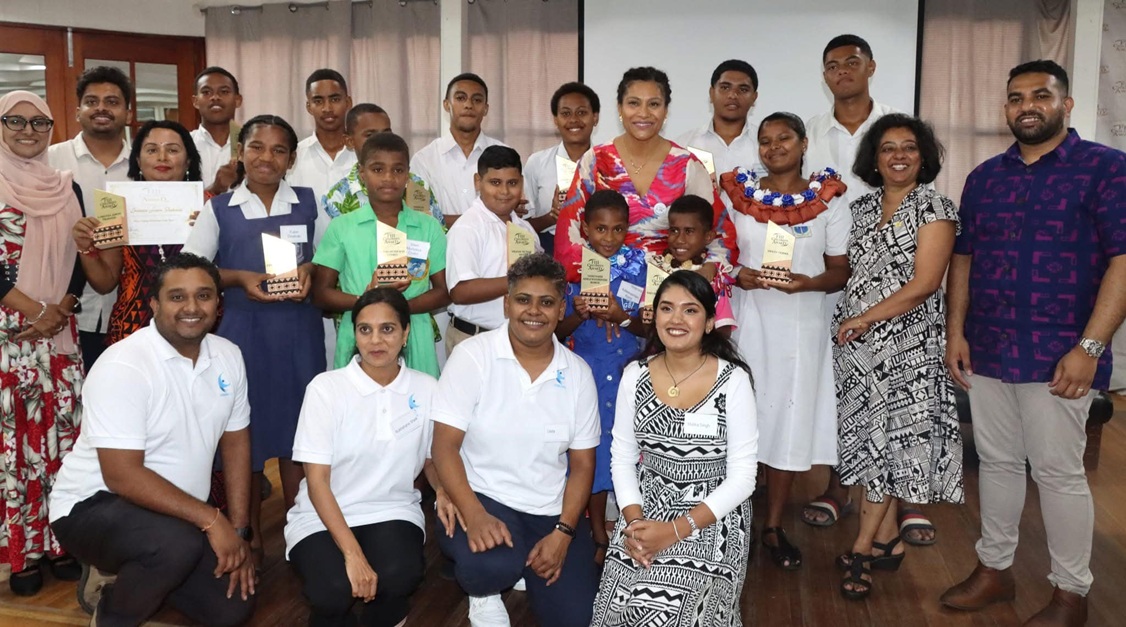
As Vision Fiji officially launched the 2026 Fiji Children’s Award, past organisers, trustees and supporters reflected not only on the growth of the initiative, but on the generations of young Fijians whose acts of courage, compassion and service have shaped communities across Fiji.
Vision Fiji Board spokesperson Hosana Kabakoro said the award continued to represent the organisation’s deep commitment to the wellbeing, development and recognition of children in Fiji.
“I was privileged to come on board in 2011, many years ago, and it brings me so much joy in 2026 to sit here with previous winners of the Fiji Children’s Award,” Ms Kabakoro said.
“It is such a testament to the mission of this organisation and to those who lead it.
“These incredible young people were once amazing children who are now going to be helping us select and recognise the next generation of outstanding children.”
The Fiji Children’s Award was first held on November 20, 2010, coinciding with United Nations World Children’s Day.
The inaugural ceremony was hosted at Government House by the late President Ratu Epeli Nailatikau and the First Lady, Adi Koila Nailatikau.
Since then, the award has continued as a biennial initiative recognising children aged between six and 17 who demonstrate selflessness, resilience, leadership and service to others.
The launch also marked another milestone for Vision Fiji, an organisation that began in 1994 with a small group of volunteers united by a belief that children must remain a national priority.
Over the past three decades, Vision Fiji has evolved into a registered non-profit organisation focused on child welfare and youth development through projects in education, health, nutrition, environmental awareness and legal advocacy.
Throughout its journey, one principle has remained central, that investing in children means investing in Fiji’s future.
Ms Kabakoro said the importance of the award extended far beyond celebration.
“In a world where negative stories so often dominate our headlines and social media, the Fiji Children’s Award reminds us that there is so much good amongst our young people,” she said.
“There are children in Fiji who lead by example, who care for others, who overcome hardships, who support their families and contribute to their schools and communities.
“They demonstrate values that many of us adults can learn from.”
She said recognising such young people encouraged other children to believe their own actions could make a difference.
The organisation has also continued to promote child-focused awareness campaigns over the years, including the widely recognised message: “It’s after 10pm, do you know where your children are?”
Fiji Children’s Award organising committee chairperson Navitalai Qereiwasa described the launch as the beginning of another important journey.
“This initiative recognises and celebrates the achievements, talents, leadership and positive contributions of children and young people throughout Fiji.”
Vision Fiji trustee and former Fiji Children’s Award chairperson Gazala Akbar said the award had always focused on recognising acts of service and humanity among children.
“We are always looking towards children who are involved in some sort of selfless act,” Ms Akbar said.
“It can be bravery, it can be any act that shows virtue, portrays them as good citizens, shows resilience, helps them overcome adverse circumstances, and also when they are serving their school or community.”
The award recognises children who improve the lives of others, particularly vulnerable members of society, contribute positively to their schools or communities, or demonstrate exceptional personal growth despite difficult circumstances.
As organisers prepare for another round of nominations, the award continues to serve as a reminder that leadership is not always found in positions of power or prominence.
Sometimes, it begins in classrooms, villages, homes and communities – through children whose actions leave lasting impacts on the people around them.

