NURSE Vanisha at Yanuya Nursing Station knows that caring for 1,314 people across two islands and several villages means ensuring essential health services remain available, even in communities where resources and infrastructure can be challenging.
A solar power system installed through Cure Kids Fiji now helps keep oxygen equipment running, vaccines refrigerated and daily healthcare services operating at the nursing station.
It was this work that competitors in the Cure Kids Race to Survive Fiji campaign witnessed first-hand when they visited the facility during five days of fundraising and physical challenges across the Mamanuca Islands and the Nadi region.
Their visit offered a glimpse of how fundraising can translate into practical support for children and families, particularly those who depend on health services in remote and maritime communities.
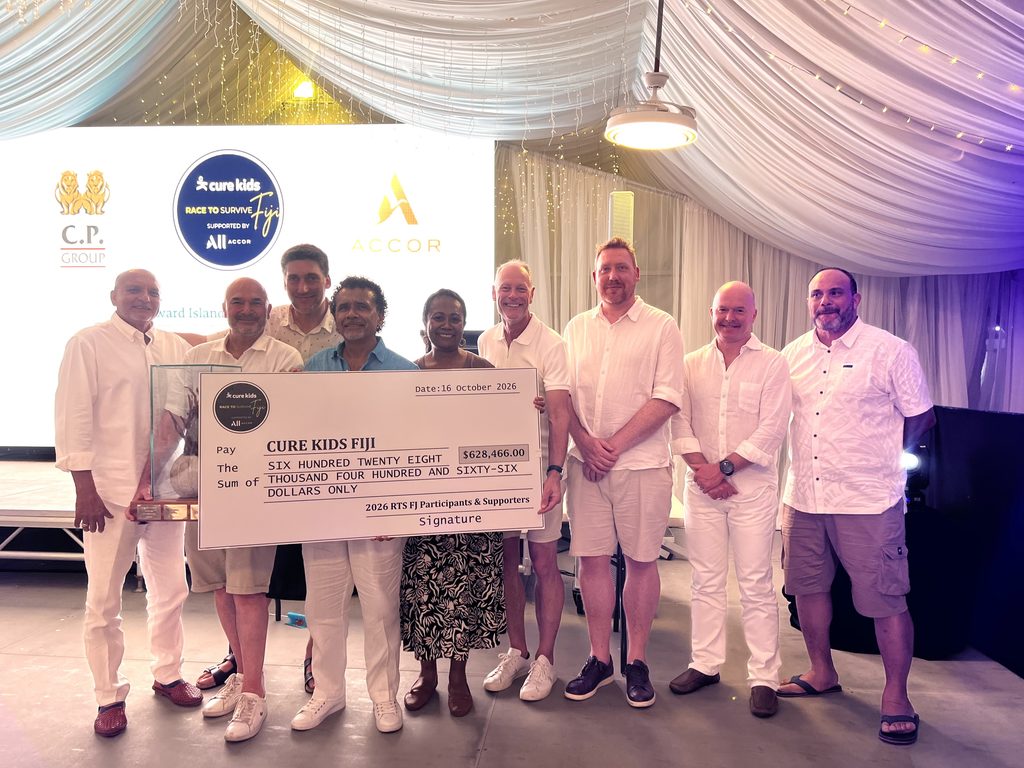
The campaign, supported by Accor, raised $628,466 for Cure Kids Fiji, taking the event’s cumulative fundraising total beyond $4 million since it began in 2006.
Returning after an eight-year absence, the 2026 event brought together more than 60 competitors and crew from the hospitality and tourism industries in Fiji, Australia and New Zealand.
The money will support efforts to detect rheumatic heart disease earlier, connect children with treatment and continuing care, and improve access to medical oxygen for children with serious respiratory illnesses.
Cure Kids Fiji works alongside the Ministry of Health and Medical Services and local health professionals to strengthen these services.
Detecting heart disease early
Rheumatic heart disease remains a significant concern for children in Fiji, where early detection can help prevent lasting damage to the heart.
The disease can develop following rheumatic fever, an inflammatory condition that may occur after an untreated or inadequately treated group A streptococcal infection.
Without appropriate care, it can cause permanent damage to the heart valves.
Cure Kids Fiji’s 2025 Annual Impact Report recorded more than 6800 people screened for rheumatic heart disease during the year, including more than 4000 schoolchildren.
Screening through schools reached children across the Rewa, Labasa, Lautoka and Suva subdivisions.
The report recorded 92 newly diagnosed patients who related to treatment and continuing care.
However, screening is only the beginning of the process.
Children diagnosed with the condition may require regular medical reviews, prescribed medication and long-term follow-up.
Maintaining that connection with health services is essential to managing the disease and preventing complications.
The organisation’s Heart Heroes Fiji community outreach programme also identified 51 people who had missed treatment or appointments.
Of those, 44 restarted treatments, while seven remained under follow-up.
The figures highlight the importance of reaching beyond hospitals and clinics to ensure patients do not fall through the gaps in ongoing care.
Keeping medical oxygen accessible
The campaign also supports Cure Kids Fiji’s work to improve access to medical oxygen, an essential treatment for children with serious respiratory illnesses and premature or critically ill newborns.
Since its oxygen and respiratory health programme began, the organisation has purchased and distributed more than $1.1 million in oxygen equipment and consumables, supporting treatment for more than 90,000 patients across Fiji.
The figure covers patients of all ages, rather than children alone.
Reliable oxygen supplies require more than the delivery of equipment.
Health facilities also need trained staff, suitable infrastructure and dependable power to keep equipment operating.
These challenges can be particularly important in coastal and maritime communities, where access to services and infrastructure may differ from that available in larger centres.
Cure Kids Fiji’s 2025 report recorded 16 health facilities using solar power systems to operate oxygen concentrators in vulnerable coastal areas.
Four facilities received new solar installations during the reporting year, including Yanuya Nursing Station.
The installation demonstrates how practical infrastructure can support healthcare delivery in communities where a reliable power supply is essential to maintaining services.
Beyond the fundraising target
Before the campaign began, organisers had set a target of raising more than $500,000.
The final total exceeded that goal, reflecting months of fundraising and preparation by participants and support from local and international communities.
Cure Kids Fiji board member and event coordinator Murray Davison said the event had achieved its aim of combining fundraising with a deeper understanding of the communities the organisation serves.
“We are so proud of all our competitors, not only for their incredible fundraising efforts prior to the event, but also for their efforts over the last five days,” he said.
“Our goal was to showcase everyday life here in Fiji and highlight the beautiful culture of the people of Fiji, and at the same time ensure they saw first-hand where the funds they raised would go to make a life-changing difference.”
The programme included a traditional welcome at Yanuya Village, visits to schools and nursing services, and community activities intended to connect participants with the people and places benefiting from their efforts.
At Mamanuca District Primary School, where a cyclone damaged the school in March, competitors helped repaint classrooms and install roofing along a walkway.
They also distributed hundreds of toothbrushes and tubes of toothpaste donated by participants to support dental education.
The teams joined pupils in games and donated more than 50 rugby balls for the children to take home.
While the event featured physical and mental challenges, its wider purpose was to draw attention to the health needs of communities and the programmes working to address them.
Cure Kids Fiji chairman Tony Whitton said the fundraising would strengthen the organisation’s work with its partners, including the Ministry of Health and Medical Services.
He said the money would support more echocardiography screening in schools and villages, oxygen supplies for maritime health clinics, community awareness and training, and the national rheumatic heart disease register.
A continuing commitment
While the conclusion of the five-day event marks the end of the competition, the health programmes it supports will continue throughout the year.
To children at risk of rheumatic heart disease, that means the opportunity for earlier screening, diagnosis and treatment.
For patients experiencing serious respiratory illness, it means helping health facilities maintain access to essential oxygen equipment and supplies.
The fundraising also supports the training and outreach needed to strengthen the capacity of local health professionals and maintain continuity of care.
The return of Race to Survive Fiji after eight years has therefore delivered more than a sporting challenge and a fundraising milestone.
Its significance will ultimately be measured by how effectively the money raised helps health workers reach children earlier, supports families to remain connected to treatment and strengthens services in communities where access to healthcare can be difficult.
With $628,466 raised in 2026 and cumulative fundraising now exceeding $4 million, the campaign has provided another injection of support for that work.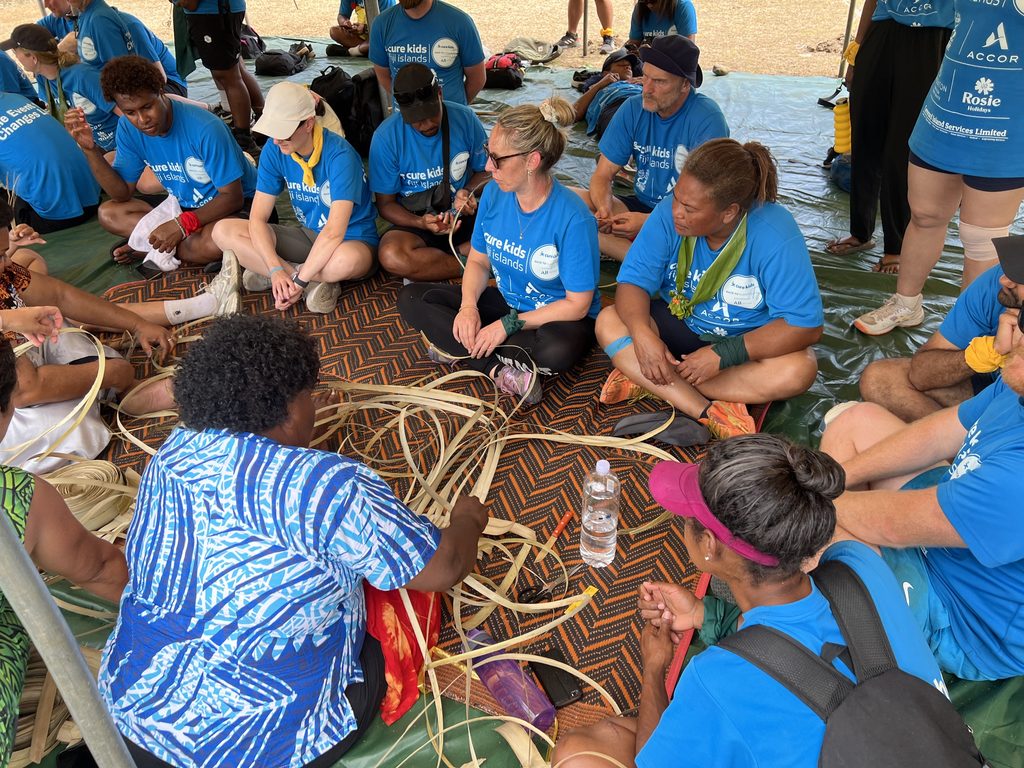
Women part of NGO, Rise Beyond the Reef teach participants how to weave fans and mats. Picture: SUPPLIED
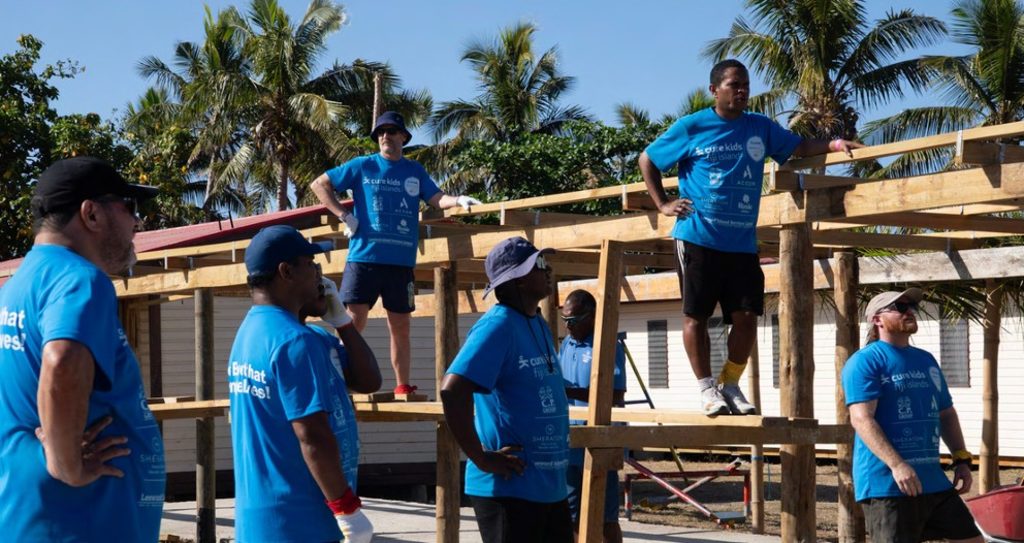
Teams helped re-paint classrooms and install roofing along a walkway at Mamanuca District Primary School which was damaged by a cyclone in March. Picture: SUPPLIED