
WORKPLACE health and safety is not only a regulatory responsibility – it is a business investment.
Safe workplaces protect workers, strengthen businesses and contribute to a more productive and resilient economy. For employers, investing in workplace health and safety means more than meeting minimum requirements. It means creating systems, cultures and practices that support employees, reduce operational risks and enable businesses to perform sustainably.
Poor safety practices can carry significant financial, operational and reputational consequences, particularly at a time when businesses are navigating rising costs, workforce pressures and increasing expectations around responsible business practices.
Businesses that invest in compliance, continuous training and education, quality equipment, effective risk management systems and a culture of wellness, safety and resilience are better positioned to improve productivity, retain employees and build long-term organisational strength.
The cost of workplace incidents
According to the Ministry of Employment, Productivity and Workplace Relations (MEPWR):
(a) a total of 1040 notices were issued to businesses for breach of OHS. On average, this is about 367 a year;
(b) the top five infringement notices issued were: Improvement Notice (seven days to rectify), Requisition Notice (submission of documents), Penalties fines (no rectification done), Prohibition Notice (stop work order) and Rescinding Order (work may resume as issue rectified).
(c) the top five industries with the highest OHS infringements were Construction, Transport, Saw-milling, Mining and Quarry and Manufacturing.
MEPWR also recorded 1585 Workmen compensation claims pay out – valued at $16,899,850.00, between 2023 and March 2026. These figures highlight why workplace safety must remain a priority for employers, workers and policymakers. Beyond the financial cost, workplace incidents can impact families, employee wellbeing, productivity and business continuity. Effective workplace health and safety requires practical policies, clear guidance and ongoing collaboration between those who develop workplace frameworks and those responsible for implementing them.
Your voice in national policy
This is where the Fiji Commerce & Employers Federation (FCEF) plays an important role.
As Fiji’s national employers’ organisation, FCEF advocates on behalf of businesses across a wide range of issues, including labour reform, workforce development, regulatory change and workplace health and safety.
One of the ways FCEF creates value for members is by ensuring that employer experiences help shape national policy discussions.
The National Occupational Safety and Health Advisory Board (NOSHAB) is one such platform.
Established under the Health and Safety at Work Act 1996, NOSHAB is a tripartite body bringing together representatives from Government, trade unions and employers to discuss occupational health and safety matters and provide advice on the continued development of workplace health and safety policy in Fiji. FCEF currently has five employer representatives serving on NOSHAB, ensuring that the experiences and perspectives of Fiji’s businesses are considered during national discussions on occupational health and safety. “The first NOSHAB meeting for this year is scheduled for August 13, 2026,” FCEF chief executive officer Edward Bernard said. “We have reached out to members for feedback on any challenges they are facing on OHS. This is the highest national policy body on OHS and therefore important to ensure that our representatives amplify the needs of our members and the private sector.”
Modernising Fiji’s workplace safety framework
Government has indicated that the Health and Safety at Work Act 1996, is up for review. After almost three decades, there is an opportunity to ensure Fiji’s workplace health and safety framework reflects the realities of modern workplaces, changing technologies and evolving business practices.
Work will start on it after the highly anticipated Employment Relations (Amendment) Bill 2025 and the Work Care Bill 2025 is finally passed by Parliament. This is a key legislation that is on FCEF’s workplan for the 2026-27 financial year. “The root cause of non-compliance by businesses can also be that policy makers in Government are not informed on what is working and what is not – perhaps the industry has transitioned to new systems and processes and our laws and inspectorate have not modernised. This is also why we want to hear from our members,” Mr Bernard said.
Best practices in OHS compliance
In the majority of workplaces in Fiji, business owners and managers are doing their part to ensure a healthy and safe work environment for staff, suppliers, customers and the public. In manufacturing and industrial operations, businesses have implemented risk assessments, machinery safeguards, employee training and improved reporting systems to manage workplace hazards.
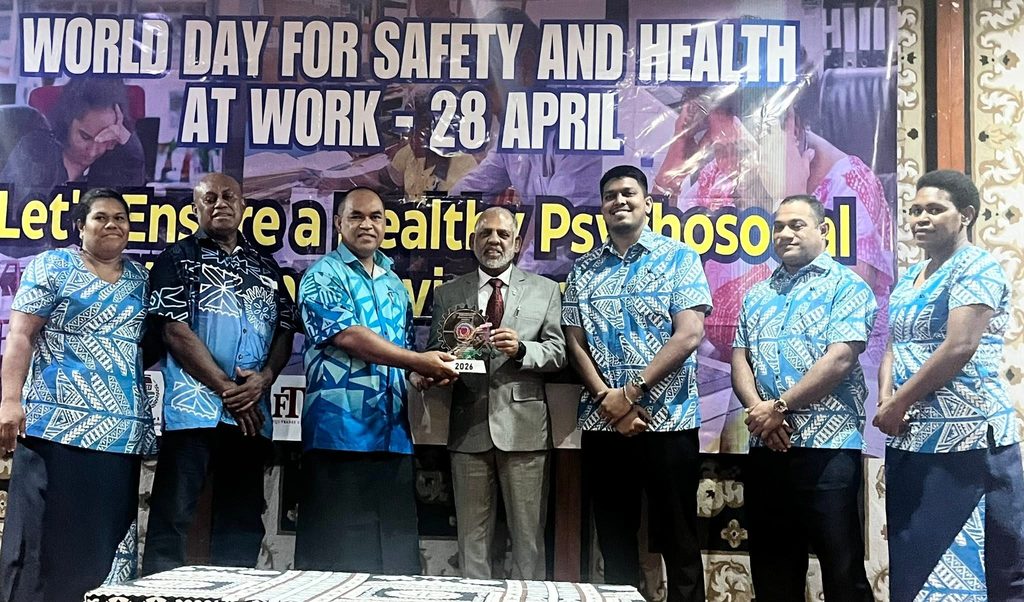
In construction, employers continue to focus on areas such as working at heights, equipment safety, contractor management and site controls. In tourism and hospitality, businesses prioritise areas including food safety, emergency preparedness, guest safety and employee wellbeing. The recent National OHS Awards awarded FCEF members Vinod Patel and Fiji Airports as winners in their respective categories. Vinod Patel – Large Enterprise category. Fiji Airports – Fiji Government Subsidiary category. Both winners ranked high for their OHS governance, training & competency programmes, Risk management plan, employee engagement, and safety performance.
Lessons from COVID-19
The COVID-19 pandemic provided one of the clearest examples of how workplace health and safety systems can protect workers while supporting economic continuity.
During this period, businesses across Fiji rapidly adapted their operations to introduce new workplace health measures, including hygiene protocols, employee health monitoring, revised operating procedures, emergency planning and new approaches to managing workplace risks. Across sectors, employers worked alongside Government agencies to implement measures that protected employees, customers and communities while allowing essential services and economic activity to continue. The experience demonstrated that when Government, employers and workers work together, practical workplace safety outcomes can be achieved at scale.
It also reinforced that businesses are not simply recipients of workplace safety policies but essential partners in implementing them.
The evolving meaning of workplace safety
Historically, OHS discussions have often centred around physical hazards—machinery, chemicals, workplace injuries and inspections. However, modern workplace health and safety increasingly recognises that employee wellbeing, mental health, fatigue management and preventative health are also important components of a safe and productive workplace. The revised Public Service Workplace Health and Wellness Policy (for Civil Service), for example, includes workplace health promotion, mental health, NCD prevention and initiatives such as Wellness Wednesdays as part of a broader healthy workplace approach. This reflects a growing recognition that employee wellbeing is closely linked to workforce productivity, engagement and resilience.
Many employers have also introduced their own wellness initiatives, recognising that supporting employees’ overall wellbeing contributes to stronger workplace culture, improved morale and greater workforce resilience.
Why your feedback matters
While compliance is important, the reality is that one size does not fit all. Employers may encounter differing interpretations during inspections, difficulties implementing certain requirements, administrative challenges or emerging risks associated with new technologies and changing ways of working.
Smaller businesses may face additional challenges accessing specialised expertise, training resources or systems that larger organisations can more easily implement. Sharing both successes and challenges helps ensure occupational health and safety policy continues to evolve in a way that is practical, effective and responsive to Fiji’s diverse business community.
We are seeking feedback from businesses on occupational health and safety matters affecting their operations, including experiences relating to the Health and Safety at Work Act, workplace inspections, compliance requirements, policy implementation, administrative processes or emerging workplace risks. FCEF members are invited to submit their feedback through the FCEF Members Hub by 12pm on Friday, July 31, 2026, ahead of the upcoming NOSHAB meeting.
Sign in to Members Hub to share your feedback.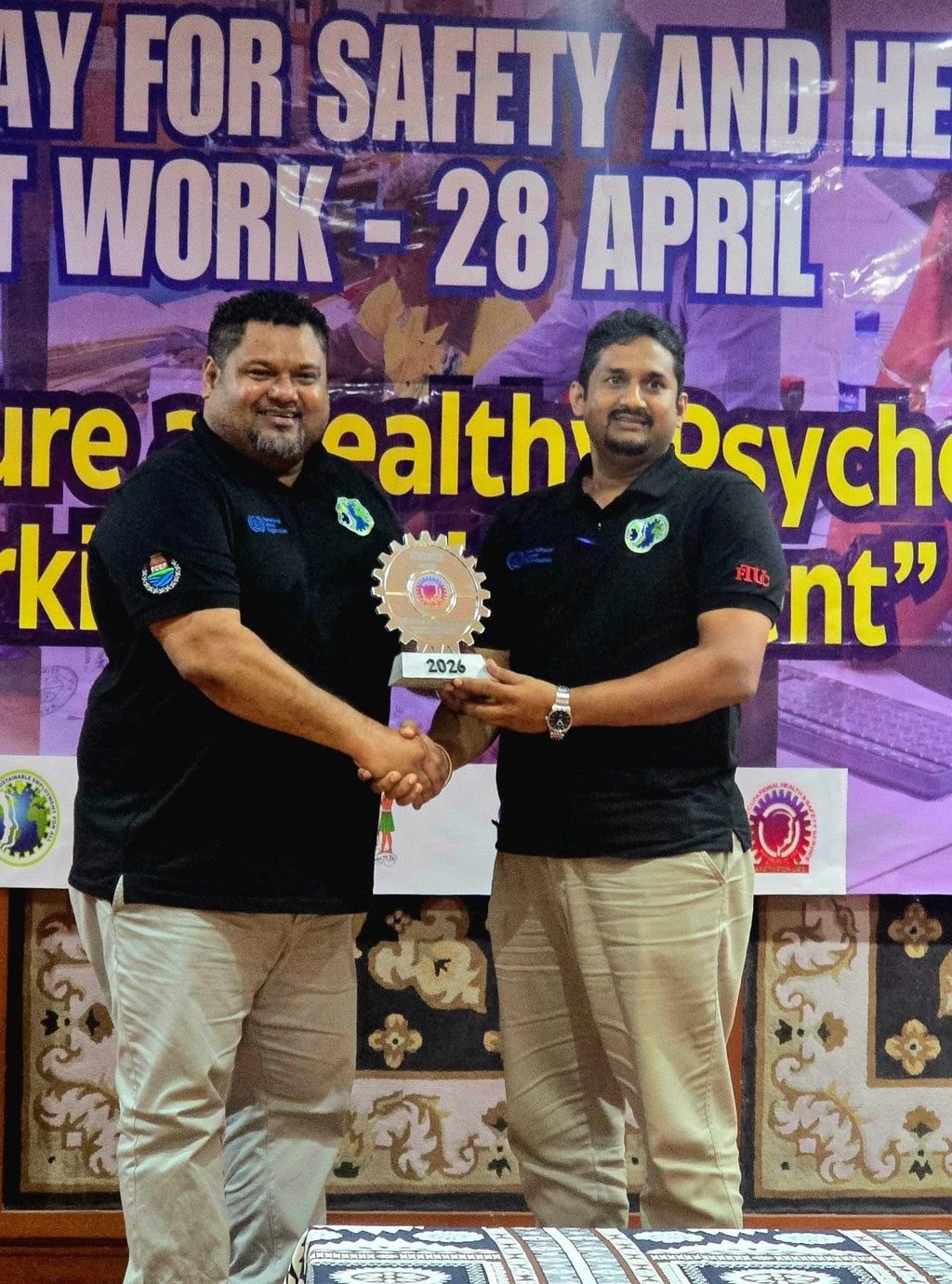
Vinod Patel won in the Large Enterprise Category of the 2026 OHS Awards held in Nadi in April. Picture: FCEF/SUPPLIED

Log in to Members Hub QR CODE

