
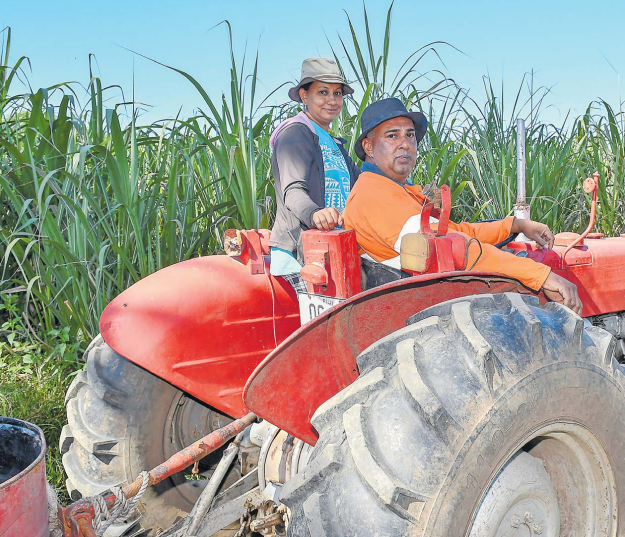
DESPITE repeated calls from cane farmers for an increase in the guaranteed cane price, the Government has maintained the rate at $85 per tonne for the 2026 crushing season.
While announcing the 2026-2027 National Budget, Finance Minister Esrom Immanuel said the Government would continue to guarantee the $85 per tonne price.
“With the forecast market return estimated at $57 per tonne, Government has set aside $41.6million to fund a top-up payment of approximately $28 per tonne to growers,” he said.
The announcement, however, has disappointed some farmers, who say the guaranteed price no longer reflects the rising cost of producing sugarcane.
Bucaisau farmer Firoz Ali said farmers had been asking for the guaranteed price to be increased to $110 per tonne.
“The Government and other stakeholders in the sugar industry should listen to what farmers are asking for,” he said.
“Despite our repeated calls, the guaranteed cane payment remains at $85 per tonne. Farmers have been requesting that the rate be increased to $110 per tonne to better reflect the rising cost of production.”
Mr Ali said many growers were reluctant to begin harvesting despite the Fiji Sugar Corporation announcing that the crushing season would begin on July 1.
“Many farmers say they will not harvest their cane unless their concerns are addressed. They argue that cutting cane at the current rate would mean operating at a loss,” he said.
He said the costs of fertiliser, labour, transportation and farm maintenance had increased significantly over the past few years, while returns to farmers had remained largely unchanged.
Mr Ali said many growers believed the current guaranteed payment was no longer enough to sustain their livelihoods and keep their farms operating.
He warned that without better returns, more farmers could leave the sugar industry, placing further pressure on cane production and the long-term future of the sector.

