
IN recent months, Fiji has again been shaken by sacrilege against sacred places. Hindu temples in Labasa and Suva have suffered stolen offerings, torn pages of the holy Ramayan, and even the destruction of century–old idols at Shiv Mandir in Samabula. Catholic churches, including the Sacred Heart Cathedral and St Michael’s Parish, have seen statues vandalised — deep wounds for communities who see these images as signs of God’s love and presence.
These are not isolated episodes in our history. Past waves of temple attacks, especially around the 1987 coups, were often tied to ethnic and political tensions. Today, some incidents may be linked to drugs or mental illness, but the effect is the same: fear, hurt, and a quiet erosion of trust between communities.
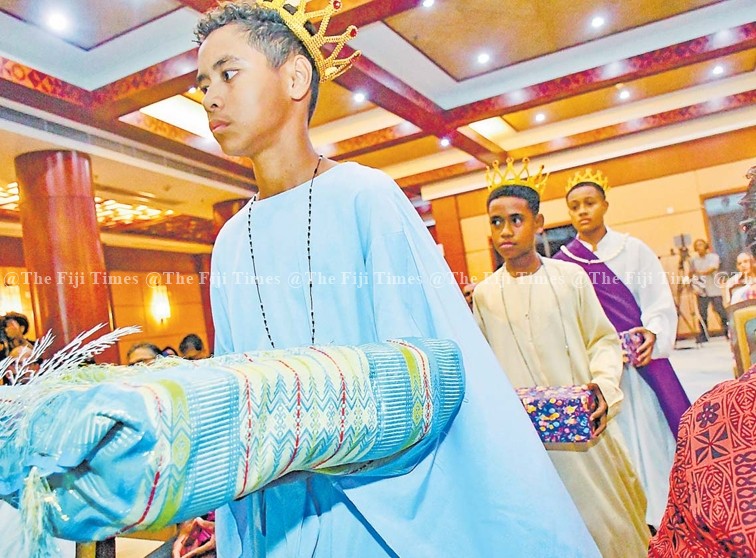
As Christians celebrate the Feast of the Epiphany, the story of the Magi speaks powerfully into this reality.
The Magi: Guided by a star beyond their borders
The Magi were outsiders — seekers from another land, culture, and religion. They did not possess the Hebrew Scriptures; they had only the stars. Yet God used something from their own world to lead them to the truth in Bethlehem.
This is a new lens for viewing our neighbours in Fiji. The Second Vatican Council’s document Nostra Aetate teaches that the Church “rejects nothing that is true and holy” in other religions, which often reflect “a ray of that Truth which enlightens all men”.
God’s light is not imprisoned in one building, one community, or one religious tradition. When we see a Hindu neighbour praying with devotion, a Muslim colleague fasting in Ramadan, a Sikh family serving the poor, or a Bahá’í friend working for unity, we see glimpsing rays of God’s light — “seeds of the Word” present in every human heart.
For Christians, the first step toward respecting other religions is humility: acknowledging that God is not limited to our church walls, and that wherever love, truth, and goodness are sincerely sought, Christ is mysteriously present.
Respect is not weakness – it is mature faith
Some fear that respecting other religions means weakening one’s own faith. The Magi show otherwise. Their search did not end when they followed the star; it brought them to its fulfilment in the child of Bethlehem.
True respect does not claim that “all religions are the same”. It means being so secure in the love of Jesus Christ that we no longer feel threatened by the genuine spiritual journey of others.
Fiji’s multiracial context
Fiji’s 2019–20 survey highlights a richly diverse nation: about 69 per cent Christian, 24 per cent Hindu, 5.8 per cent Muslim, with others including Sikhs, Bahá’ís, and people of no religion. Around 63 per cent of our people are iTaukei, 34.2 per cent Indo–Fijian, with religious identity often following these lines. Catholics — just over 90,000 — are a minority within a minority, yet called to play a vital role.
In this context, Christians are not invited to build higher walls of suspicion, but to “model God’s way”. Jesus called his followers “the light of the world”, not a light to be hidden.
Respect for other religions is not spiritual compromise; it is a sign of mature discipleship. It allows us to say: “I see the goodness in you. I honour the truth you hold. Let us walk together as brothers and sisters.”
Choosing “another road” for Fiji
After encountering Jesus, the Magi “returned to their country by another road”. They could not return to Herod’s path of fear and violence. Their route — and their hearts — had changed.
Fiji, too, is being called to choose another road.
The old road is familiar:
- Thinking in terms of “Christians versus pagans”.
- Laughing at religious jokes and stereotypes.
- Remaining in ethnic and religious camps.
- Believing that “if they succeed, I lose”.
The Epiphany road is different: the path of respect, dialogue, and shared responsibility for the common good. Imagine a Fiji where:
Christians, Hindus, Muslims, Sikhs, Bahá’ís and others stand together against poverty, domestic and gender–based violence, and drug abuse.
Faith communities unite to protect our environment and support families in crisis.
Leaders visit one another’s places of worship not only after vandalism, but regularly, as friends.
When we act together for justice and mercy, we become a living “epiphany” — a manifestation of God’s love for all who call these islands home.
Three everyday ways to build bridges
1. Change the way we speak
Reject casual mockery and stereotypes. When such words appear, answer gently: “In our common home, we respect the light of God wherever we find it.” A simple sentence can change a conversation.
2. Build one real relationship
Befriend one person of another faith. Don’t argue — listen:
l “What do you most love about your faith?”
l “What gives you hope?”
Such encounters often deepen our own convictions and make prejudice impossible.
Become part of Fiji’s “treasure”
The Magi brought gold, frankincense, and myrrh. Today, Fiji needs the treasure of character: honesty at work, forgiveness in families, integrity in public life, joy in serving others. Long before we speak God’s name, our actions announce what we truly believe.
A star over every house of prayer
Epiphany tells Fiji in 2026 that God’s star shines over every sincere seeker: over mosque and temple, gurdwara and church, and over homes where people pray — or quietly search for meaning without a religion.
For Christians, proclaiming Jesus as “light of the world” does not authorise contempt; it demands a larger love, one that recognises God’s light in every people and refuses to answer sacrilege with hatred or indifference.
Fiji stands at a crossroads. We can stay on the old road of suspicion, or choose a new way: respect, honest dialogue, and standing together for justice and peace.
The star over our islands is still shining. The question is not whether God is guiding us — only whether we will follow that light, and whether we will follow it together.

