
THE future of the Pacific’s coral reefs will come under international scrutiny this week as researchers, conservationists and policymakers gather in Auckland for the 16th International Coral Reef Symposium 2026 (ICRS).
The week-long meeting, hosted in New Zealand, brings together some of the world’s leading coral reef scientists to examine the growing threats facing one of the planet’s most valuable marine ecosystems and to explore solutions for its survival.
Organisers say holding the symposium in Auckland provides an opportunity to place the Pacific at the centre of the global conversation on coral reef conservation while highlighting the role of Indigenous knowledge alongside scientific research.
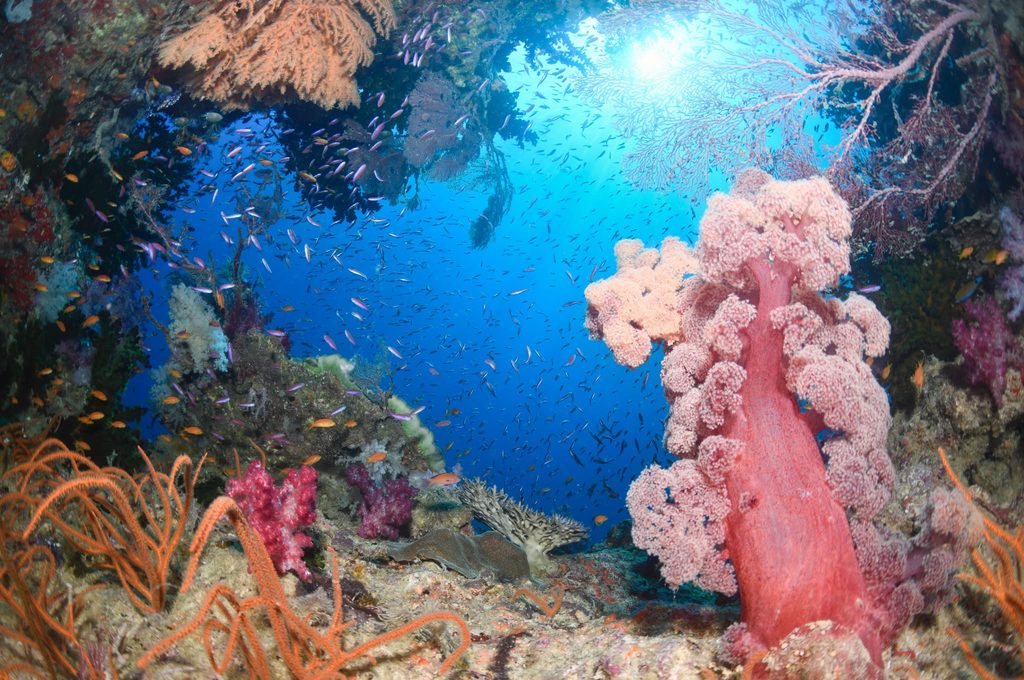
Coral reefs cover less than one per cent of the ocean floor but support an extraordinary diversity of marine life.
Across the Pacific, they sustain fisheries, protect coastlines from storm surges and provide food, livelihoods and cultural identity for millions of people.
Yet those same reefs are under mounting pressure.
Mounting pressure
Rising sea temperatures continue to trigger widespread coral bleaching, while ocean acidification, pollution, destructive fishing practices and coastal development are weakening reef ecosystems throughout the region.
For Pacific Island countries, the challenges extend well beyond environmental concerns. Healthy reefs underpin local economies, tourism, food security and traditional ways of life.
Against that backdrop, the symposium offers a forum where scientific findings, policy discussions and Indigenous knowledge can be brought together to help shape future conservation efforts.
Associate Professor Dan Hikuroa of the University of Auckland believes the significance of the gathering goes beyond marine science.
“For thousands of years, indigenous Pacific peoples voyaged across the Pacific Ocean, home to myriad and diverse coral reefs, using ancestral and innovative technologies of sailing and navigation,” he said.
“As one of the world’s largest Pacific cities, it is highly fitting that Auckland host a meeting on coral reefs, which have always been an integral part of Pacific peoples’ lives and livelihoods.”
Hikuroa said his opening address would focus on a philosophy he describes as “Being a Good Ancestor” — an indigenous way of thinking that links decisions made today with responsibilities to both previous and future generations.
Weaving in indigenous knwoledge
“It is an expression of what it means to be indigenous – simultaneously thinking about the past, present and future, and making decisions with an inter-generational mindset.”That philosophy, he said, should also guide how environmental challenges are approached.”
As I try and manifest ‘Being a Good Ancestor’ in my work, I seek to weave together indigenous knowledge and science, recognising that many solutions or ways forward can only be realised by drawing from both bodies of knowledge together, and could not be reached from either on its own.”
Hikuroa also sees the conference as an opportunity to reconnect Pacific peoples through knowledge that predates modern political boundaries.
Recalling comments made by former French Polynesian Minister Heremoana Maamaatuaiahutapu during a gathering in Tahiti, Hikuroa said Pacific communities shared common ancestral links long before colonial languages divided the region.
“He reminded those gathered that ‘before we spoke French and you spoke English – we shared a common language’,” Hikuroa said.
“Perhaps this meeting can be considered an expression of that opening.”
While indigenous knowledge provides one part of the discussion, scientists warn that the physical impacts of climate change are accelerating.
Warming oceans is the biggest threat
Dr Christopher Cornwall, a senior lecturer in marine biology at Victoria University of Wellington, said warming oceans remain the single greatest threat to coral reef ecosystems.
“This symposium brings together the world’s leaders in coral reef science in one place to discuss ideas and issues of importance,” Cornwall said.”It is timely that it is held in New Zealand.”
He said increasingly frequent marine heatwaves are placing reefs under unprecedented stress.
“Climate change greatly threatens the world’s coral reef ecosystems with ongoing ocean warming causing marine heatwaves that drive coral bleaching in even otherwise pristine reefs.”
When corals bleach, they lose the microscopic algae that provide much of their energy, leaving them weakened and vulnerable.
Repeated bleaching events can result in widespread coral mortality and lasting damage to reef systems if recovery is limited.
Consequences are far-reaching
Cornwall said the consequences extend beyond marine biodiversity.
“Ocean warming, acidification, and deoxygenation reduce the calcification of corals and calcified algae — their ability to make their skeletons,” he said.
“These stressors also increase biological erosion of coral reef framework.”
With forecasts pointing to another El Niño event, Cornwall believes Pacific governments should make full use of the symposium while leading researchers are in the region.
“Now is the time for New Zealand to take heed of the findings of the symposium and take advantage of the world leaders in this field being present in our country to improve outcomes for the coral reefs of our Pacific neighbours.”
Another area attracting attention is the future of reef islands themselves.
Low-lying reefs
Professor Paul Kench, Pro Vice-Chancellor of STEM at the University of Waikato, said approximately 26 per cent of the world’s coral reefs were located in the Pacific, making the region central to global reef conservation.
His research focuses on low-lying reef islands that support hundreds of thousands of people in countries including Tuvalu, Kiribati, the Marshall Islands and the Maldives.
These islands are formed from coral-derived sand and gravel produced by living reef ecosystems.
Because of their low elevation, they are often portrayed as disappearing beneath rising seas.
However, Kench said recent research painted a more complex picture.
“Evidence increasingly shows that many reef islands are dynamic landforms capable of adjusting their size and location in response to environmental change,” he said.
Rather than remaining fixed, reef islands continue to evolve as waves, currents and sediment reshape their coastlines.
That does not remove the risks associated with climate change, Kench cautioned, but it broadens the options available to island communities planning for the future.
“These adjustments influence both island persistence, habitability, and broader reef-system resilience.”
Key conservation strategy
He said understanding how islands responded to changing environmental conditions would be essential for future conservation planning and adaptation strategies.
The symposium comes at a time when Pacific countries continue to call for stronger international action on climate change while seeking practical ways to protect communities already living with its effects.
Over the next week, delegates will examine the latest research on reef health, restoration, fisheries management and emerging conservation technologies.
Just as importantly, the meeting will provide space for Indigenous leaders and scientists to exchange knowledge on equal footing.
For the Pacific, where coral reefs are inseparable from culture, livelihoods and identity, the discussions in Auckland carry significance far beyond the conference halls.
The decisions, partnerships and research priorities that emerge may help determine how future generations inherit one of the world’s richest and most threatened – marine environments.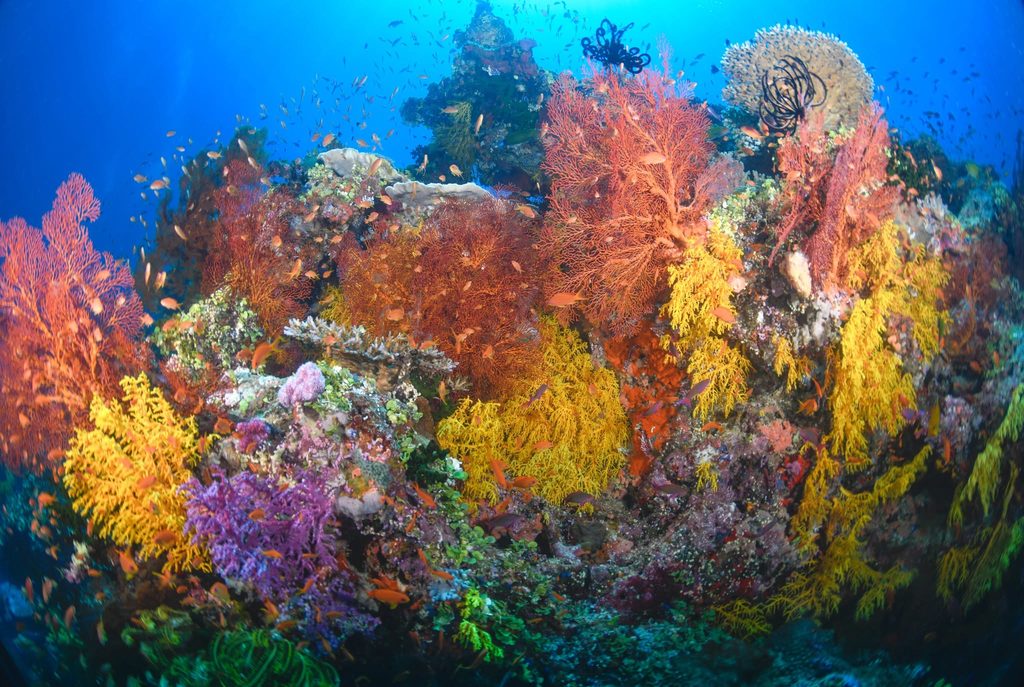
Climate change greatly threatens the world’s coral reef ecosystems with ongoing ocean warming causing marine heatwaves that drive coral bleaching in even otherwise pristine reefs. Picture: ALISON SMITH

