
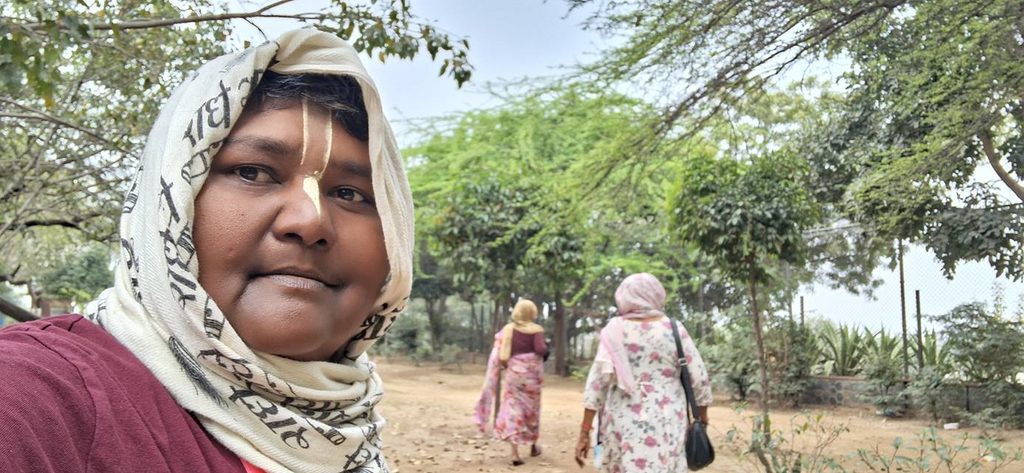
RAGNI Devi Dasi’s life made a complete turnaround many years ago.
A resident of Cuvu in Nadroga, she realised life was more than just working in restaurants and garment factories. Her weekly income was inadequate and the pressure of work and family was overwhelming.
She wanted happiness and peace of mind and heart, far away from struggles associated with wealth accumulation and carnal pleasures.
That’s when she got introduced to the Hare Krishna movement.
Today, she lives and works in the Sri Sri Radha Damodar Temple in Sigatoka, a striking multi-story Hindu temple located in the hills towering above Sigatoka Town which serves as a major spiritual, cultural, and community hub dedicated to Lord Krishna and Radharani.
In Hinduism, Radha or Radharani is the goddess of love, tenderness, compassion, and devotion. She is the chief consort and eternal beloved of the god Krishna.
Highly revered in the bhakti (devotional) tradition, she symbolises the ultimate devotion of the human soul seeking union with God.
“I reached a stage in my life, when I yearned for enlightenment,” she said.
“The things of this world started to mean nothing because the more I acquired them the less I became peaceful and happy. I realized that I could only find these by serving God.”
She grew up with a different name. Now she goes by Ragni and has the honorifics Devi Dasi added to her new name to signify spiritual rebirth.
“Devi Dasi means I am a “servant of the Lord”.
” I devote my time within the Sigatoka temple, serving both God and the community.”
On the day The Sunday Times team caught up with her for a chat, she looked modest in her Hare Krishna style of dressing.
Two vertical brown lines connected to the bridge of her nose, resembling a ‘U’ shape and symbolising the “lotus footprints” of Lord Krishna.
A few rounds of small, beaded necklace made from the wood of the holy Tulsi (basil) plant hung snugly around her neck, serving as a sign of spiritual devotion and surrender to Lord Krishna.
Her right palm was partially hidden, dipped inside a chanting bag called japa mala.
Every now and then, her lips trembled as she recited the famous 16-word Hare Krishna mantra: Hare Krishna Hare Krishna, Krishna Krishna Hare Hare Hare Rama Hare Rama, Rama Rama Hare Hare
“Today I am fasting… so I am expected to do 25 rounds of the string of tulsi 108-chanting beads,” she told me.
That meant that in 24 hours, Ragni Dasi repeated the Hare Krishna mantra at least 2700 times, her right hand always in her chanting bag where the environment was considered clean and protected.
Like Ragni Dasi, a huge portion of every female Hare Krishna devotee’s life centers on bhakti-yoga, which loosely translates to one’s loving service to Lord Krishna.
Their days are highly structured and organised, starting with a prayer before dawn, meditation, and scripture study. Daily routines are anchored around community and temple services, daily offerings, and adherence to the strict principles of spiritual discipline.
The temple is a space for worship, community fellowship, education, meditation and service.
“As servants of the Lord, Krishna temple dasi have a roster centred around prayer, deity worship, food preparation, community service and other devotional responsibilities,” Ragni Dasi said.
“Sometimes I lead the devotion, dress the deities, prepare meals, receive devotees at the main gate and help in cleaning.”
In the Hare Krishna movement (ISKCON), working and rendering service (seva) in the temple signifies the highest spiritual duty, one which shifts devotees’ consciousness from self-centered desires or ego to a loving, surrendered relationship with the divine.
Practical daily services, like sweeping the floors or washing the temple altars, are viewed as physical acts that mirror the purification of one’s consciousness, washing away ego, greed, and material attachments.
While celibacy is highly revered as the ideal spiritual standard, it is not mandatory for Hare Krishna followers. A majority of devotees are married.
Ragni chose to remain single and remain celibate to show her absolute devotion to Lord Krishna.
“I cannot look into the future but for now, this is where I want to be and I will remain dedicated to the services of the temple,” Ragni said.
“The world is becoming a dangerous place to live in but you can be in the world but remove yourself from worldly things and live in harmony with the divine and those around you…that is real peace and happiness.”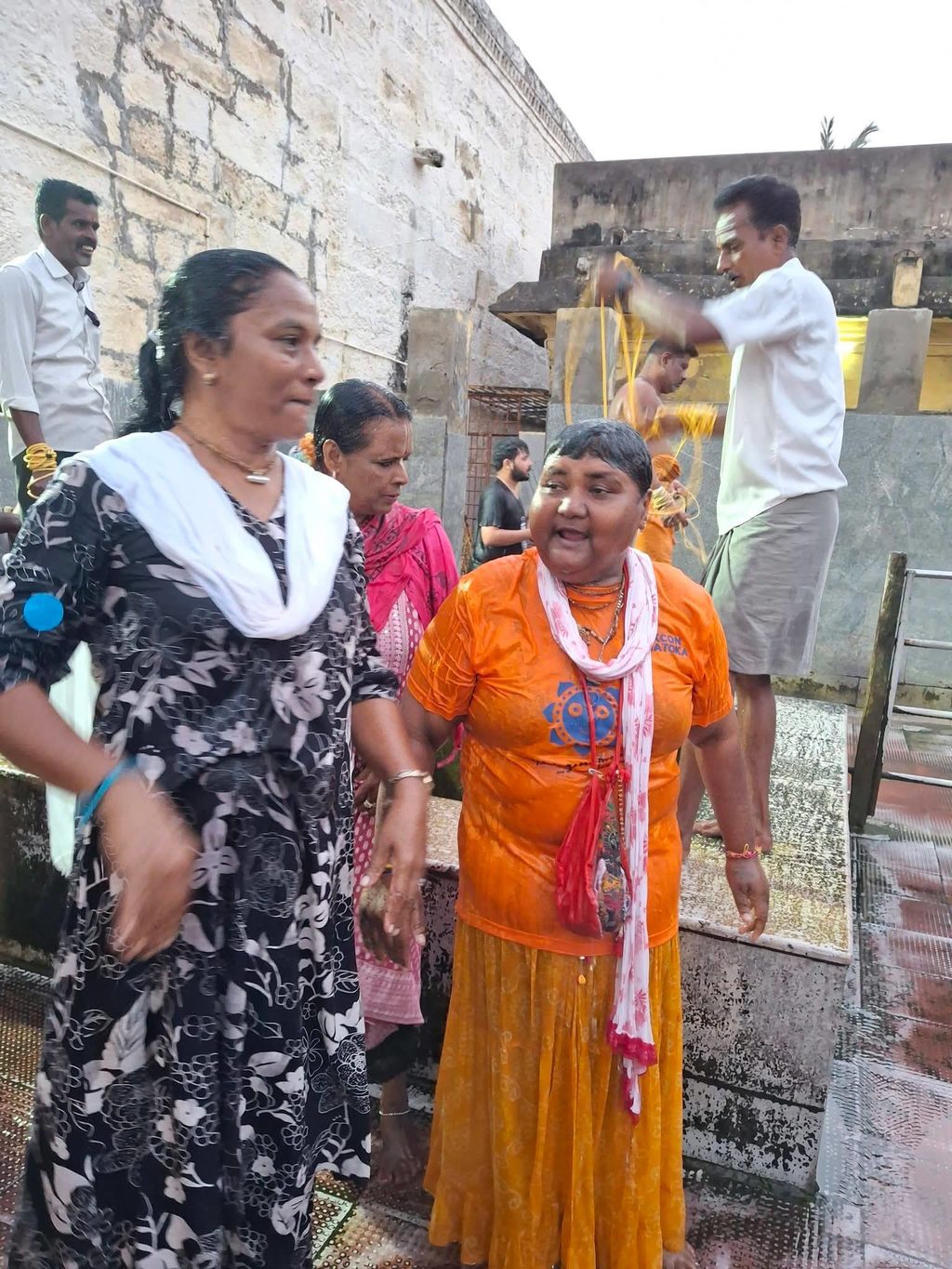
Ragni (in orange) gets a sacred bath in India. Picture: RAGNI DEVI DASI
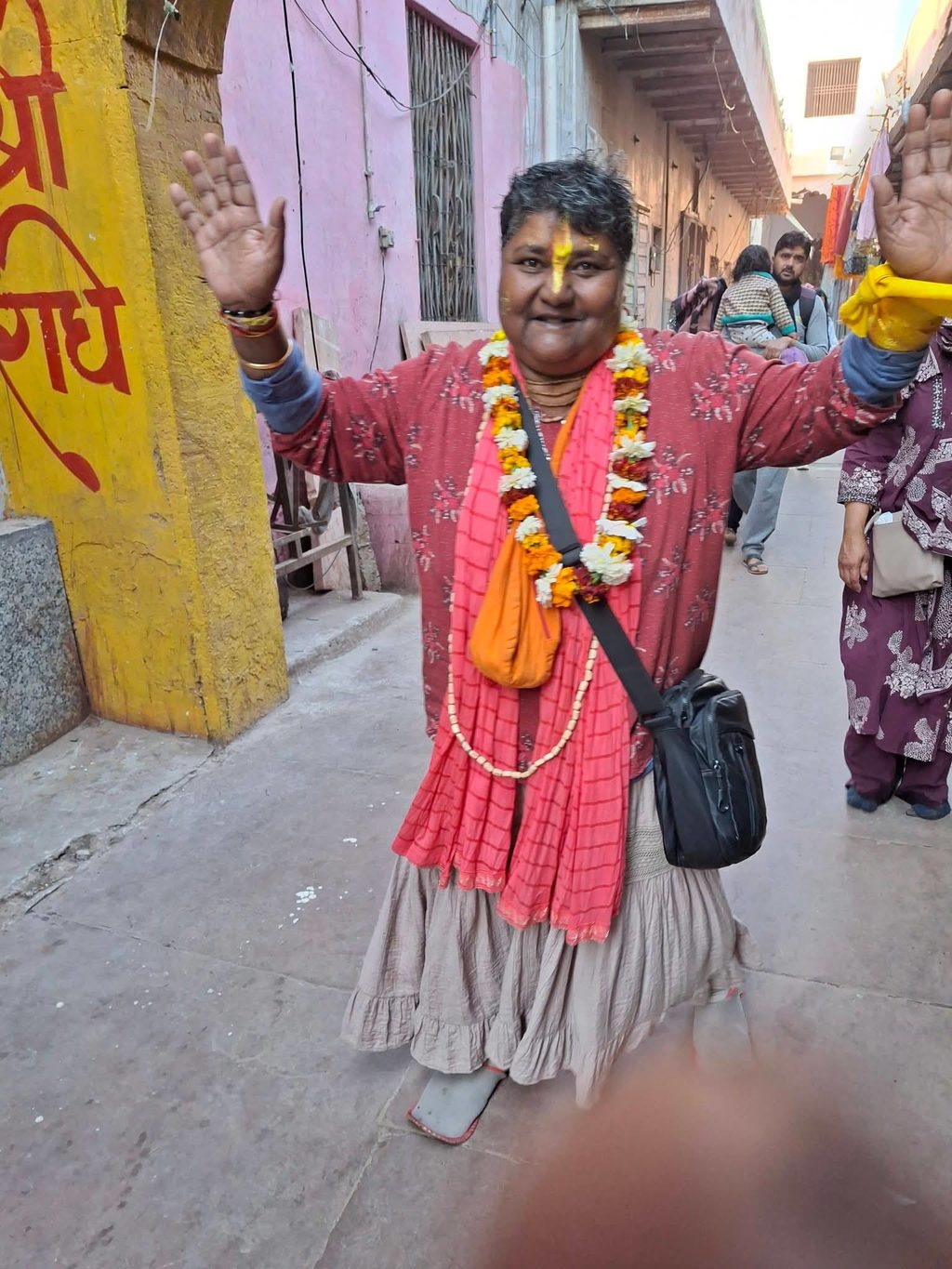
Adorned with marigold garlands while standing on a narrow city street in India. Picture: RAGNI DEVI DASI
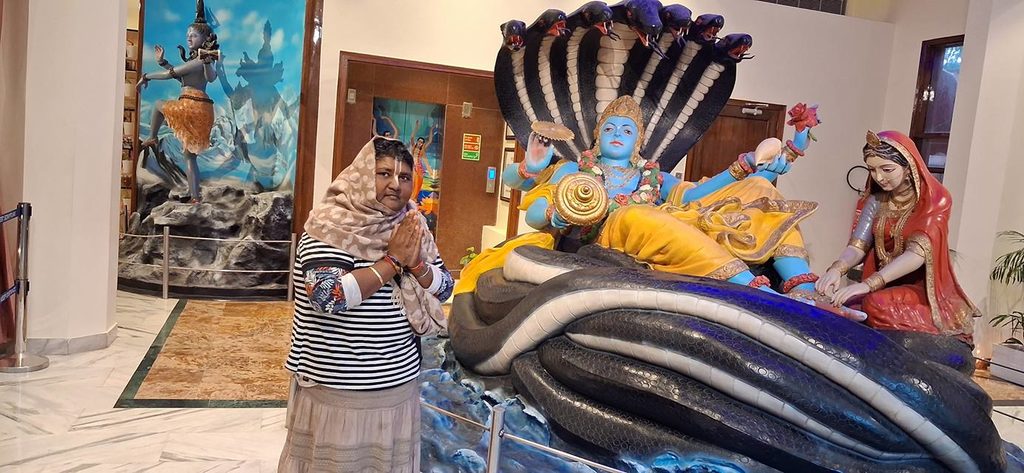
Ragni next to an ornate sculpture depicting Lord Vishnu resting on the serpent Adisesha, inside the ISKCON Temple in Delhi, India. Picture: RAGNI DEVI DASI
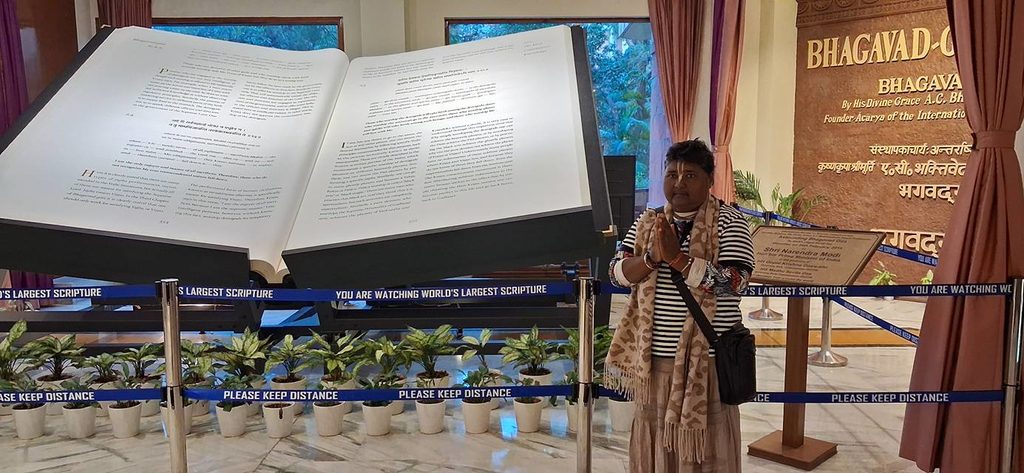
Ragni next to a giant Bhagavad Gita, with 670 pages and weighing 800 kg, at the International Society for Krishna Consciousness (ISKCON) temple in East of Kailash New Delhi. Picture: RAGNI DEVI DASI

