
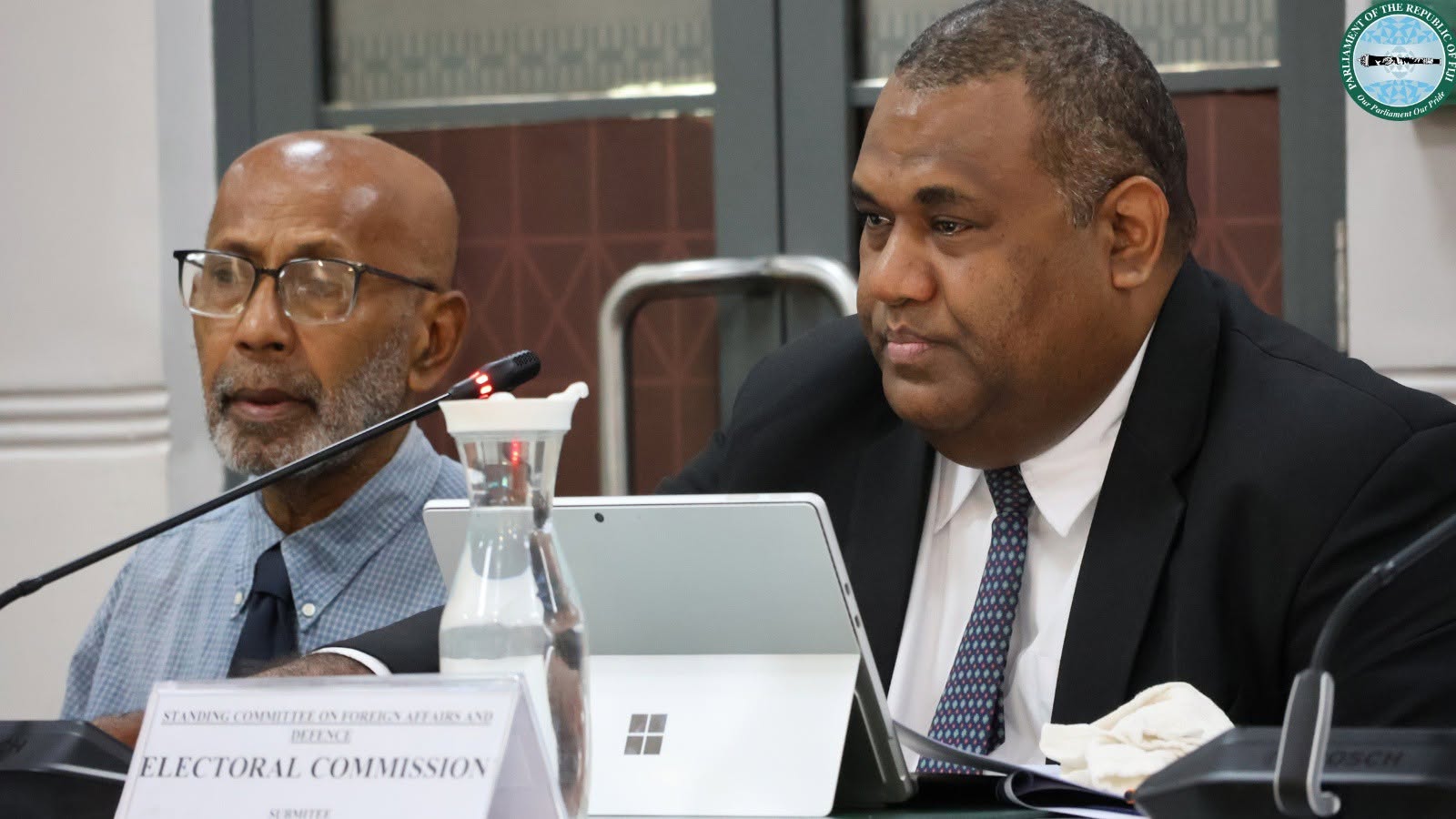
THE Electoral Commission’s ability to carry out its constitutional functions was severely disrupted after its records were seized by the Fiji Independent Commission Against Corruption (FICAC) and the body later lost its decision-making quorum.
Making a submission on the commission’s annual report 2023-2024 to the Standing Committee on Foreign Affairs and Defence, Electoral Commission chair Usaia Ratuvili said the institution faced major operational and governance disruptions during that period, which limited its ability to respond fully to questions on its activities.
Committee deputy chair Rinesh Sharma questioned the commission on voter education programs delivered in 2023 and how allocated funds were used, noting that voter education is a core constitutional responsibility of the Electoral Commission.
Mr Ratuvili said the current commissioners were not in office during the period under review and key records were not available to support detailed responses.
“Any information that could have been retained was in the documents that were seized from the commission by a such warrant.
“So, I’m not really in a position to assist you with that query.”
He added that some documents had since been returned, but the commission was still working to establish whether all seized records had been recovered.
Mr Ratuvili told the committee they were unable to function effectively at one stage after several members’ terms expired simultaneously, leaving it without the quorum required to make decisions.
“The commission requires a quorum of four members to make a decision.
“Four members’ terms expired together. So, they couldn’t basically do anything.”
He said while the Fiji Elections Office (FEO) continued operational work during this period, formal decisions requiring Electoral Commission approval could not proceed, effectively limiting oversight of the Supervisor of Elections.

