THE current 2026–2027 El Niño is “off the charts” and unlike any event previously monitored, the World Meteorological Organisation has warned at COP31 in Antalya, Türkiye.
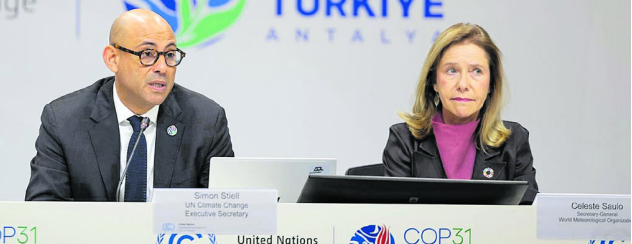
Presenting the WMO State of the Climate 2026 Update yesterday, Secretary-General Celeste Saulo said sea surface temperatures in the tropical equatorial Pacific could surge to nearly four times the El Niño threshold between November 2026 and January 2027.
Because El Niño triggers its peak warming in the year after developing, she warned the world must brace for another record-breaking year in 2027.
“Indeed, this 2026–2027 El Niño is off the charts,” Prof Saulo said.
“It is different from any El Niño that we have monitored.”
She said global temperatures from January to September reached 1.47 degrees Celsius above pre-industrial levels, placing the past four years as the hottest on record.
UN Climate Change executive secretary Simon Stiell said the weather phenomenon was compounding an already deadly crisis.
“A super El Niño is turbocharging climate impacts, delivering a deadly double blow,” Mr Stiell said.
“The climate crisis is now a global health crisis of pandemic proportions.”
Prof Saulo said drought was already gripping parts of the Pacific, Asia and Central America, while ocean heat hit a record high for the 10th consecutive year and sea levels threatened 900 million coastal residents.
She warned that tropical cyclones, heat waves and rainstorms were intensifying faster than historical baselines prepared nations for.
Prof Saulo urged COP31 leaders to fund sustained weather observations and turn early warnings into action, warning that humanity “cannot afford to fly blind” against an existential threat.