
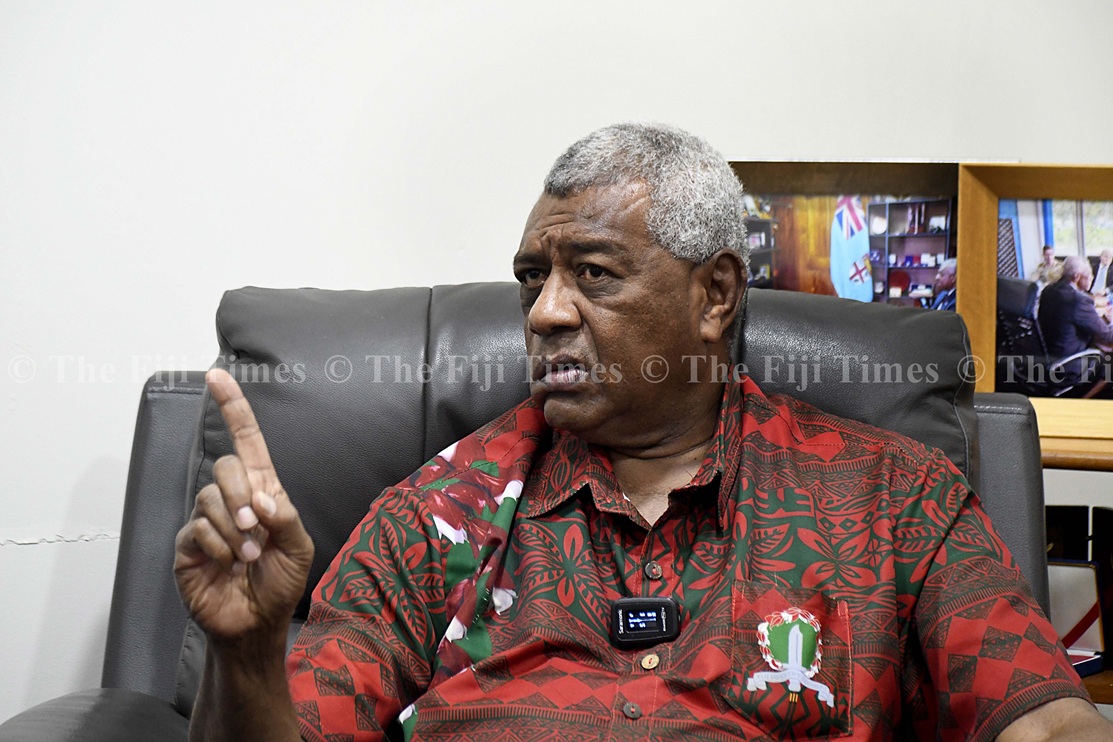
Defence and Veteran Affairs Minister Pio Tikoduadua made a powerful statement on The Lens@177 program by The Fiji Times, airing tonight at 7pm, that is certain to attract widespread attention.
Fiji, he said, is simply too porous as an island nation to monitor every entry point effectively, making it vulnerable to the movement of illegal drugs, weapons, ammunition and other forms of contraband. As a small archipelagic state with islands spread across vast stretches of ocean, he said, it is a major challenge to monitor every vessel and every person moving through our waters.
Those entering Fiji can bring with them items prohibited under our laws, including illicit drugs, firearms, ammunition and other illegal goods.
The minister argued that the presence of such items is directly linked to the difficulty of policing Fiji’s vast maritime domain.
Yet Fiji is not alone in facing such a challenge. We note that countries with significantly greater resources and sophisticated enforcement systems continue to struggle in the battle against transnational crime. The United States, for instance, remains heavily engaged in a costly and ongoing fight against the illegal drug trade. Closer to home, Australia has one of the most robust border security and law enforcement networks in the region. Despite this, criminal syndicates continue to target its shores, highlighting the persistence and adaptability of organised crime.
If nations with extensive resources face such difficulties, then our vulnerability becomes even more apparent. Mr Tikoduadua made the point that no nation can realistically monitor every corner of its territory at all times. The world’s largest countries cannot achieve complete coverage, and neither can Fiji.
He said this should help explain the discovery of arms and ammunition in the country.
We say the scale of this surveillance challenge should reinforce an important message. We are vulnerable, and safeguarding our nation demands vigilance, engagement and proactive action.
In saying that, it is worth reflecting on comments made earlier this month by the Tui Nayau, Ratu Tevita Mara, after illicit drugs washed ashore on islands in Lau. He warned that the repeated arrival of such cargoes demonstrated that current responses were not adequately matching the scale of the threat.
Ratu Tevita argued that greater emphasis must be placed on prevention rather than relying solely on enforcement after drugs have already entered the country. He called for a review of village by-laws, stronger community involvement in coastal monitoring, and practical support through small boats, communications equipment, fuel and properly resourced village constabularies.
If the vanua is willing to play a greater role in this fight, then the question becomes whether we have the collective will to make it happen. That means investing in awareness, training and resources, while strengthening cooperation between communities and security agencies, including the Fiji Navy, Water Police, the Republic of Fiji Military Forces and Customs and Immigration.
Let’s face it.
Protecting Fiji cannot be left to law enforcement alone. We should have a united front involving Government, communities, traditional leaders, churches, schools and citizens. We say awareness must be constant, vigilance unwavering and commitment genuine.

