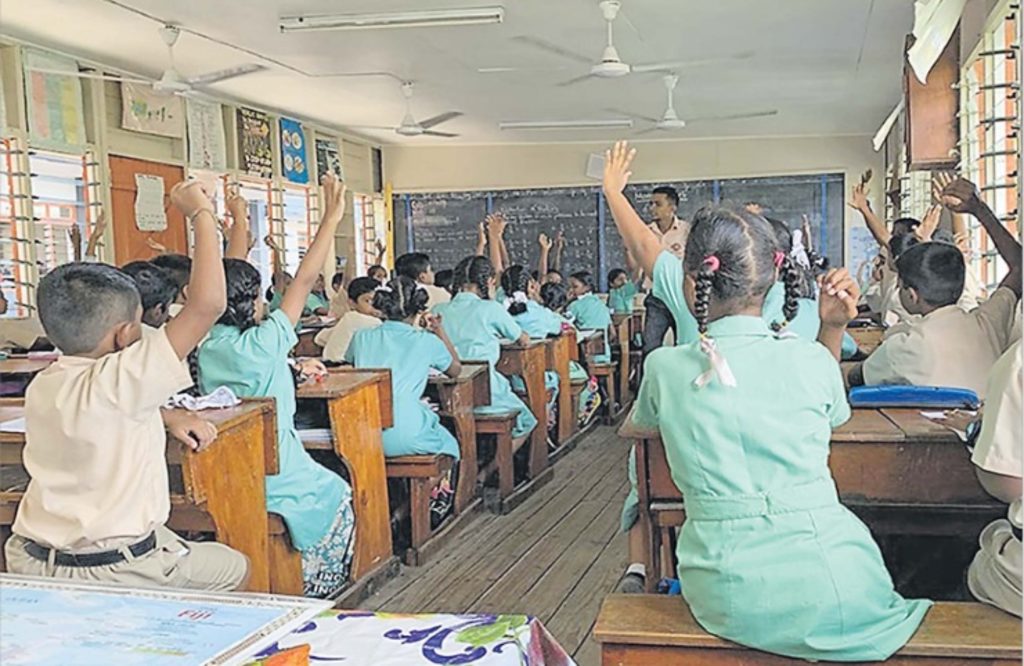
So, children in multicultural classrooms need local contexts and oral traditions reflected in their reading materials rather than traditional Euro-centric definitions. Well, that’s according to Professor Margaret Sims of Macquarie University, who is also an adjunct professor at the Fiji National University.
Prof Sims told the Literature Training Workshop in Lautoka on Thursday that modern definitions of literature must expand beyond Northern theories to include blogs, AI-generated content and oral histories.
Now, that’s a new direction.
She said what people regarded as literature was shaped by their history, past, institutions and culture, while much of the research focusing on those definitions remained Eurocentric. Her reaction comes in the wake of revelations that we may have declining literacy and numeracy standards in Fiji.
Just last week, former trade unionist and educationist Susana Tuisawau said curriculum changes made without adequate research, the removal of vernacular languages as a medium of instruction in the early years and overcrowded classrooms were contributing to declining literacy and numeracy standards in Fiji.
She was reacting to the Pacific region’s appalling literacy and numeracy performance recorded in 2025 and reflected in findings released last week by the Pacific Community (SPC).
She is now calling for a thorough review of primary teacher training and practicum, particularly for Years One to Three.
Prof Sims emphasised that teaching materials must connect directly with students’ everyday realities instead of forcing foreign concepts onto them.
She explained that a child living in an Australian desert could struggle to relate to a story about buying groceries at a city corner store.
Instead, educators should champion co-creation by turning local events, such as a local fire engine visit, into classroom reading materials. This approach allows teachers to ground lessons in familiar experiences while extending student literacy.
What is encouraging here is the fact that we have experts finally speaking up.
It means we have a base to start from, and that should encourage us to do something about our systems and processes.
If there has to be a sense of urgency on the part of stakeholders to address our woes, then we suggest someone, or some people, have to pull out all stops and get the ball rolling.
The message is clear: our children need to see themselves and their experiences reflected in what they learn. We cannot expect better outcomes if the foundations of learning are disconnected from their realities.
This is where reform must begin. We need honest assessments, stronger teacher preparation, relevant materials and a willingness to listen to those on the ground.
Let’s face it! We may have gone past the time for acknowledging the problem! So, we should be acting with purpose and urgency, before another generation of children pays the price for shortcomings we know exist.