
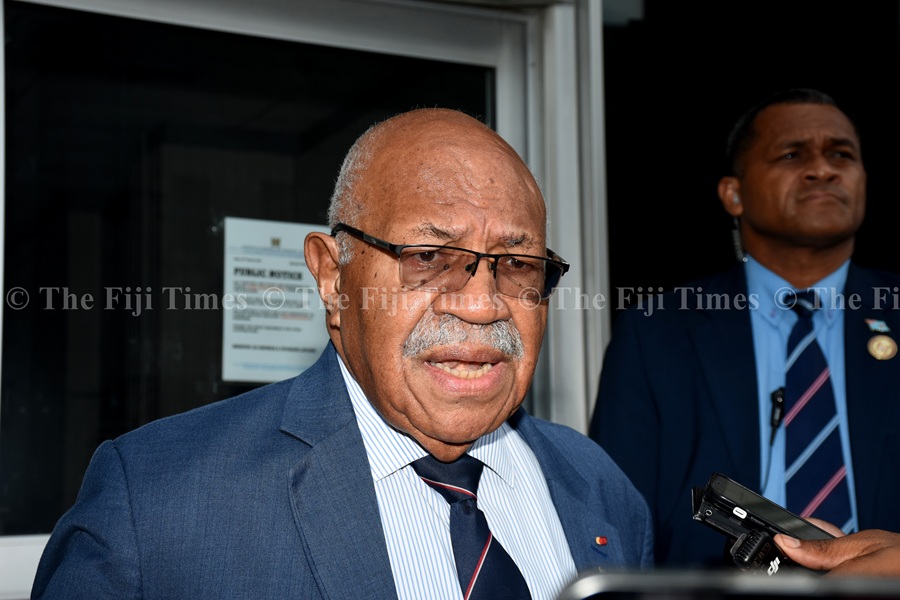
It is encouraging to know that Prime Minister Sitiveni Rabuka is already talking about the Government’s urgent plan to work with Energy Fiji Ltd to prevent possible nationwide power rationing.
This comes as concerns grow over fuel supply pressures and the stability of electricity generation.
EFL has warned that if fuel recovery support is not secured by May 22, the country could face controlled load shedding and possible power rationing.
And that is not something any of us would like to see.
So, in the face of this looming threat, it is reassuring to hear Mr Rabuka say the Government understands the seriousness of the situation and is working closely with the national utility to find practical alternatives.
The key word here is “engaging”.
That is good to know.
The Prime Minister says the Government wants to avoid rationing if at all possible. However, he has also acknowledged that if there is no other option, Fiji may have to adopt a strategy that many countries around the world have used during similar crises.
He noted that while Fiji has not experienced widespread power rationing in recent decades, the country’s energy mix, including hydroelectricity and the increasing use of household solar systems, could help soften the impact if managed wisely.
He suggested that careful demand management may be the best way to ensure both hydro and diesel generators continue operating effectively.
Mr Rabuka stressed that any measures introduced would be designed to prevent total blackouts.
He also confirmed that a $30million assistance package from the Australia Government will be channelled through Fiji’s national budget system rather than being provided directly to EFL.
The Prime Minister is expected to meet with EFL’s chief executive today, ahead of the May 22 deadline, in an effort to resolve the issue and reduce pressure on consumers.
We have, however, been warned about the possibility of such a development.
The current fuel crisis, driven by escalating tensions involving the United States, Israel and Iran, is a reminder of how international conflicts can quickly disrupt supply chains and affect nations far beyond the battlefield.
We have always said that we are not immune to the troubles of the world.
The tensions around the Strait of Hormuz have shaken global energy markets and exposed how vulnerable small island nations can be to events beyond their control.
In the face of this, we are reminded of the importance of expanding solar power solutions tailored for households and making them affordable for ordinary families.
We must also review policies and processes that empower consumers to rely more on renewable energy in the years ahead.
For now, though, we look to our leaders and stakeholders to work together to ease the pressure on households and businesses. That is why it is encouraging to see discussions taking place. Engagement matters. It offers hope, inspires confidence, and reminds us that even in the midst of a global crisis, practical solutions can be a way forward for us.

