
THE fight against drugs has become one of Fiji’s latest and biggest public challenges.
Communities have raised concern over safer streets, stronger enforcement and decisive action against those who profit from and participate in illegal drug deals.
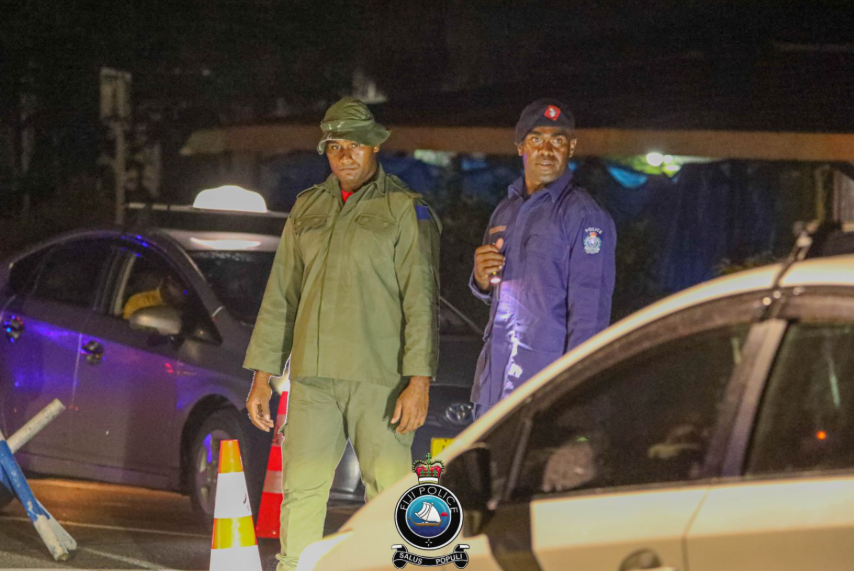
So it is no surprise and understandably so, that many of us welcome the involvement of the Republic of Fiji Military Forces alongside the Fiji Police Force.
We believe the partnership strengthens the country’s ability to tackle organised crime and law breaking.
As Human Rights and Anti-Discrimination Commission Commissioner Chantelle Khan observed this week: “Many members of the public support military involvement because they believe it improves public safety.”
That confidence and trust in the army, or any public institution for that matter, is important.
But so too is any decision to effectively monitor these joint operations.
The commission is not questioning the need to combat crime.
Rather, it is asking whether those operations are being carried out within the boundaries of the law and with full respect for human rights. Period!
Ms Khan said the Commission wanted to better understand “the terms of reference governing joint military-police operations” and whether officers fully understood “their human rights obligations when carrying out operations involving civilians.”
Allegations alone should never be treated as proof of wrongdoing. Every complaint deserves a fair and impartial investigation, just as every officer is entitled to due process.
But neither should such complaints be dismissed without careful examination.
This conversation itself is not new. Statistics from the Office of the Director of Public Prosecutions, point to concerns that have existed for some time.
Independent monitoring helps build public confidence by assuring citizens that misconduct, will be addressed fairly.
At the same time, fairness requires acknowledging the difficult realities of maintaining law and order.
Officers routinely face dangerous situations, long hours and immense psychological pressure.
Split-second decisions can have life-changing consequences.
Better mentoring, counselling, supervision and training should form part of the solution.
Supporting officers’ wellbeing is not a concession; it is an investment in professional policing and development.
The overwhelming majority of officers serving within our security force, do so with dedication and integrity.
Their service deserves respect and appreciation.
Yet the authority entrusted to law enforcement carries equally significant responsibilities.
Effective policing depends not only on the power to enforce the law, but also on the public’s confidence that it will be exercised fairly, professionally and with restraint.
Winning the fight against crime will require determination, cooperation and public trust.
Protecting that trust may well prove to be law enforcement’s greatest achievement.

