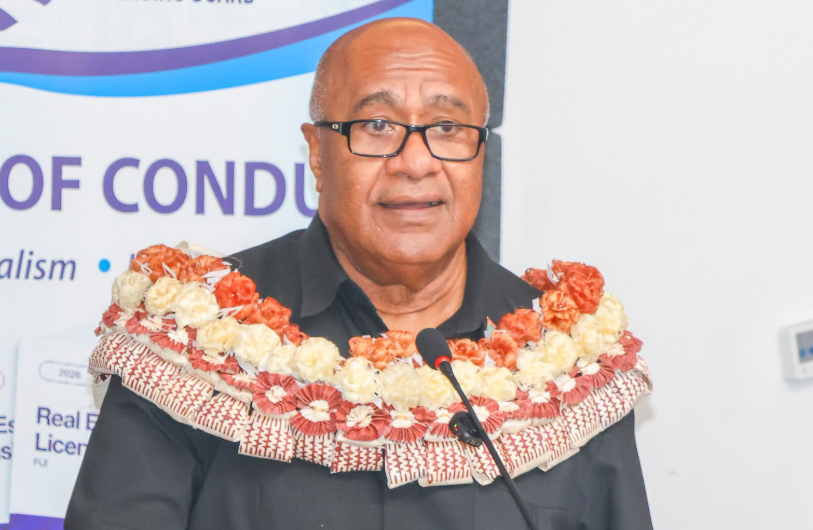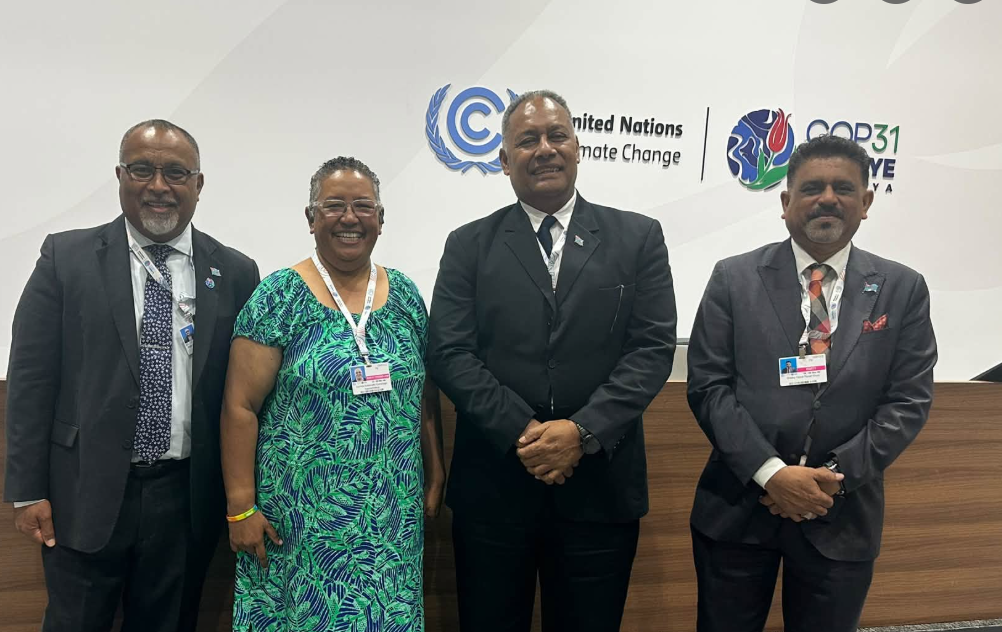
Foreign Affairs Minister Sakiasi Ditoka has defended the size of Fiji’s delegation to COP31 in Antalya, Türkiye, saying the country cannot afford to be absent from critical climate negotiations and that the benefits of participation should not be measured solely against travel costs.
Responding to questions raised on social media about what Fiji gained from COP31 and why it sent a sizeable delegation, Mr Ditoka said multiple negotiations took place simultaneously, covering issues such as climate finance, loss and damage, emissions and oceans.
“By the time a decision reaches the closing plenary, much of the wording has already been settled. Fiji cannot afford to leave those rooms to others,” he said.
“Everyone who attends has a reason to be there and a job to do.”
Mr Ditoka said development partners often sponsored the participation of members of Fiji’s delegation, as well as representatives of regional and international organisations attending from Fiji.
He also defended the attendance of ministers, saying the seniority of representatives influenced when countries were given the opportunity to speak under United Nations protocol.
“If a large country is represented by an official and Fiji is represented by a minister, Fiji will usually speak first,” he said.
“Our officials do the detailed negotiating, and ministers take Fiji’s position directly to their counterparts when the political decisions are being made.”
Mr Ditoka acknowledged that COP31 had fallen short of Fiji’s expectations, with countries unable to agree on the main decision and no funded plan secured for tripling adaptation finance by 2035.
However, he said decisions were adopted to strengthen technical assistance for loss and damage, with Fiji helping lead Pacific negotiations, including on guidance for the Loss and Damage Fund.
“Incremental gains are still gains. Sometimes an issue moves only a little at one COP.
“That can give us enough to work with in the months that follow, as we sit down with other governments and build support with our Pacific partners for a decision at the next one. That is the nature of negotiated diplomacy.”
Mr Ditoka pointed to more than US$100 million in Green Climate Fund grants approved for four projects in Fiji as examples of the longer-term benefits of international climate engagement.
These included US$31 million for the Greater Suva water and wastewater programme, US$35.2 million for the Great Sea Reef, approximately US$29.4 million for forest and watershed restoration, and US$12.9 million to strengthen disaster warning systems.
“If the cost of sending delegations is the only yardstick, I can understand the complaint. But judging COP by that measure alone risks missing much of what Fiji has gained, and what it can still gain,” he said.
“One simple test is to compare what Fiji has been granted with what our delegations have cost.
“The four Green Climate Fund grants I have just mentioned add up to more than US$100 million. I don’t think the cost of all our delegations to all the COPs comes anywhere close to the Viria project alone.”
Mr Ditoka did not disclose the total cost of Fiji’s COP31 delegation in his social media statement.
He also highlighted the $5.9 million relocation of Nabavatu Village in Macuata, saying years of Pacific advocacy at climate conferences had helped draw international attention to the challenges associated with relocating entire communities.
Meanwhile, Mr Ditoka expressed disappointment over the failure to secure a standalone ocean decision at COP31, despite Fiji leading a group of countries advocating for its adoption.
“When the main decision was rejected, ten agreed ocean paragraphs fell with it, and at the closing plenary Fiji asked for them to be adopted on their own.
“That did not happen this time, but the text exists and the support behind it is real.”
He said Fiji would continue pursuing the adoption of those provisions, beginning with climate talks in Bonn in June ahead of COP32 in Addis Ababa, Ethiopia, in November 2027.
Mr Ditoka also highlighted the growing importance of trade in international climate negotiations, saying Fiji needed to ensure its exports remained competitive as global trade rules evolved and that trade opened opportunities for green investment.
“We can take pride in those gains and still be frank about what fell short in Antalya.
“Between now and COP32, we will keep working with partners, preparing the projects our communities need and building support for the decisions we want to see.”
Mr Ditoka acknowledged the contributions of Environment and Climate Change Minister Lynda Tabuya, government officials, other ministers, the Leader of the Opposition, the parliamentary delegation, civil society organisations, trade unions and international development partners.