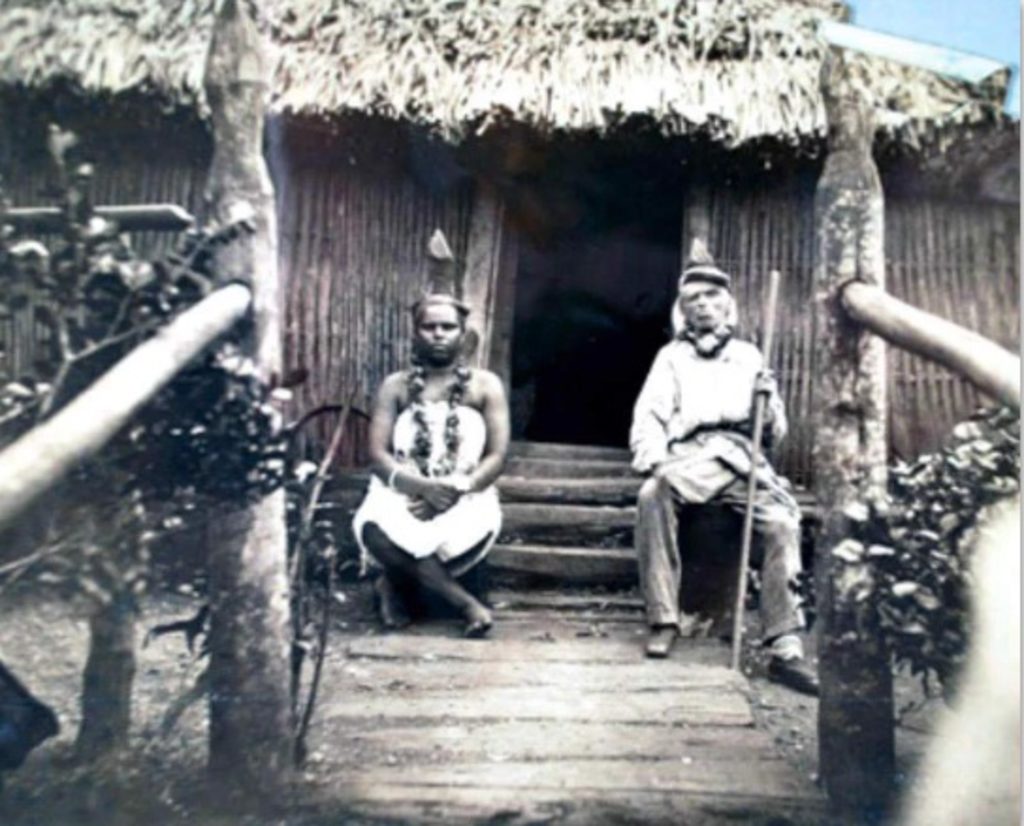
The journey of John Humphrey Danford began in the crowded streets of London but ended deep in the mountains of Namosi, where he found acceptance among a people the outside world feared.
Along the way he survived storms, famine, captivity, betrayal and poverty before becoming an adopted brother of a Fijian chief.
Known throughout Fiji as “Harry the Jew”, Danford lived a life that blurred the boundaries between European society and the traditional world of nineteenth-century Fiji.
His story, recorded in an 1863 newspaper account, is one of hardship and unlikely belonging.
FamilySearch historical records state that John Humphrey Danford was born in 1805 in Minories, London, England.
He and his wife, Kalara Taulawa raised four children together. He died on January 26, 1889 in Namosi, Fiji, aged 84, where he was buried.
Running from one life to another
According to the Lake Wakatip Mail in June 1863, Danford described himself as a man who could never settle.
“Born in London,” the newspaper reported, he was apprenticed to several trades but abandoned each one because his employers were men with whom he “could not agree.”
The sea offered an escape, but his spirited heart found little satisfaction.
After serving on several vessels in the South Pacific, he concluded that the captains he had to deal with were disagreeable men and eventually deserted at Tongatapu.
His fortunes did not improve.
After spending a year in Tonga, where a devastating hurricane and famine brought severe hardship, he decided the Tongans were disagreeable people and sailed by canoe to Fiji.
Instead of finding refuge, he arrived in Kadavu, where the canoe was seized and the crew condemned to be ‘baked in the oven’.
Through strategy, Danford escaped and reached Rewa, where he lived for a time among other European settlers.
A reputation follows him
Danford’s time among fellow Europeans was not easy.
One episode involved selling Charles Pickering what the newspaper described as ‘a pinchbeck watch that only went when carried’.
Once payment was made, Danford immediately departed, later declaring that the white men were a ‘disagreeable set of fellows’.
It was Pickering who gave him the nickname “Harry the Jew” after the watch transaction.
Danford later worked with Pickering in a beche-de-mer business and acted as an agent for a man known as Flash Bob in negotiating the purchase of a wife from a Fijian chief.
The partnership ended badly.
Following a dispute, the drying house of the business was destroyed by fire and Pickering removed everything from the establishment leaving Danford, according to the newspaper, “penniless, shirtless, and friendless on the beach.”
His troubles were compounded by his nickname.
Translated into Fijian, “Harry the Jew” led some newly converted Christians to refuse him hospitality because he supposedly ‘belongs to a people who have killed Christ’.
Finding a home in Namosi
Just when his circumstances seemed hopeless, an unexpected invitation changed his life.
The brother of Chief Kuruduadua invited Danford to live in the highlands of Namosi.
The journey into the mountains filled him with fear.
“His heart almost fails him as he toils his way into the very midst of a nation of cannibals,” the newspaper recounted.
Exhausted and nearly naked, Danford finally reached the settlement, where messengers carried him on their shoulders to meet the chief.
What followed surprised him.
The chief provided him with wives, a yam plantation, gardens, houses and native cloth to exchange for European clothing.
Danford was also adopted as a brother of the chief and assigned attendants.
The newspaper observed that Danford had finally found agreeable companions in the chief and his people.
A valued member of the community
Danford quickly became more than a guest.
His practical skills earned him an important place within the community.
He repaired muskets for the people of Namosi and entertained the chief by telling stories about Europeans and their homeland.
Although he had spent only about a week working as an errand boy for a London apothecary, that brief experience enabled him to dispense pills to the sick, allowing him to assume another important stand in his new life.
Years passed without Danford seeing another European. Then messengers arrived from the coast carrying an unusual description.
They said a foreigner wished to meet him and wore a blue coat all covered over with ‘looking-glasses’.
Curious, Danford agreed to the meeting.
The stranger proved to be John B. Williams, the United States consul, whose brass buttons locals had been mistaken for mirrors.
Through Danford’s assistance, Williams negotiated the purchase of copper mines in the interior from the local people.
Although ownership changed hands, the newspaper noted that the mines had not yet been worked or scientifically examined then.
A life between two worlds
By 1863, Danford had lived so long in Fiji’s interior that even he could no longer remember exactly how many years had passed.
The Lake Wakatip Mail described him as “the only Englishman who has lived for any length of time in the wild and unknown regions of the interior” and noted that he had “managed to throw a halo of mystery around himself.”
His remarkable journey had taken him from London’s workshops to Fiji’s mountains, through hardship and conflict.
Yet it was far from the society into which he was born that John Humphrey Danford found the acceptance and purpose that had long eluded him.
- History being the subject it is, a group’s version of events may not be the same as that held by another group. When publishing one account, it is not our intention to cause division or to disrespect other oral traditions. Those with a different version can contact us so we can publish your account of history too — Editor.
Part 2 Next Week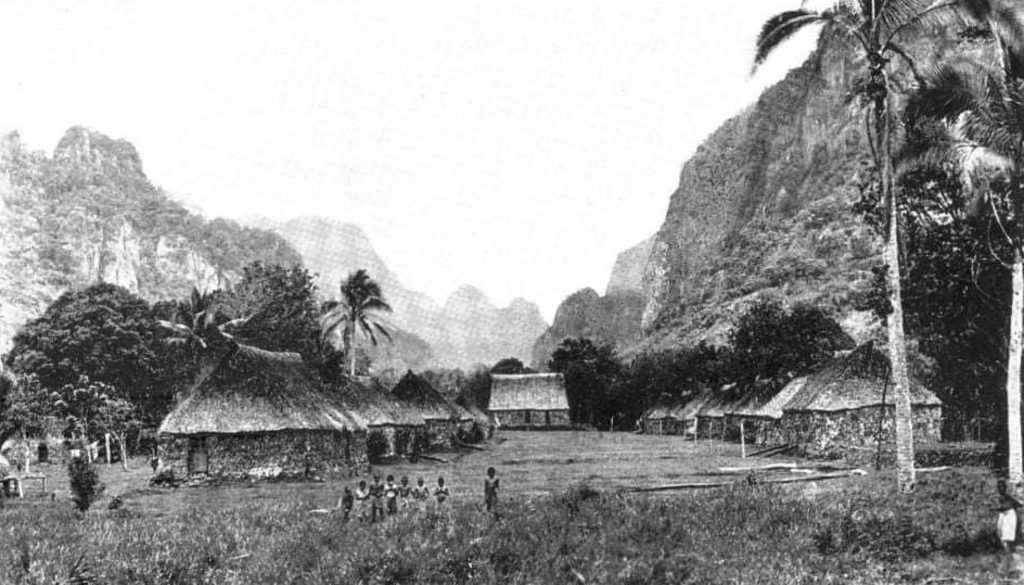
The koro makawa (old village) of Namosi. Picture: NATIONAL ARCHIVES OF FIJI
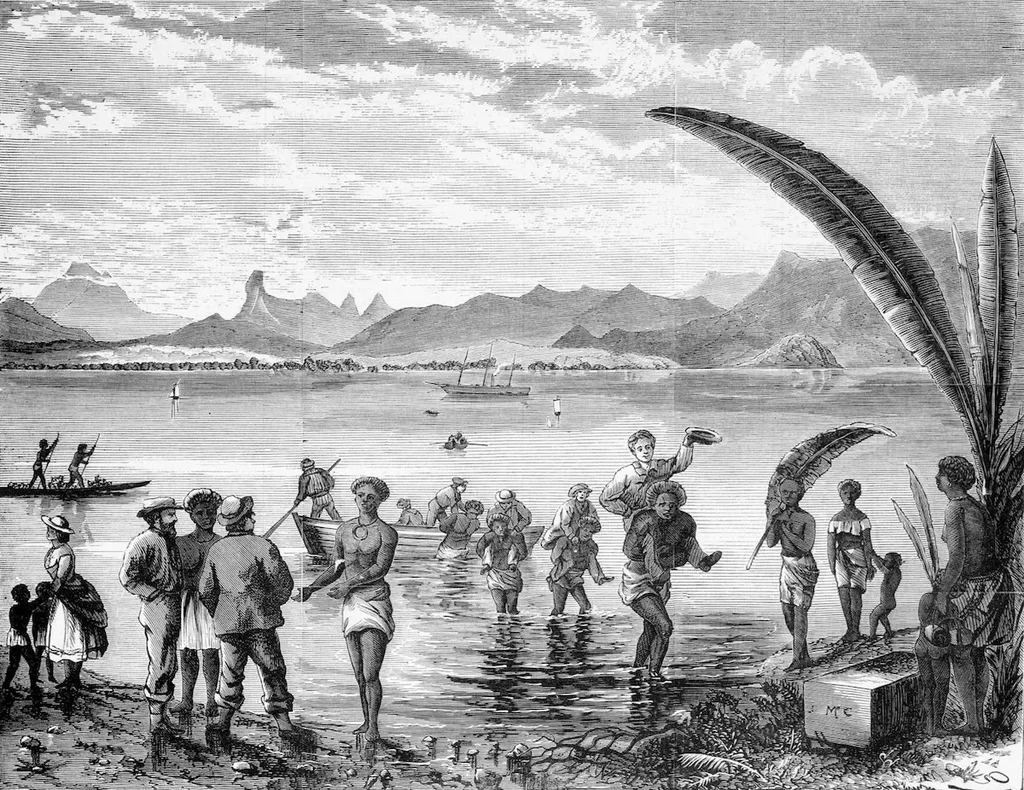
A depiction of ‘landing in Suva on the Fijian island of Viti Levu’ by Robert Bruce, June 17, 1871. Picture: HISTORY TODAY /STATE LIBRARY VICTORIA.
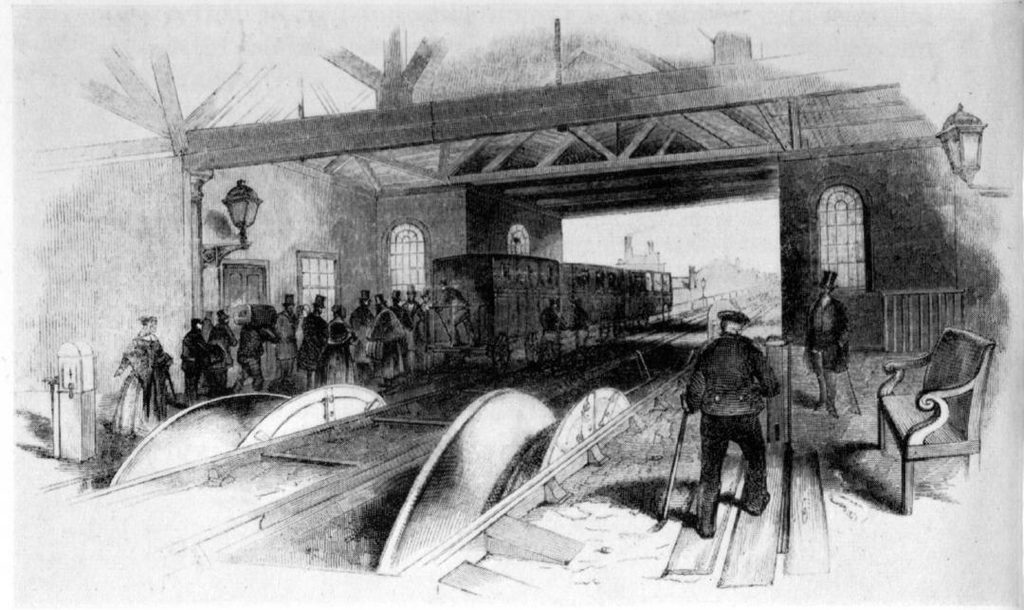
FamilySearch historical records state that John Humphrey Danford was born in 1805 in Minories, London, England. Picture: WIKIPEDIA
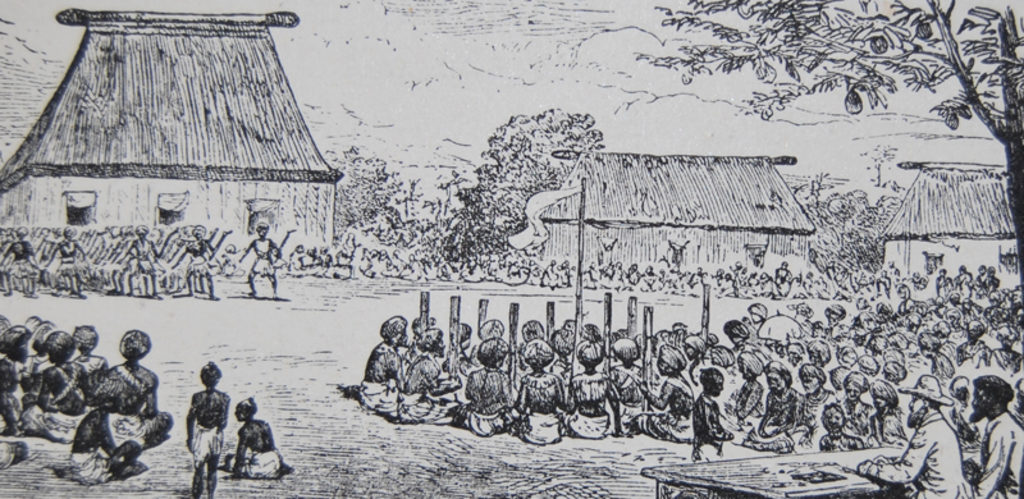
Danford quickly became more than a guest, his practical skills earned him an important place within the community. He repaired muskets for the people of Namosi and entertained the chief by telling stories about Europeans and their homeland. Picture: SUPPLIED