
Welcome back readers to part 2 of measuring government’s performance. This week we continue with looking at the 16 important areas that can improve the quality of all our citizens’ lives across a wide spectrum of society. These indicators may give us the answers as to whether the government is truly performing or not. Last week, we started with our first eight points to measure government’s performance and this week here are the final eight points of the most important areas of interest for the public in Fiji.
1. Safety of women and children
I don’t think I need to say any more than Fiji has one of the highest rates of domestic violence per capita against women in the world. As we all know this is a national shame and is unacceptable if we are to progress in anyway way, shape or form as nation. The children have not been spared either as our rates of physical and sexual abuse against both women and children are shocking.
2. Standard of education
At present, studies have shown that to give your child a chance to blossom, learn and develop, we have to stop overcrowding our classrooms with students. This has been an ongoing problem which never gets addressed. The teacher to student ratio can sometimes be as high as 30 to 40 to even 50 students in a class, which puts tremendous strain on both the teacher and student. In today’s teaching environment, this can certainly be detrimental to a child’s development.
3. Freedom of speech
Freedom of speech is a fundamental human right and a very basic human right, yet we continue it seems to have the majority of the population who are intimidated and also fear to express their views openly in society. This as we know can lead to not questioning what the people in power are doing and also being able to hold them accountable. This is one area that needs to be urgently looked at as we all want that right to express ourselves without fear or intimidation.
4. Freedom to assemble
Again, an area that needs to be urgently improved on as it seems almost every time a permit is applied for there seems to some excuse or the other to deny the public a chance to voice themselves.
5. Inclusive government
This is one area where there is little doubt that government struggles with, and that is being inclusive with the public and consulting stakeholders with what is going on. As a developing nation the NGOs are the backbone of the nation and are an essential partner to any government. During the COVID-19 lockdown organisations such as FRIEND and so many more were one of the first on the ground giving essential help and assistance to the needy and vulnerable. You look at The Fiji Women’s Crisis Centre and other women’s NGOs who are doing essential work for the betterment of both women and the society. They need to be involved with decision making for the country as their contribution is priceless. These are just a few examples of government needing to be inclusive with stakeholders as part of nation building.
6. Ministers pay and workers pay
This topic is very interesting as the gap between what government ministers get paid weekly and what workers get paid weekly is quite revealing. Some of our ministers get paid between $6000 to $7000 dollars a week and the people they are working for, which is the public can be earning between $150 to $200 a week. There is something wrong somewhere.
7. Freedom to criticise government
Criticising the government, should be taken as a mechanism where they can look at that criticism and take it as a way to improve what services they are delivering to the public they serve. For example, they can look at the state of the roads and traffic congestion which they have spent millions and billions of dollars on and say OK this is serious and find ways to deliver better roads and how to alleviate traffic congestion. Rather than hitting back and trying to close down the conversation.
8. Coming out of poverty
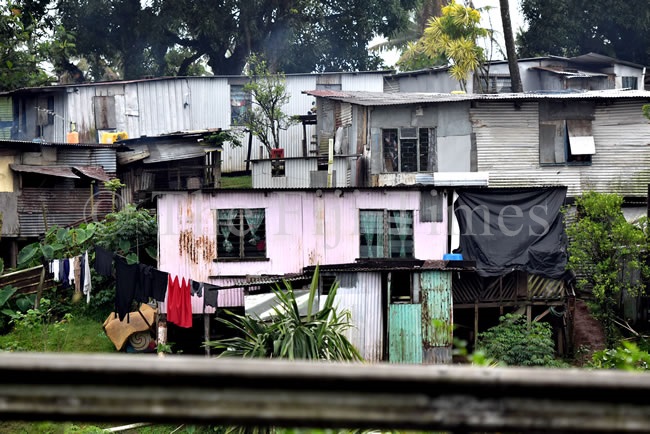
I think the question here is what is being done to bring people out of poverty. This question has to be asked as poverty and abject poverty are areas that are on the rise in Fiji. The government budget runs into billions of dollars now, so what is being done to combat poverty and also what programs have been put into place to combat poverty over the last few years. Most importantly what is the success rate of these programs. Unfortunately, it just doesn’t seem to be working as our citizens are going further into debt, poverty and homelessness.
There you have it, the final eight points which can be performance indicators as to how government is performing or is not performing in regards to delivering important and key services to the public. Blessed weekend ahead folks and see you next week.
• AJAY BHAI AMRIT is a founding member of The People’s Alliance party and is also a freelance writer. The views expressed in this article are his and do not necessarily reflect the views of this newspaper.

