RELEASED at 2:00 a.m. on Sunday, November 22, as COP31 stretched deep into overtime in Antalya, Türkiye, the 94-paragraph Presidency-led cover decision draft attempts to bridge deep geopolitical divides by pairing urgent acknowledgements of climate overshoot and ocean vulnerability with voluntary energy targets and deferred financial pathways while omitting explicit language to phase out fossil fuels.
Spanning two overarching sections Global progress and context, and Accelerating implementation, the 10-page document sets the political and technical architecture for how countries navigate the remainder of this decisive decade.
For Pacific Island states and developing nations on the frontlines of climate change, the draft offers several hard-won institutional anchors on adaptation finance, oceans, and loss and damage, yet stops short of binding commitments on the primary driver of global warming.
At the centre of the text’s scientific framing is an explicit admission that the world is entering dangerous territory.
Paragraphs 9 through 13 reaffirm the Paris Agreement goal of holding global warming well below 2 degrees Celsius and pursuing efforts to limit it to 1.5 degrees Celsius, while expressing “deep concern” that peak global warming is expected to exceed 1.5 degrees Celsius in the next few years. The text recognizes that every increment of warming above current levels increases the frequency and intensity of loss and damage and risks irreversible impacts on human and natural systems.
It also links these risks to the ongoing El Niño event against a backdrop of worsening weather extremes, and establishes a high-level dialogue at CMA 9 on the scientific findings and equity implications of 1.5 degrees Celsius overshoot.
Yet when moving from diagnosis to cure, the text reveals its sharpest political compromise. Under concrete solutions, paragraph 40 calls for global cooperation to increase the share of electricity in total final energy consumption to 35 per cent by 2035 and encourages accelerating Carbon Capture, Utilization, and Storage (CCUS) deployment toward gigatonne scale globally by 2035, particularly in hard-to-abate sectors. Conspicuously absent from the 94 paragraphs is any direct call to phase out or transition away from coal, oil, and gas a glaring omission for Pacific nations that view fossil fuel phaseout as non-negotiable for survival.
Nowhere is the tension between developing nations’ urgent survival needs and incremental multilateral compromises clearer than in paragraph 19 of the text.
”Highlights that the costed needs of developing country Parties as reported in their nationally determined contributions are estimated at USD 5.1-6.8 trillion for up until 2030 or USD 455-584 billion per year and that adaptation finance needs are estimated at USD 305 billion annually for up until 2035 and notes with concern the gap between climate finance flows and needs, particularly for adaptation in developing country Parties.”
What Paragraph 19 Means for the Pacific and Developing Nations
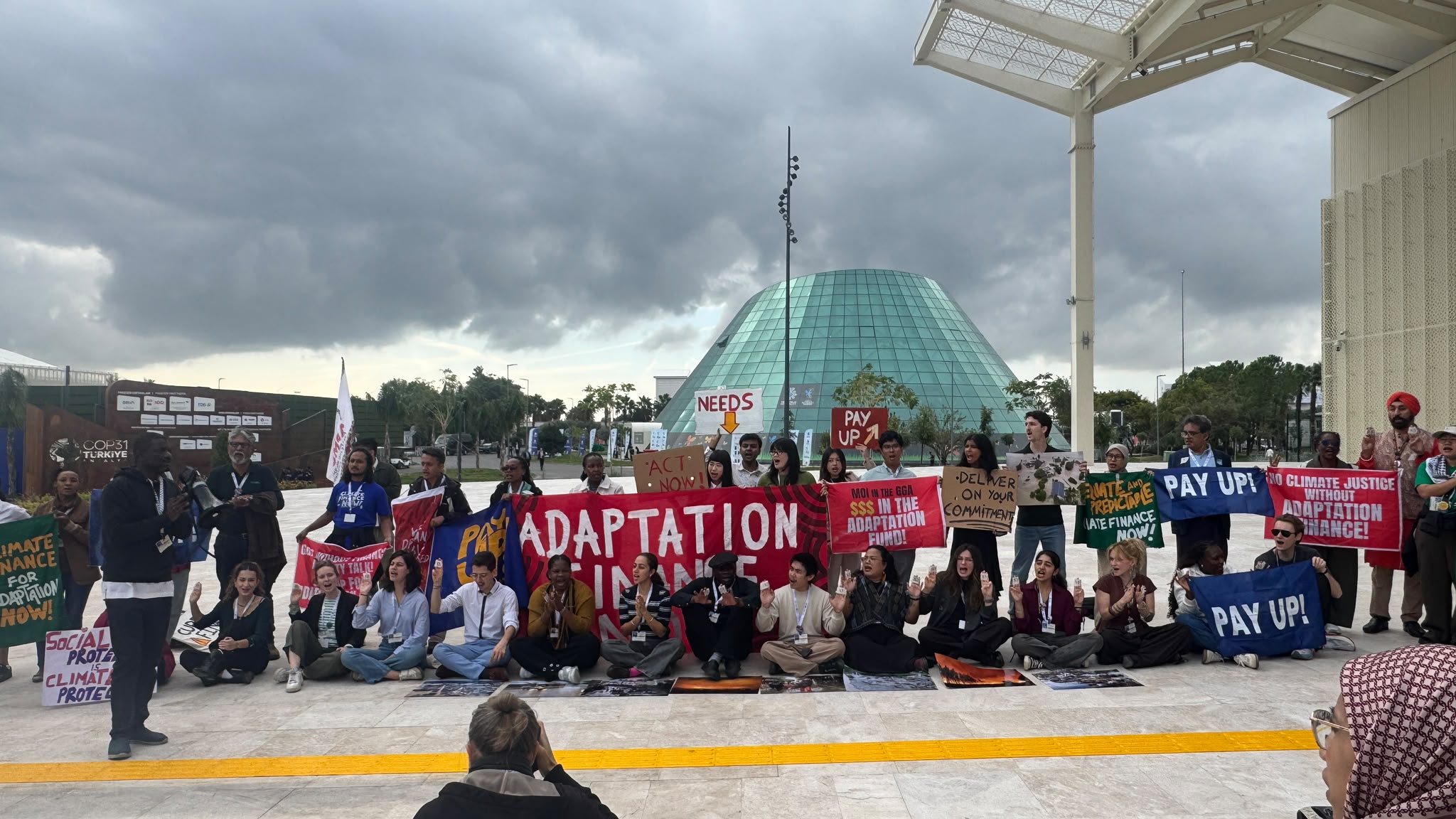
This single paragraph captures the fundamental arithmetic confronting Fiji, Tuvalu, and developing countries across the Global South. By formally enshrining the UNEP Adaptation Gap Report 2026 estimate of USD 305 billion needed annually for adaptation up to 2035 alongside trillions in broader implementation needs, the cover decision validates what Pacific leaders have argued for years: current financial flows are nowhere near the scale required to protect vulnerable coastlines, water supplies, and livelihoods.
However, while paragraph 19 diagnoses the trillion-dollar shortfall with official UN figures, subsequent finance paragraphs defer concrete delivery mechanisms. Paragraphs 45 through 54 reaffirm developed countries’ obligations under Article 9 of the Paris Agreement and resolve to accelerate efforts to at least triple adaptation finance by 2035, launching the “Antalya-Addis Ababa road map on adaptation and resilience finance”.
Rather than locking in an immediate dollar floor or grant-only guarantee at COP31, the text tasks the Standing Committee on Finance and the climate finance work programme with preparing baseline options and an implementation pathway for consideration at CMA 9 in November 2027.
For Small Island Developing States (SIDS), there are nonetheless critical operational gains embedded in the finance and implementation sections. Paragraph 50 stresses the urgent need for public, grant-based, and highly concessional finance specifically for SIDS and least developed countries, recognizing that debt-laden loans cannot fund non-revenue-generating resilience projects. Paragraph 59 further urges multilateral climate funds and development banks to simplify approval procedures, allow mutual recognition of accreditation, and apply flexible co-financing approaches for SIDS—longstanding Pacific demands aimed at cutting bureaucratic delays.
Paragraphs 62 and 63 also welcome progress in operationalizing the Fund for responding to Loss and Damage and call for scaling up its resources.
Beyond finance, the text delivers notable institutional momentum on oceans and early warning systems, two pillars of Pacific resilience. Paragraphs 27, 28, and 40(a) reinforce the 2027 universal coverage goal under the Early Warnings for All initiative across SIDS. Meanwhile, paragraphs 32, 70, and 71 express deep concern over ocean warming and sea-level rise, establishing the “Antalya Ocean Current” multi-year plan for 2027–2028 and commissioning the “Blue Imece” synthesis report by March 2028 to feed ocean-based climate action directly into the second Global Stocktake.
Ultimately, the 94-paragraph text leaves the Pacific with a bittersweet balance sheet. It strengthens procedural pathways for ocean governance, early warning systems, and simplified finance access, while formally acknowledging the 1.5 degrees Celsius overshoot crisis.
Yet by sidestepping an explicit fossil fuel phaseout and pushing concrete adaptation finance baselines to 2027, the draft places the heaviest burden of climate inaction squarely back on the islands fighting to stay above water.
A final plenary is expected to be called by the COP31 Presidency later today.