
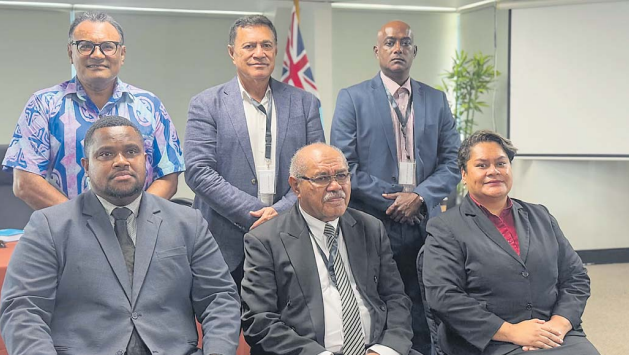
THE structure and long-term intent of the 2013 Constitution are now under close scrutiny, as the Constitution Review Commission grapples with what it describes as its most difficult task — the Bill of Rights.
Commission chairperson Sevuloni Valenitabua said the strength and scope of rights enshrined in the Constitution are making proposed reforms complex and, in some cases, contentious.
He noted that fundamental freedoms are clearly “spelled out in black and white”, meaning any attempt to amend them must be approached with caution.
“These are the basic rights, the right to life, the right to freedom of religion, the right to belief, and all those,” he said.
Mr Valenitabua said some submissions received by the commission call for changes that could effectively scale back certain protections — a move he indicated would not be straightforward.
Tensions, he added, are most apparent where proposals appear to conflict with existing guarantees, particularly the principle of equality before the law.
“So, having heard the submissions, particularly when we say that Fijians should be paramount, we’ve got equality before the law — it’s in the Bill of Rights and it’s in the Constitution.”
He also identified proposals to redefine Fiji as a Christian State as another significant challenge, given the Constitution’s current secular framework.
Such changes, he warned, would not be isolated.
“If we are to put these in, or we are to change them, then we’ve got to change all other aspects, or some other aspects of the Constitution which tie in with them.”
Mr Valenitabua said the commission remains mindful that the Constitution was designed with continuity in mind, making any shift in its core principles a matter of careful balance rather than simple revision.
Growing submissions from ministries, agencies
THE Constitution Review Commission (CRC) has been receiving a growing number of submissions
from ministries and agencies seeking to fix shortcomings in their own laws through constitutional changes.
This, according to CRC member, Dr John Fatiaki reflects a broader trend where gaps, overlaps, and
inconsistencies between existing legislation and the Constitution are being pushed into the review
process.
Responding to questions from this newspaper, Dr Fatiaki said many submissions had highlighted
conflicts between the supreme law and various Acts governing ministries and statutory bodies.
“I think the simple answer is we have had many submissions that have overlapped between the
supreme law, the Constitution, and the various Acts that pertain to different ministries,” he said.
He explained that in attempting to address perceived inadequacies, some agencies had proposed inserting
elements of their legislation directly into the Constitution, while others sought amendments to the Constitution to accommodate limitations within their own legal frameworks.
“The commission had taken note of the submissions and would consider them as part of its final report.”
However, he stressed that the review process was not about criticising whether the current system works.
Instead, he said, it was about identifying areas for improvement where necessary.
Dr Fatiaki cautioned against overloading the Constitution with detailed provisions better suited to
ordinary legislation.
“Because the supreme law is the supreme law, it’s not the sort of thing that you want every aspect of an
Act inserted into it.
“If anything, we want to keep it as short and narrow as possible and allow the Acts to be the areas where
you can take it to Parliament and amend them as you see fit.”
He added that frequent changes to the Constitution would undermine its authority and intent.
“The Constitution is not the sort of thing that should be amended on a monthly or annual basis.”

