
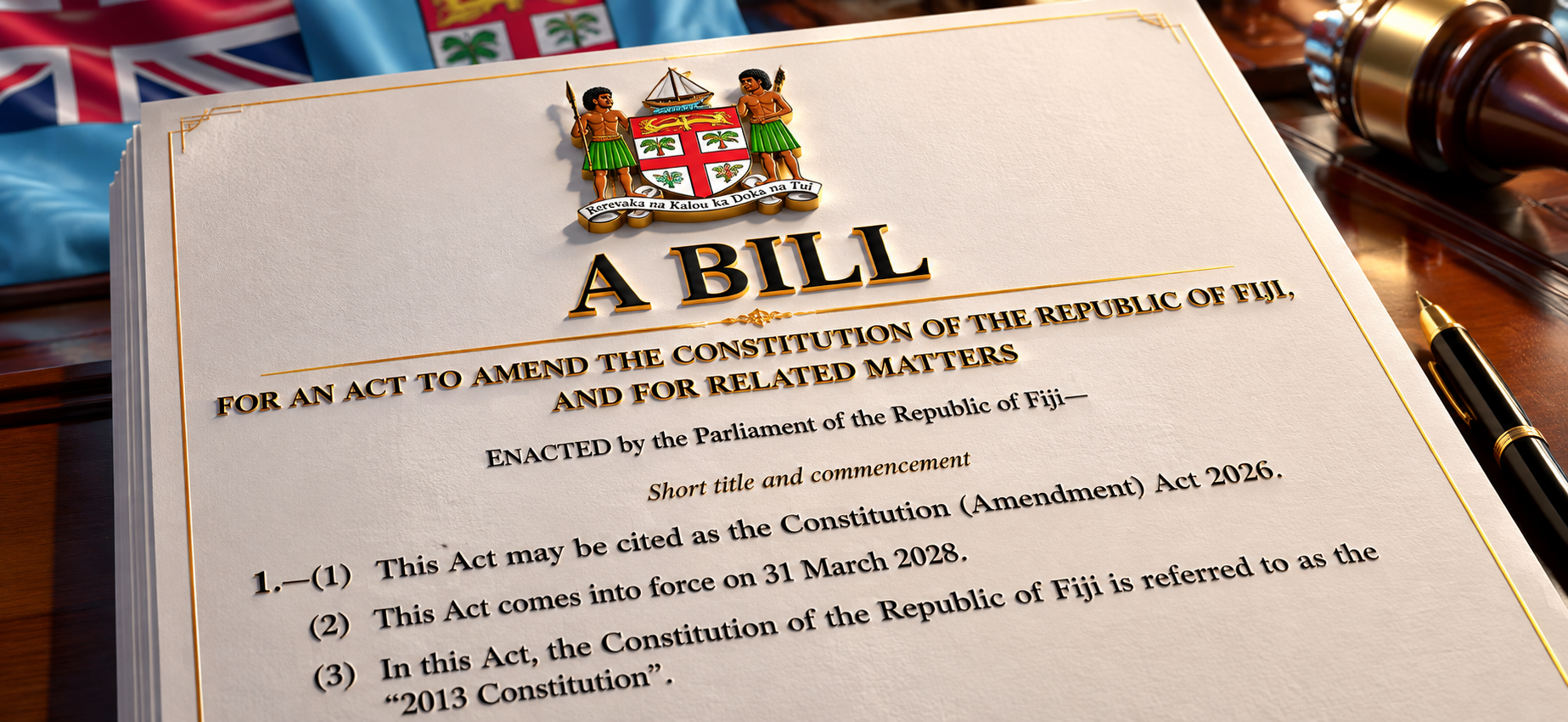
The Constitution (Amendment) Bill 2026 proposes recognising Christianity and family values among the founding values of the Republic of Fiji, while maintaining the separation of religion and the State.
Prime Minister Sitiveni Rabuka tabled the Bill in Parliament this afternoon, beginning the parliamentary stage of Government’s proposed changes to the 2013 Constitution. Cabinet had previously endorsed a timetable providing for the Bill’s first reading on September 30, followed by a second reading and proposed referral to a Special Parliamentary Committee for public consultations.
Under Chapter 1 of the Bill, Fiji would remain a “sovereign democratic State” founded on a series of stated values.
The first listed value is “Christianity and family values.”
Other founding values include respect for human rights, freedom and the rule of law; equality; human dignity; good governance and separation of powers; transparency and accountability; common and equal citizenship and national unity; and a sustainable relationship with nature.
However, the proposed provision stops short of declaring Fiji a Christian State.
“Although religion and the State are separate, the people of the Republic of Fiji acknowledge that worship and reverence for God are the source of good governance and leadership,” the Bill states.
Rabuka had earlier said that simply declaring Fiji a Christian State would not make the country Christian and stressed that the freedoms of Hindu, Muslim, Sikh and other faith communities must be respected and protected.
The Bill also seeks to strengthen constitutional supremacy, stating that the Constitution “cannot be abrogated or suspended by any person” and can only be amended through procedures prescribed in the Constitution.
It further proposes that any attempt to establish a government outside the Constitution would be unlawful.
“Anything done to further that attempt is invalid and of no force or effect,” the Bill states.
Significantly, the provision also states that no immunity could lawfully be granted to anyone for actions taken or omitted in furtherance of such an attempt.
The Bill is part of a broader package of reforms endorsed by Cabinet following the Constitution Review Commission process.

