
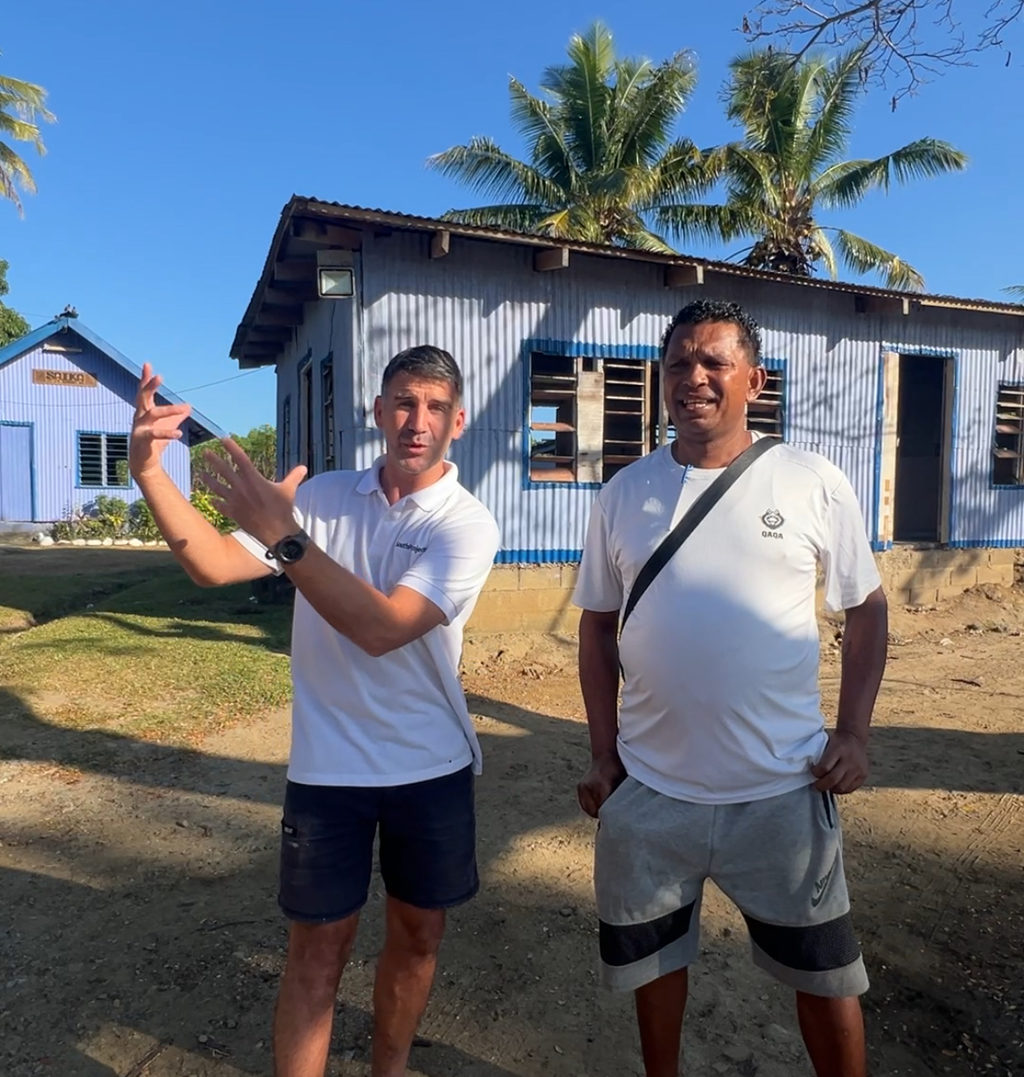
WHEN Dan Herbison arrived in Fiji a few years ago to take up a lead role in a major resort construction project, many locals could not help but do a double take.
At the time, Gareth Baber had just departed as head coach for the Fiji Airways Men’s National 7s side and Fijians often mistook Dan as being the Welshman because of their striking resemblance.
But rugby was never the reason Dan came to Fiji
While Baber was shaping Fiji’s rugby talents on the field, Dan quietly pursued a different mission — one grounded in community development, mentorship and creating opportunities to uplift ordinary Fijians through practical support.
Somewhere between the warm smiles of villagers, the deep talanoa sessions under a bure roof and the strong sense of community unique to Fiji, the New Zealander found something he never expected a profound connection to the country and its people.
That connection eventually became personal and from that personal connection came a vision, a vision he now calls “Kauta Ki Nakoro” or Take to the Village.
It is a simple but powerful concept inspired by the realities Dan witnessed in some places: families struggling to complete homes because of the soaring cost of building materials, while at the same time construction projects often discard perfectly usable materials.
“Generally, construction projects have up to five per cent material wastage,” Dan explained.
“My proposition is to have clients nominate a local village to receive excess materials worthy of donation.
“These materials will be utilised by needy families, those that may not be able to buy some extra materials to complete their home.”
The initiative was trialled last year at a home in Legalega and at the Saravi community hall along the busy Denarau Road corridor in Nadi.
What may appear to some as leftover timber, roofing or hardware, Dan sees differently.
He sees a chance for a struggling family to finally complete a bedroom for their children or repair a leaking roof before cyclone season.
For Dan, however, this project is not just about building materials.
It is about giving back to a country that has quietly shaped much of his life for nearly three decades.
But beyond simply redistributing excess materials, “Kauta Ki Nakoro” could evolve into something much bigger — a nationwide culture of corporate and community giving.
Whether through excess building materials, labour support or simple financial contributions, Dan believes every effort can make a meaningful difference to vulnerable families and rural communities.
“There are many good-hearted businesses in Fiji that already give back quietly to communities,” Dan said.
“Kauta Ki Nakoro simply creates a practical avenue where materials or resources that may otherwise go unused can directly benefit families in need.”
He believes the initiative can also strengthen relationships between the private sector and communities by encouraging a more sustainable and socially responsible approach to development.
“Sometimes a few extra pieces of timber, roofing iron or cement can mean the difference between a family finishing their home or living incomplete for years,” he explained.
“For many rural families, the smallest assistance can go a very long way.”
Dan hopes the project will eventually involve young apprentices willing to assist vulnerable households complete basic construction work safely and efficiently.
The long-term vision, he says, is not just to donate materials, but to create a support network where businesses, skilled workers and communities work together to uplift one another.
He also believes the initiative aligns strongly with the Fijian culture of solesolevaki (communal living) working together for the common good.
“In Fiji, community has always been one of the country’s greatest strengths,” he said.
“This initiative is really about harnessing that spirit and ensuring that what may no longer be useful to one person could become life-changing for another family somewhere else.”
“Fiji is very close to my heart,” he said softly.
His journey with Fiji began long before his recent work here.
In 1994 Dan’s father moved to Fiji to work as a builder and joiner, managing a Suva-based carpentry team and undertaking construction projects stretching from Nadi to Savusavu.
Much of the work involved resort construction and joinery, the kind of projects that quietly helped shape Fiji’s growing tourism industry.
Dan first visited Fiji in 1995.
Two years later, in 1997, he returned to live with his father for an entire year while continuing his New Zealand high school studies extramurally.
By then, Fiji no longer felt foreign. Having grown up surrounded by Pacific Island communities in Wellington, New Zealand, adapting to life in Fiji came naturally.
The culture, the communal spirit, the respect for family and the simple way of life resonated deeply with him.
Over time, those roots only grew stronger.
Dan’s father later married a Fijian woman from Lau, strengthening the family’s connection to Fiji and creating a wider Fiji-based vuvale that remains close to him today.
Now, almost 30 years since that first visit, Dan believes his relationship with Fiji has evolved into something much greater than work or business.
“With long-standing connections to Fiji spanning nearly 30 years, it is my intention to establish a long future residing here in Fiji,” he said.
“Fiji has a bigger plan for us.”
Those words are not empty sentiments.
They are reflected in the many quiet initiatives Dan has already undertaken to empower people around him.
In March 2024, he helped a talented carpenter from Qamea realise a dream many only talk about, starting his own construction labour company.
Dan helped the young tradesman register his business, which led to securing his first work contract at Crowne Plaza, followed by six months of resort construction work where he ramped up to 35 staff.
“We often meet to talanoa, put plans in place for future work opportunities, and I share my knowledge of construction contracts, financial forecasting and bookkeeping,” Dan shared.
But perhaps what stands out most about Dan is not the projects themselves.
It is the relationships he builds.
Since April last year, he has developed close ties with a tokatoka (clan) in Nadi.
“We eat together, attend family functions and birthdays together and we talanoa on how they can utilise their land allocation to benefit their generation, and generations that follow,” he said.
He is currently helping the clan explore ideas around a bure-style rental accommodation business model, one that could create sustainable income opportunities for future generations.
And while many of his current initiatives are already changing lives in quiet ways, Dan believes the bigger dream still lies ahead.
A dream he hopes will one day transform vocational training opportunities for young Fijians.
“A bigger, long-term SouthPac Projects dream is the formation of a ‘Bure-build’ trade-skills training hub in Nadi,” he said.
The program would provide hands-on vocational training to young Fijians while constructing relocatable bure-style homes between 50 and 60 square metres in size.
It is an idea that blends practical skills, cultural identity and community development into one vision.
In many ways, it perfectly reflects the man behind it.
A project manager by profession, a mentor by passion and now, after almost 30 years of connection to the islands, definitely a Fijian at heart.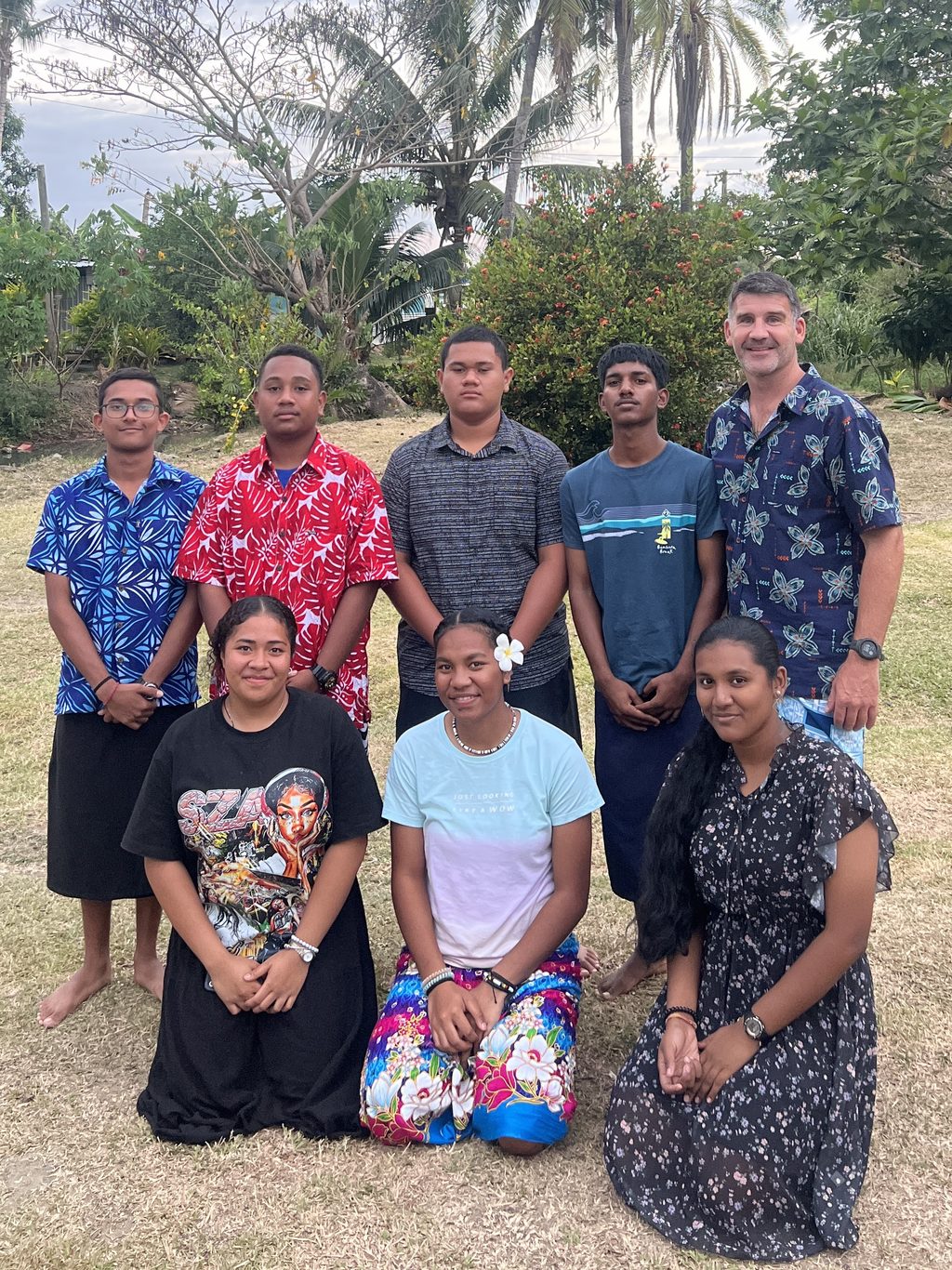
Dan Herbison is also passionate about empowering local youths by helping them develop their personal growth and leadership skills. Picture: SUPPLIED

