DEEP geopolitical fractures, procedural deadlocks and sharp disagreements over climate finance and the role of science dominated a marathon closing plenary at the 31st United Nations Climate Change Conference (COP31) in Antalya, culminating in the rare failure to adopt an overarching cover decision.
At the end of her intervention, Fiji’s Environment Minister Lynda Tabuya said while an Antalya pact was not endorsed by parties, the Pacific would continue to fight for its priorities.
After running more than 40 hours past its scheduled Friday close to become the longest UN climate summit on record, the COP31 Presidency led by Türkiye alongside Australia as President of Negotiations confirmed that delegates could not reach consensus on a final political declaration, leaving the global climate process without a unified Antalya pact.
While a handful of technical agenda items cleared the floor, the closing plenary revealed a deeply divided negotiation hall where major powers and developing blocs clashed over foundational principles.
Fractures on the plenary floor
The fault lines became immediately visible during deliberations on Action for Climate Empowerment (ACE), a program governing climate education, public awareness and participation.
The Russian Federation formally objected to adopting the draft text (CP-2026-L.8), claiming the document bypassed multilateral negotiations and included unacceptable “new terms and concepts”.
Moscow argued against what it termed “censorship of science,” forcing the Presidency to defer the matter to the Subsidiary Body for Implementation’s 66th session (SBI 66).
The objection drew swift pushback from several delegations. The European Union, the United Kingdom speaking for the Umbrella Group and Mexico expressed “surprise and disappointment,” noting they believed convergence had been reached.
Panama, representing the Independent Alliance of Latin America and the Caribbean (ILAC), warned that access to accurate, science-based information and “information integrity” were non-negotiable preconditions for climate action.
Meanwhile, Ghana, speaking on behalf of the African Group of Negotiators (AGN) and backed by Tanzania, voiced profound disappointment over how the Presidency handled the talks, warning that the process must remain “party-driven” rather than imposed.
Ghana subsequently blocked the adoption of a draft decision on long-term climate finance (CB-2026-L.2), arguing that the assessment of the $US100billion ($F229.16b) finance goal relied too heavily on only two sources, the Organisation for Economic Co-operation and Development (OECD) and Oxfam, while failing to give equal weight to reports from developing nations.
Despite an appeal from the EU not to reopen the text, the Presidency was forced to suspend the item for further consultations.
Cultural and ideological disputes also surfaced during the session.
Under agenda items co-chaired by Fiji’s Ambassador Amena Yauvoli and Germany’s Henry Reich regarding the Standing Committee on Finance, which was successfully adopted, Argentina and Paraguay entered formal interpretative statements defining “gender” strictly in biological terms or under domestic law.
The EU countered immediately, rejecting any backsliding on human rights and inclusive climate language agreed at COP30.
One rare bright spot saw delegates approve the selection of the UN Environment Programme (UNEP) to continue hosting the Climate Technology Centre and Network (CTCN) with nearly double its current budget.
Even then, Chile noted with concern that several developed countries had resisted referencing the “best available science” when assessing developing nations’ technology needs.
The collapse of the cover decision
Before suspending the session for overnight consultations, the COP31 President issued an urgent plea, telling delegates that a final draft cover decision was undergoing legal review and giving parties until 6am to bridge remaining gaps.
“Outside of this hall, there are people who are living with the effects of climate change. The children, the parents are waiting for this,” the COP31 President Murat Kurum told the room.
Ultimately, that bridge could not be built. Because UN climate decisions operate by consensus, opposition from key blocs including pushback from the EU, the UK, Latin American nations and small island states over the omission of explicit language to transition away from fossil fuels, alongside resistance from fossil-fuel-producing states meant no cover text could pass.
What it means for Fiji and the Pacific
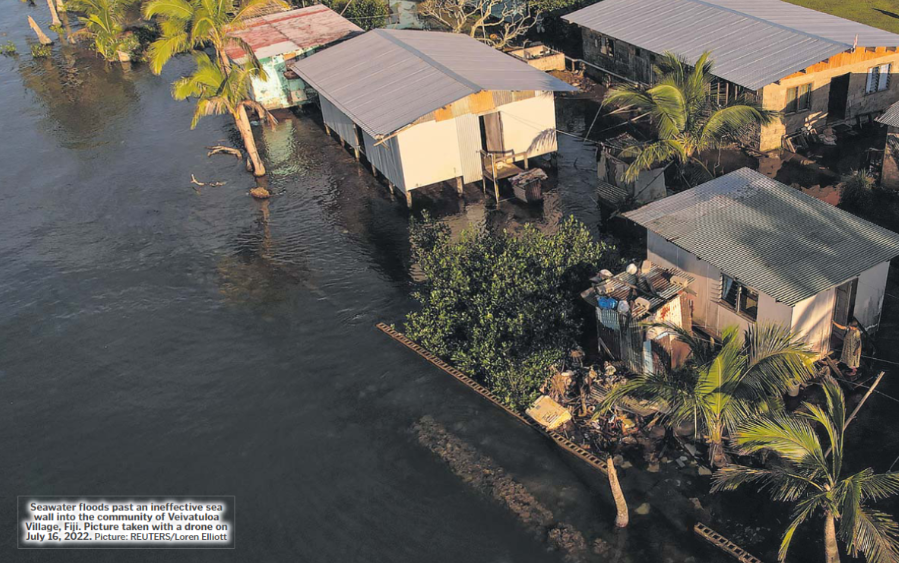
For Fiji and the wider Pacific region, the absence of a COP31 cover decision is a sobering setback at a critical juncture in the second decade of the Paris Agreement.
A cover decision serves as the political compass of a COP, setting global ambition and holding major emitters accountable to the 1.5°C warming threshold the existential survival line for Pacific island nations.
Without an overarching Antalya declaration, the global climate process loses vital political momentum, leaving no collective reaffirmation from Türkiye to accelerate the phase-out of fossil fuels or close the widening emissions gap.
At the same time, the plenary deadlock over long-term climate finance assessments and delayed operational guidance for the Green Climate Fund underscore ongoing friction between developed and developing nations over how climate money is counted, accessed and delivered.
While these setbacks weighs heavy on the minds of our technical negotiators, one thing is clear according to Minister for Environment and Climate Change Lynda Tabuya who put it plainly that “the fight continues”.
“This is not the end and we will continue to fight for our people and for our vulnerable communities.”