
LAZY eye, medically known as amblyopia, is a common but often overlooked eye condition that usually begins in early childhood.
It occurs when one eye develops weaker vision than the other not due to a structural problem but because the brain begins to favour one eye.
Over time, the weaker eye becomes less active, leading to reduced vision if not treated early.
In a healthy visual system, both eyes work together to send clear, balanced images to the (retina) brain.
In amblyopia, this balance is disrupted and the brain gradually ignores input from the weaker eye resulting in blurred or reduced vision on that side.
Because this condition is not always obvious especially in young children, regular eye check-ups are essential.
Common causes include eye misalignment (crossed eyes), significant differences in prescription between the eyes, cataracts or eye injury.
Since children may not realise their vision is impaired, parents, teachers, and caregivers should watch for warning signs such as one eye wandering inward, outward, upward, or downward; squinting; headaches; eye strain; poor depth perception (such as trouble catching a ball or judging distance); difficulty focusing on objects; head tilting; or bumping into things more often than usual.
The good news is that amblyopia can be effectively treated, particularly when detected early.
Treatment focuses on strengthening the weaker eye and encouraging the brain to use it.
This may involve corrective glasses, wearing an eye patch over the good eye, or vision therapy exercises.
Early intervention can significantly improve and sometimes fully restore vision.
School eye screening programs play a vital role in early detection. They help identify children with vision problems, even if they have never complained.
Many children simply adapt to poor vision without realising it. Community screening initiatives further extend this support to children who may not yet be in school or who miss routine check-ups.
Early childhood is a critical period for visual development. If vision problems are not found and treated early can result in permanent vision loss in one eye.
That is why every child, especially when starting school, should have a comprehensive eye examination to ensure they are ready to learn and grow with clear vision.
Raising awareness about amblyopia is essential. A simple eye test at the right time can make a life-changing difference.
Protecting a child’s vision supports not only their sight but also their development, confidence, and overall quality of life.
Don’t ignore the signs, early detection and timely treatment can help every child see the world clearly.
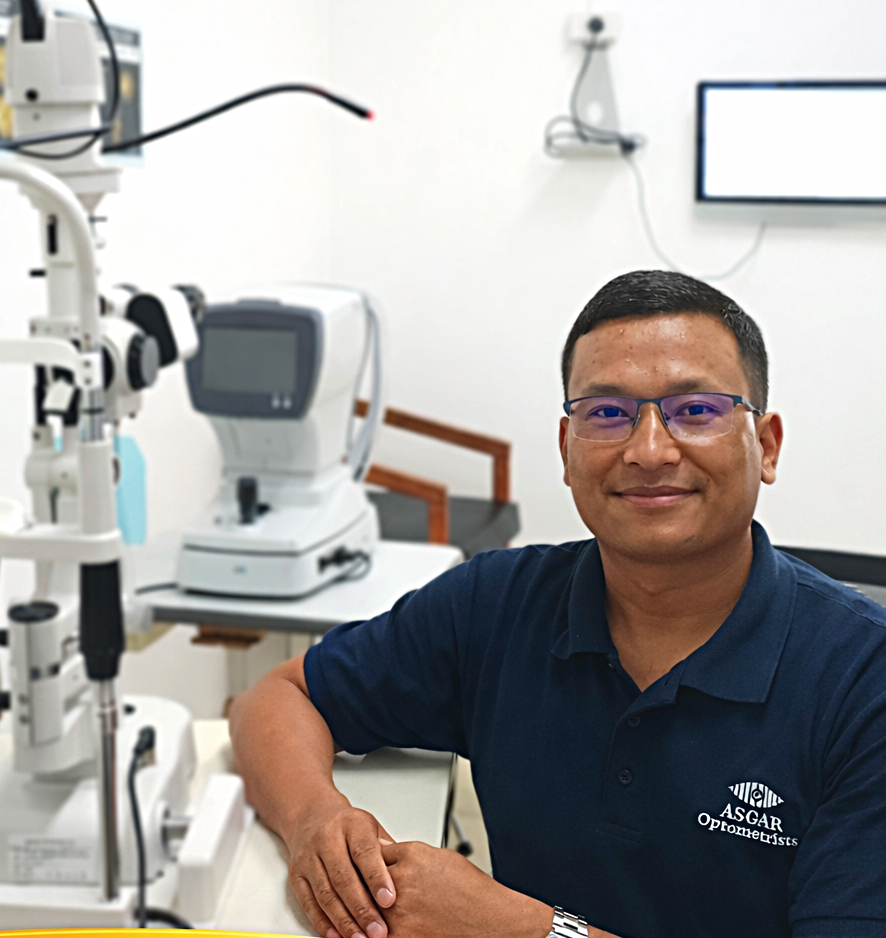
n Ukash Manger is the
Consultant Optometrist
at Asgar Optometrist,
Lautoka Branch

